
Macrosaccus morrisella leafminer
Macrosaccus morrisella
Description
How to identify
Macrosaccus morrisella is a species of moth belonging to the family Gracillariidae. These tiny insects are characterized by their narrow wings and specific wing patterns typical of leaf-mining moths within the order Lepidoptera.
Adult moths are primarily nocturnal and highly elusive, which makes monitoring their populations difficult during the early stages of infestation. Their life cycle is synchronized with the vegetative periods of their host plants.
The larvae are specialized leaf-miners with mouthparts adapted to feeding within the leaf tissue. Throughout their development, they create distinct tunnels or mines, increasing in size as they mature toward pupation.
Pupation typically occurs within the mine formed by the larva in the leaf blade. This location provides the developing insect with a stable microclimate and protection from predators and various environmental stressors.
The rate of development is heavily influenced by ambient temperature and host plant quality. In favorable conditions, multiple generations can emerge within a single growing season, leading to rapid population growth.
What it damages
The primary hosts for this pest are members of the Fabaceae (legume) family. Black locust and various wild legume species are particularly susceptible to heavy infestation by Macrosaccus morrisella.
Larvae feed on the leaf parenchyma, leaving the veins intact. The intensity of the damage depends on the population density, with high numbers of larvae causing significant stress to the host plant.
In cases of severe infestation, larvae may migrate to adjacent healthy leaves. This behavior facilitates the spread of the pest throughout the canopy, increasing the cumulative impact on the plant's health.
While the larvae do not consume reproductive parts, the mining activity reduces the total photosynthetic area. This reduction hinders the plant's metabolic processes and weakens its overall vigor.
Persistent damage often results in premature leaf drop, especially towards the end of the season. This early defoliation leaves the plant more vulnerable to winter conditions and potentially affects its growth the following spring.
Signs of infestation
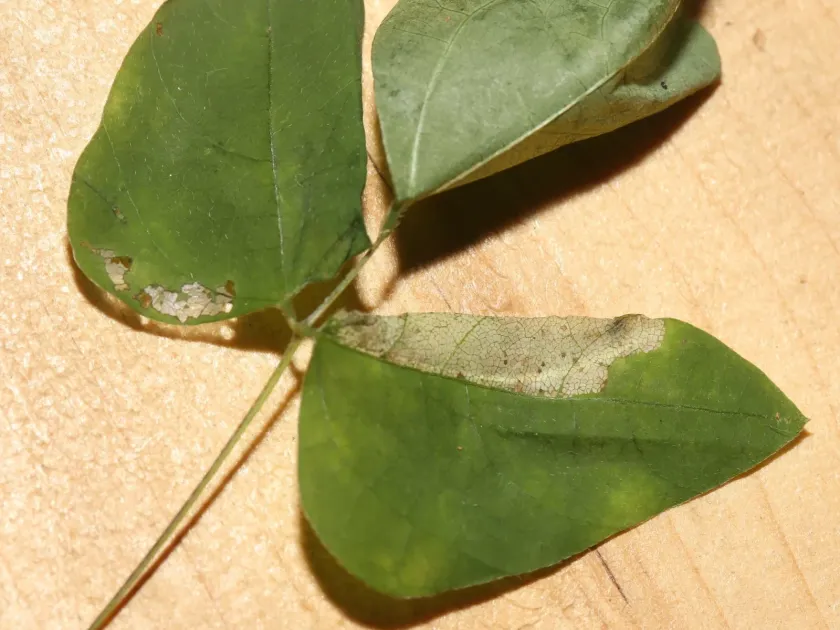
The most diagnostic sign of infestation is the appearance of leaf mines. These can be seen as light-colored, irregular blotches or serpentine tracks on the leaf surface, which are clearly visible when backlit.
As the larva grows, the mine darkens due to the accumulation of frass (larval excrement) within the feeding tunnel. In some cases, the leaf margins may curl or twist, providing extra cover for the larva.
The thin, translucent epidermal layer of the leaf remains intact over the mine. This distinguishes Macrosaccus morrisella damage from that of general foliage feeders that consume the entire leaf thickness.
Tiny exit holes on the surface of the leaf indicate that the adult moth has emerged or that a parasitoid wasp has successfully attacked the larva. These holes are essential indicators of the end of the current larval cycle.
Heavy mining activity causes leaves to turn yellow or brown and wither prematurely. This discoloration is a direct result of tissue death and the loss of chlorophyll caused by the mining process.
Control measures
Management strategies involve a combination of cultural and chemical practices. Sanitation is vital, particularly the collection and disposal of fallen leaf litter, which serves as an overwintering site for pupae.
Biological control plays a significant role through the activity of naturally occurring parasitoid wasps. Enhancing the presence of these beneficial insects can help regulate moth populations without chemical intervention.
Chemical control is most effective when systemic insecticides are applied at the time of egg-laying or early larval emergence. Targeted applications help preserve beneficial predator populations in the environment.
Monitoring using pheromone traps is recommended to determine the optimal timing for intervention. Accurate timing significantly reduces the amount of chemical pesticide required for effective suppression.
- Maintaining crop hygiene to disrupt the life cycle of the pest.
- Utilizing selective insecticides that minimize impact on non-target species.
- Regular inspection of legume foliage to detect early-stage mines.
Taxonomy
- Latin name
- Macrosaccus morrisella
- Order
- Lepidoptera (butterflies)
- Family
- Gracillariidae
- EPPO code
- MCSAMO
Discussion
No discussions yet — be the first.