
Brown recluse spider
Loxosceles reclusa
Description
How to identify
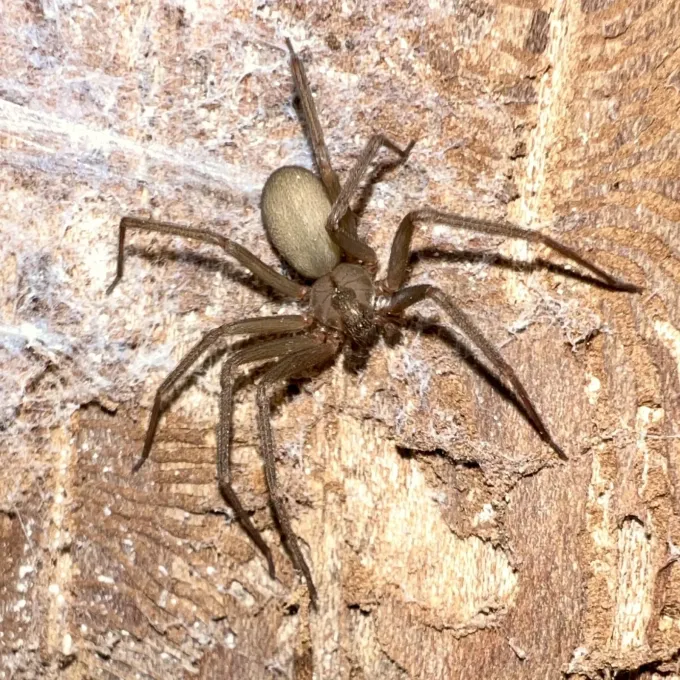
The brown recluse spider (Loxosceles reclusa) is a member of the Sicariidae family. Adults typically measure between 6 and 20 mm in length. The most distinctive identifying mark is a dark, violin-shaped pattern on the cephalothorax.
The body ranges from light to dark brown. Unlike most common house spiders, the brown recluse has six eyes arranged in three pairs, forming a semicircular pattern. This anatomical detail is a primary key for professional identification.
These spiders are nocturnal and thrive in secluded, dry environments. They are commonly found in agricultural storage sheds, woodpiles, equipment storage areas, and undisturbed dark corners of barns or packing facilities.
The lifecycle includes eggs, nymphs, and adults. A female produces white, silk-like egg sacs, each capable of holding up to 50 eggs. These sacs are hidden in protected areas, contributing to their ability to sustain populations over time.
Because they are reclusive by nature, they are rarely seen during the day. Most interactions occur when employees disturb their habitats while moving boxes, cleaning, or performing maintenance in storage areas.
What it damages
The brown recluse spider does not feed on crops and therefore is not a direct threat to plant health. Instead, it poses a significant occupational health risk to staff working in agricultural settings and food storage facilities.
Their venom is necrotic, which can cause severe skin ulcers and health complications if a worker is bitten. This necessitates rigorous safety protocols in workplaces where these spiders are suspected to be present.
In terms of facility management, their presence creates a sanitation issue. Spider webs can collect dust, debris, and egg cases, which can contaminate stored produce or packaging materials, affecting the quality of the goods.
They act as predatory arachnids that consume other insects, including beneficial species. This can indirectly affect integrated pest management (IPM) programs by disrupting the balance of insects present in the agricultural ecosystem.
Large populations in storage areas can be a cause for concern regarding product certification and cleanliness standards. Maintaining high hygiene levels is essential to prevent the establishment of colonies in agricultural infrastructure.
Control measures
Sanitation is the cornerstone of managing brown recluse populations. Removing clutter, old cardboard, stacked wood, and other debris from storage sheds and work areas denies the spiders the shelter they require.
Sealing gaps and cracks in the building structure, especially around windows, doors, and foundations, prevents the spiders from migrating into buildings. Ensuring the facility is well-sealed is more effective than any chemical treatment alone.
If chemical control is necessary, residual insecticides are applied to baseboards, corners, and voids where spiders congregate. Professional pest control services are often recommended to ensure correct application and safety.
Sticky traps can be used as an effective monitoring tool to detect the presence and extent of an infestation. These traps should be placed in low-traffic, dark areas where spiders are most likely to hunt for food.
Training staff is vital. Employees should be taught to recognize the habitat signs of the brown recluse and to wear proper protective gear, such as gloves, when handling stored equipment or materials that have been sitting undisturbed for long periods.
Taxonomy
- Latin name
- Loxosceles reclusa
- Family
- Sicariidae
- EPPO code
- LOXSRE
Discussion
No discussions yet — be the first.