
African Elephant
Loxodonta
Description
How to identify
The African elephant (genus Loxodonta) belongs to the order Proboscidea and is the largest terrestrial animal, capable of significant environmental modification.
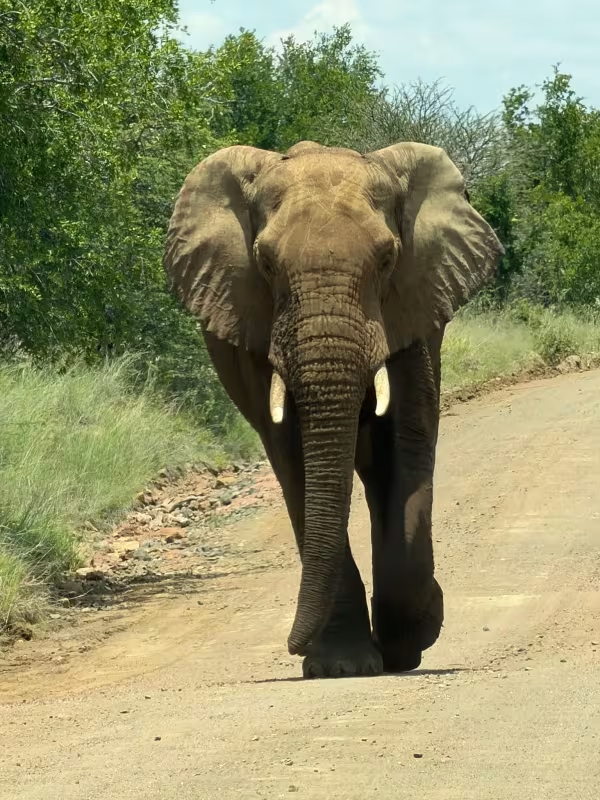
Characterized by a large body, massive ears, and a prehensile trunk, these mammals possess high cognitive abilities and social intelligence.
Their biological need for immense quantities of forage drives them to explore diverse landscapes, including cultivated agricultural lands.
The species has a long lifespan and a slow reproductive rate, with family groups led by a matriarchal figure guiding their foraging movements.
Understanding their behavior is critical for farm management, as they are capable of learning and memory-based foraging strategies.
What it damages
African elephants are generalized herbivores that can devastate commercial crops including maize, bananas, sugar cane, and oil palm.
Damage occurs not only through feeding but also via extensive trampling of crops, which results in the destruction of entire harvest areas.
Infrastructure damage is a major concern, as elephants frequently destroy fences, irrigation pipes, and water storage containers.
Trees and perennial crops often sustain lethal damage through debarking and the removal of branches by the animals' powerful trunks.
The economic impact is often catastrophic for smallholder farmers, potentially leading to total loss of income and food security.
When it appears
Foraging intensity near farms typically increases during the crop maturation phase when vegetation is most nutritious and palatable.
Dry seasons push herds towards permanent water sources, which often coincide with irrigated agricultural zones.
Migration patterns of elephant populations are driven by food availability, leading to periodic but severe incursions into farming areas.
Nocturnal foraging activity is common, making detection by farmers a significant challenge during the height of the crop season.
Seasonal environmental changes dictate the movement of herds, requiring farmers to stay vigilant during specific phenological stages of crops.
Signs of infestation
Massive footprints, often exceeding 40 centimeters in diameter, provide immediate evidence of elephant presence in or near fields.
Distinctive wide pathways through vegetation where the herd has traveled characterize their movement across farmland.
Physical evidence includes uprooted plants, shredded stems, and large amounts of dung deposits across the area.
Signs of debarking on surrounding trees and destruction of farm enclosures confirm the presence of these large mammals.
Audible signals, such as deep rumbles or loud trumpeting, are clear markers of an active herd in the immediate vicinity.
Control measures
Management of African elephants focuses on non-lethal deterrent methods to minimize human-wildlife conflict.
Solar-powered electric fencing is widely considered the most effective tool for excluding elephants from protected agricultural zones.
Buffer crops like chili pepper are frequently used as a psychological barrier because elephants are sensitive to the irritant scent.
Acoustic deterrents, including the recorded sounds of aggressive honeybees, are utilized to discourage elephants from approaching fields.
Integrated land-use planning and community awareness programs are essential for long-term sustainability in elephant-inhabited regions.
Taxonomy
- Latin name
- Loxodonta
- Family
- Elephantidae
- EPPO code
- LOXDSP
Discussion
No discussions yet — be the first.