
Weevil
Elephas
Description
How to identify
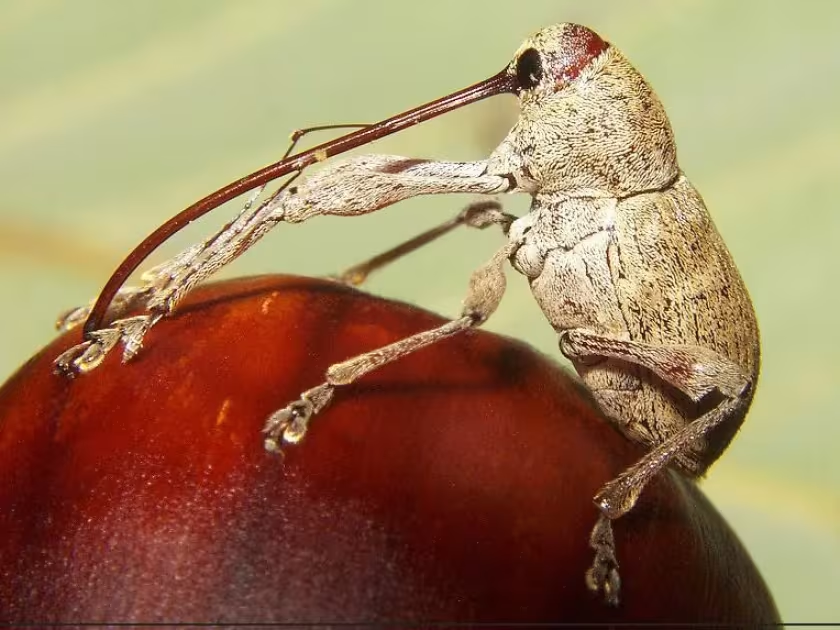
Weevils, belonging to the massive family Curculionidae of the order Coleoptera, are easily recognized by their distinctive snout, known as a rostrum. This elongated head structure often houses the mouthparts at its very tip, which are used for feeding and boring into plant tissues.
These insects vary greatly in size, ranging from tiny species a few millimeters long to much larger forms. Many weevils have bodies covered in scales or bristles that provide excellent camouflage, mimicking the color and texture of bark, soil, or leaves to avoid detection.
The larvae are typically legless, C-shaped grubs with pale, fleshy bodies and a hardened head capsule. They lead a secretive life, often developing entirely within seeds, stems, fruits, or roots of host plants, which protects them from many external threats.
The life cycle involves complete metamorphosis: egg, larva, pupa, and adult. Many species hibernate during the winter as adults in sheltered locations like leaf litter, soil crevices, or under the bark of trees, emerging when temperatures rise in early spring.
Reproduction involves the female using her snout to bore a hole in a plant part, depositing an egg inside, and often sealing it. This behavior ensures that the emerging larvae have immediate access to a food source, promoting high survival rates in successful infestations.
What it damages
Weevils are notorious polyphagous pests that affect a broad range of crops, including fruit trees like apples and pears, berry bushes such as strawberries and raspberries, and various legumes and field crops. They are capable of causing damage at every life stage of the plant.
Adult weevils primarily damage foliage, creating characteristic notches or holes along the edges of leaves, which reduces photosynthetic capacity. In some species, they also feed on buds and blossoms, leading to the destruction of fruit before it even begins to form.
The larvae are often the most destructive stage, causing internal damage that is difficult to spot until significant harm is done. Larvae tunneling through fruits or seeds make the harvest unmarketable and susceptible to rot from secondary fungal or bacterial infections.
Root-feeding species are particularly dangerous, as they consume the root systems of crops. This often leads to the stunted growth, sudden wilting, and potential death of the entire plant, making them a major concern for both commercial farmers and home gardeners.
The cumulative effect of a weevil infestation can be severe, resulting in reduced yields, poor fruit quality, and in extreme cases, the total loss of established crops. Their ability to remain hidden inside plant tissues also makes detecting early-stage infestations challenging.
Signs of infestation
The most common sign of adult activity is "notching," where pieces of leaf tissue are missing from the edges of leaves. This pattern is very specific to weevil feeding and is a clear indicator that adults are active in the area.
Dried-up or "capped" buds that fail to open are a primary signal of bud-feeding weevils. When opened, these buds often contain the larvae or the empty pupal chamber, confirming that the flower has been destroyed from the inside out.
Monitoring the presence of beetles can be done by "beating" or shaking branches over a white sheet during the early morning hours. Adults often drop and feign death when disturbed, making them easy to collect and count for population estimation.
Rolled-up leaves, often referred to as leaf-cigar structures, indicate the presence of leaf-rolling weevils. Inside these structures, the female has laid eggs, and the developing larvae use the rolled tissue as both food and a protected nursery.
Wilting of perennial plants or strawberry patches during dry spells may point to root-boring weevil larvae. If a plant can be easily pulled from the soil with minimal resistance, it is highly likely that the root system has been destroyed by larvae.
Control measures
Cultural control is a cornerstone of weevil management. This includes tilling the soil beneath host plants to disturb and destroy overwintering pupae and larvae, as well as strictly removing and destroying any infested plant debris to break the life cycle.
Physical barriers like sticky traps or bands wrapped around the trunks of fruit trees can prevent adult weevils from climbing up to the canopy. These methods are simple, low-cost, and environmentally friendly, reducing the need for chemical intervention.
Biological controls are highly effective, especially when using entomopathogenic nematodes or fungi that target larvae in the soil. These organisms seek out the larvae in their protected habitats, significantly reducing the population density in an eco-friendly manner.
- Targeted application of systemic insecticides during peak activity.
- Manual collection of beetles in the morning.
- Crop rotation to starve out host-specific species.
- Planting trap crops to lure weevils away from primary harvests.
Chemical control should be used judiciously, focusing on the timing of the adult emergence. Always select pesticides that minimize impact on beneficial insects and pollinators, and ensure applications are made when the pest is most vulnerable to exposure.
Taxonomy
- Latin name
- Elephas
- Family
- Elephantidae
- EPPO code
- ELEPSP
Discussion
No discussions yet — be the first.