
Asian elephant
Elephas maximus
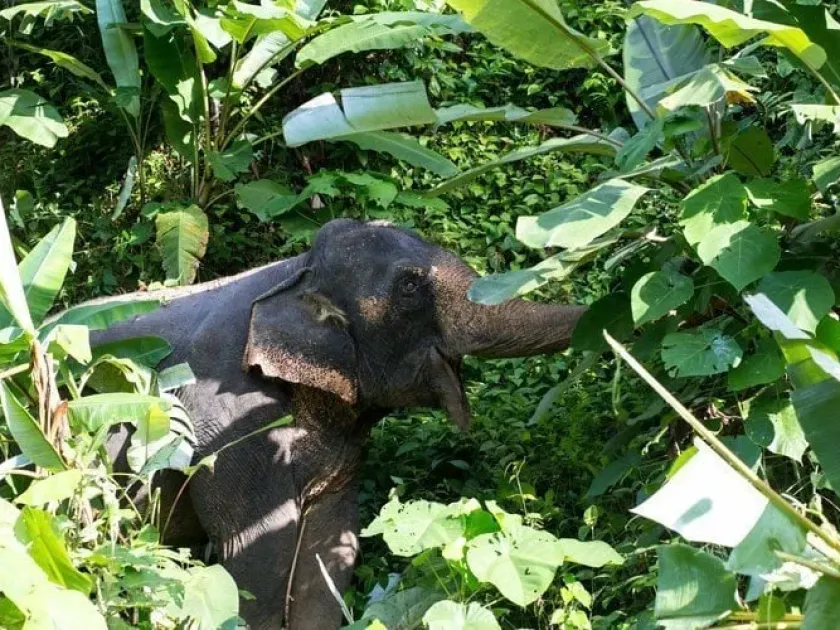
Description
How to identify
The Asian elephant (Elephas maximus) is the largest terrestrial mammal in Asia, belonging to the family Elephantidae, order Proboscidea.
These animals possess high intelligence, complex social bonds, and long-term memory, which they use to navigate landscapes in search of food.
Elephants live in matriarchal herds, and their size allows them to move through dense vegetation and overcome many physical obstacles.
A single adult elephant requires vast amounts of vegetation daily, which drives them to explore diverse habitats including farmland.
Their biological need for regular water sources and massive daily food intake makes them persistent visitors to agricultural regions.
What it damages
Elephants frequently raid plantations of rice, maize, sugar cane, bananas, and oil palms, often causing catastrophic losses in a single night.
Beyond consuming crops, the physical weight of elephants causes extensive trampling damage to soil and surrounding non-target vegetation.
In oil palm plantations, elephants frequently uproot young saplings or strip the bark from trees, resulting in the death of the crop.
Destruction of irrigation infrastructure and farm equipment is a common secondary effect of elephant herd movements across fields.
The economic impact is often compounded by the loss of time and resources spent on maintaining fences that elephants easily bypass.
When it appears
Elephant crop-raiding activity is strongly linked to seasonal changes and the phenology of agricultural crops in the region.
During the dry season, when natural forage and water in forests become scarce, elephants are significantly more likely to target cultivated fields.
Raid intensity peaks during the maturation phase of crops, particularly when rice and maize reach their highest nutritional and sugar levels.
Changing climate patterns have led to extended periods of crop raiding, as the availability of reliable food sources becomes increasingly critical.
Nocturnal behavior is a key seasonal adaptation, as elephants prefer to enter farmland under the cover of darkness to avoid detection.
Signs of infestation
Massive footprints measuring up to 50 centimeters in diameter provide clear evidence of elephant presence on agricultural land.
Significant damage to fences, trampled crop rows, and piles of dung are reliable signs that a herd has passed through the area.
Broken tree trunks and partially consumed stalks scattered across the field indicate aggressive feeding behavior by the herd.
Nocturnal auditory cues, such as deep rumbles or the sound of breaking branches, are often the first alert to farmers of an approaching herd.
Deep furrows in the soil and destroyed irrigation channels are characteristic signs of elephants navigating through a plantation.
Control measures
Electric fencing remains one of the most effective physical barriers, providing a non-lethal deterrent that prevents herd ingress.
Acoustic deterrents, including motion-activated sound emitters and the use of traditional bells, help to discourage elephants from entering fields.
Biological barriers, such as planting buffer strips of chili or unpalatable plant species, can help create a natural border for the farm.
Community-based monitoring systems using early-warning alerts allow farmers to take preemptive action before elephants reach the crops.
Landscape-level planning and the maintenance of corridors for wildlife help reduce the frequency of human-elephant interactions in farming zones.
Taxonomy
- Latin name
- Elephas maximus
- Family
- Elephantidae
- EPPO code
- ELEPMA
Discussion
No discussions yet — be the first.