
Yellow cereal aphid
Longiunguis
Description
How to identify
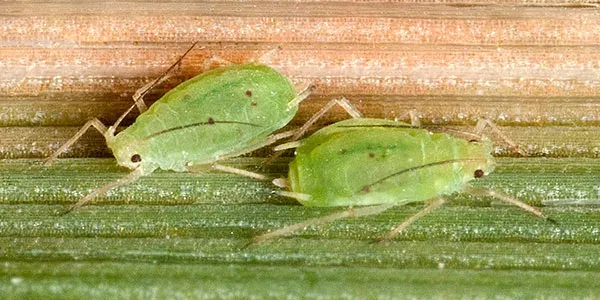
The yellow cereal aphid (specifically referring to species like Longiunguis donacis) is a small, soft-bodied insect belonging to the family Aphididae. Its body color typically ranges from light yellow to pale green, often with darker markings on the head and thorax.
This species exhibits polymorphism, with both winged and wingless forms present within a population. The antennae are relatively short, and the siphunculi (cornicles) are distinct, which helps in differentiating this species from other cereal aphids under a magnifying lens.
Aphids are usually found in colonies on the underside of leaves or within the leaf sheaths of cereal plants. Their presence is often detected by the sticky honeydew they excrete, which serves as a food source for ants and promotes the growth of sooty mold.
The reproductive cycle is characterized by rapid parthenogenesis, allowing populations to explode within a short period. Females give birth to live nymphs, bypassing the egg stage during the active growing season.
Overwintering occurs primarily as eggs on wild perennial grasses, which act as a critical source of infestation for cereal crops in the spring as temperatures rise.
What it damages
The yellow cereal aphid primarily attacks members of the Poaceae family, including wheat, barley, oats, and sorghum. They use their piercing-sucking mouthparts to feed on the plant's phloem sap, depleting vital nutrients.
Feeding damage is most critical during the stem elongation and heading stages of the cereal crop. Infested plants show stunted growth, chlorosis, and, in severe cases, the entire leaf or stem may wither and die.
Beyond direct damage, the aphid is a significant vector for various plant viruses, notably Barley Yellow Dwarf Virus (BYDV). This viral transmission is often more economically damaging than the physical nutrient loss caused by the aphids themselves.
The accumulation of honeydew on the leaves blocks stomata and provides a substrate for fungi, reducing the plant's ability to perform photosynthesis and hindering normal development of the grain.
Impact on harvest quality is significant, resulting in shriveled kernels, lower bushel weight, and reduced overall yield, which directly translates to financial losses for the producer.
Control measures
Effective management begins with scouting. Field inspection should involve checking the undersides of leaves and leaf sheaths across several areas of the field to determine the percentage of infested stems before reaching economic injury levels.
Chemical control involves the application of selective or broad-spectrum insecticides. When applying, it is crucial to ensure thorough coverage and rotate chemical classes to minimize the risk of developing resistance within the aphid population.
Cultural practices are essential for long-term control. This includes maintaining clean fields by eliminating weeds that serve as alternate hosts and selecting resistant varieties if available in the specific region.
Biological control plays a major role in integrated pest management (IPM). Beneficial insects, including ladybird beetles, lacewings, and parasitic wasps, can exert natural pressure on aphid populations, significantly reducing the need for chemical intervention.
- Regular field scouting from the jointing stage.
- Application of insecticides at economic threshold levels.
- Removal of volunteer grains and weeds.
- Use of systemic seed treatments.
- Preservation of natural predator populations.
Taxonomy
- Latin name
- Longiunguis
- Order
- Hemiptera (bugs, aphids, leafhoppers)
- Family
- Aphididae
- EPPO code
- LONUSP
Discussion
No discussions yet — be the first.