
Giant bark aphid
Longistigma caryae
Description
How to identify
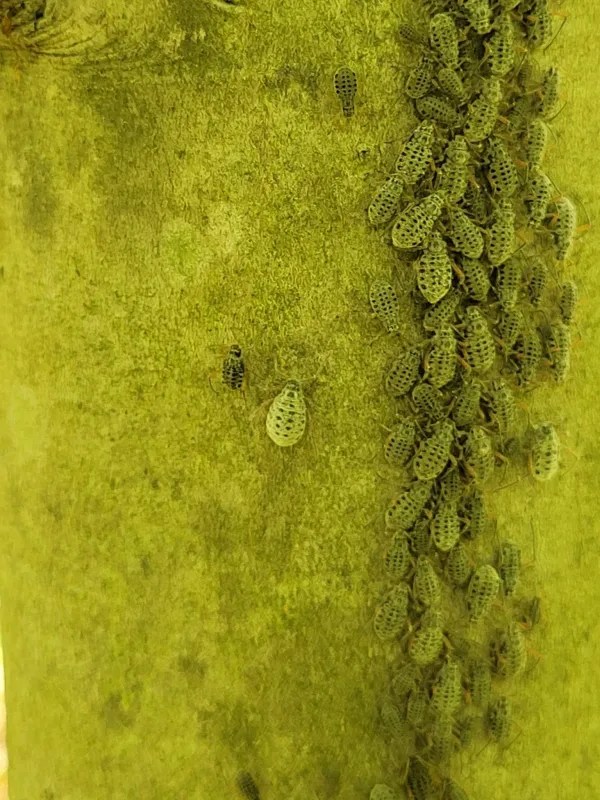
The Giant bark aphid (Longistigma caryae) is recognized as the largest aphid species in North America. Adults are typically 6-8 mm long, featuring a mottled grey-brown body with distinct dark spots and a characteristic hump on the thorax.
Taxonomically, it belongs to the order Hemiptera and the family Aphididae. Unlike common leaf aphids, this species is specialized for living on the trunks and major limbs of woody plants.
One of the most identifying features of Longistigma caryae is the presence of well-developed cornicles, which appear as two prominent dark, oval plates on the dorsal side of the abdomen.
The insect exhibits both apterous (wingless) and alate (winged) forms. The winged adults are essential for the dispersal of the colony during the summer months to new host plants.
The life cycle involves egg-laying in late autumn. These overwintering eggs are laid in deep crevices of the bark, providing high resistance to harsh winter conditions and temperature fluctuations.
What it damages
The primary hosts of this pest include various hardwood trees such as hickory, pecan, oak, willow, linden, and maple. It rarely attacks small herbaceous plants, preferring the thick bark of mature trees.
By using their piercing-sucking mouthparts, these aphids extract vast amounts of phloem sap from the tree, which can lead to significant stress and overall physiological decline of the host tree.
A major indirect damage factor is the production of copious amounts of honeydew. This sticky substance serves as a substrate for sooty mold, which blocks sunlight and reduces the efficiency of photosynthesis in leaves.
Severe infestations can result in the dieback of twigs and stunted growth in young trees. Furthermore, the weakened state of the tree makes it susceptible to opportunistic fungal infections and wood-boring insects.
The nuisance factor is also significant; in urban landscapes, the honeydew drips onto parked vehicles and sidewalks, leading to public complaints and the necessity for costly clean-up procedures.
When it appears
The cycle begins in early spring when nymphs hatch from overwintering eggs as soon as the buds start to swell. They initially colonize the smaller branches before moving to larger limbs.
Peak activity is usually observed during mid-summer. High temperatures and dry conditions facilitate rapid reproduction, leading to the formation of dense, massive colonies that cover large areas of the trunk.
During late summer and early autumn, the aphid population produces sexual morphs. This is the period when mating occurs and the overwintering eggs are deposited into the protective bark cracks.
The lifespan of the colony is strictly seasonal, with adults dying off as temperatures drop and the cycle effectively resetting with the next generation of eggs in the following spring.
Consistent monitoring is crucial because, despite their large size, the aphids' color blends perfectly with the bark, often leading to underestimation of their density until the damage becomes visible.
Signs of infestation
The most visual sign of an infestation is the presence of static, moving masses on the bark that look like unusual patches or growths. These are actually dense clusters of aphids feeding together.
The presence of honeydew is a primary indicator. If you notice a sticky residue on the leaves below the branches or on the ground, it is a clear sign that an aphid colony is established above.
The growth of black sooty mold on the surface of leaves and branches is a definitive indicator of an established and potentially severe aphid population that has been present for a significant time.
Intense ant activity on the tree trunk is a reliable secondary sign. Ants are attracted to the honeydew and will actively protect the aphids from predators, exacerbating the infestation.
Dying twigs, yellowing leaves, or premature leaf drop in specific areas of the canopy often point to high levels of sap extraction by these insects, signaling a need for intervention.
Control measures
Dormant oil sprays applied in late winter or early spring before bud break are effective in smothering the overwintering eggs, significantly reducing the initial spring population.
For established colonies during the growing season, systemic insecticides are the most effective. These chemicals move through the tree's vascular system, providing control of the feeding aphids.
Biological control using natural predators is a viable long-term strategy. Promoting populations of lady beetles, lacewings, and parasitic wasps can help keep aphid numbers below economic damage thresholds.
Pruning of heavily infested branches or shoots can reduce the total pest load. However, this is primarily useful for smaller trees or in nursery settings where the damage is localized.
Maintaining optimal tree health through proper fertilization and irrigation is essential. A healthy tree can better withstand the stress caused by sap-sucking insects and recover more quickly from injury.
Taxonomy
- Latin name
- Longistigma caryae
- Order
- Hemiptera (bugs, aphids, leafhoppers)
- Family
- Aphididae
- EPPO code
- LONSCA
Discussion
No discussions yet — be the first.