
Giant bark aphid
Longistigma
Description
How to identify
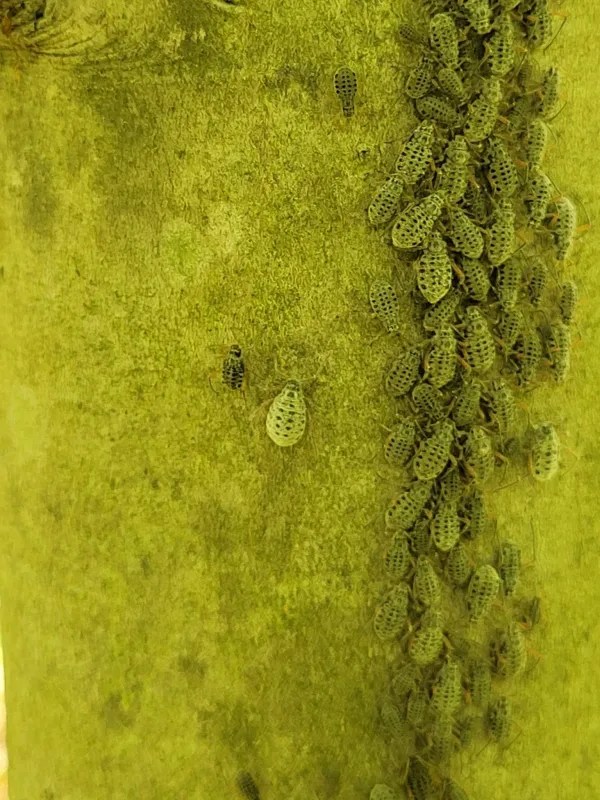
The giant bark aphid (Longistigma caryae) is one of the largest aphid species worldwide. Belonging to the family Aphididae, adults typically measure between 6 and 8 mm in length.
They possess a distinct gray or brownish body, often decorated with dark spots. Due to their significant size, these aphids are easily visible to the naked eye when they form colonies.
Their anatomy includes long, powerful legs and a specialized rostrum designed to penetrate the thick, protective bark of mature trees, where they feed on sap.
Unlike leaf-dwelling aphids, these insects are relatively stationary. Once settled on a suitable branch or trunk, they spend most of their life cycle feeding in one location.
The life cycle involves several nymphal stages before reaching adulthood. The nymphs are smaller versions of the adults but exhibit similar feeding behaviors and color patterns.
What it damages
These pests target a variety of deciduous trees, including oak, linden, chestnut, hickory, and sycamore. They thrive on mature specimens, often clustering on larger branches and trunks.
Persistent sap removal by large colonies significantly weakens the host tree. This physiological stress can lead to reduced growth and diminished resistance to environmental stressors.
The honeydew excreted by the aphids acts as a medium for the growth of sooty mold. This black fungal layer covers the bark, potentially interfering with the tree's health.
Severe infestations often result in premature leaf drop, dieback of smaller twigs, and a general decline in the tree's vitality throughout the growing season.
Trees stressed by giant bark aphids become more susceptible to secondary infestations from wood-boring insects and opportunistic fungal pathogens, threatening long-term survival.
When it appears
The life cycle commences in early spring when overwintering eggs hatch into founder nymphs. These nymphs rapidly start colonizing the tree branches.
During the summer months, the population peaks. Warm weather conditions allow for rapid reproduction, leading to dense, extensive colonies covering large areas of the tree trunk.
As autumn approaches, sexual forms emerge to mate. After mating, the females deposit eggs in bark crevices or branch crotches to survive the winter months.
Climatic factors play a crucial role in population dynamics. Mild winters ensure a high survival rate for the eggs, often leading to explosive population growth the following spring.
Multiple generations can occur within a single season, allowing the aphids to quickly exploit available resources and expand their presence across the tree canopy.
Signs of infestation
The most obvious sign of infestation is the presence of large, immobile insect clusters on the bark, which can look like dark bumps or bumps on the tree surface.
The accumulation of sticky honeydew on the trunk often attracts ants, wasps, and flies. Constant ant activity on the tree trunk is a strong indicator of an aphid colony.
A black, sooty mold covering the bark is a reliable sign of long-term aphid presence, as the fungus thrives on the sugary secretions left behind by the insects.
Yellowing of the foliage or premature leaf senescence during the summer, without signs of leaf-feeding insects, often points to sap-feeding pests located on the trunk.
Branch dieback and localized bark damage can be observed in cases of heavy, long-term colonization, indicating the tree is failing to cope with the aphid pressure.
Control measures
Biological control is highly effective through the encouragement of natural predators like lady beetles, lacewings, and hoverflies, which prey heavily on aphid nymphs.
For chemical management, systemic insecticides are the preferred choice. These are absorbed into the sap stream, making the tree tissues toxic to the aphids feeding on the bark.
Installing sticky bands around the trunk can prevent ants from reaching the aphids. Removing ant protection leaves the aphids vulnerable to their natural enemies.
Good horticultural practices, including proper fertilization and regular inspections, help keep trees vigorous and more capable of resisting minor infestations.
During winter or early spring, physical cleaning of the bark can help dislodge and remove the overwintering eggs, reducing the initial population for the upcoming season.
Taxonomy
- Latin name
- Longistigma
- Order
- Hemiptera (bugs, aphids, leafhoppers)
- Family
- Aphididae
- EPPO code
- LONSSP
Discussion
No discussions yet — be the first.