
Longidorus pseudoelongatus
Longidorus pseudoelongatus
Description
How to identify
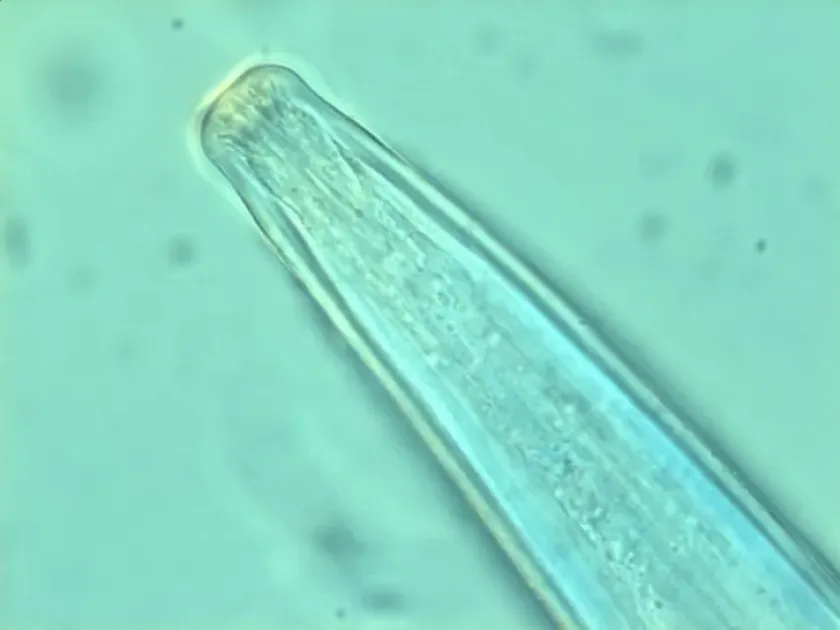
Longidorus pseudoelongatus is a type of soil-borne plant-parasitic nematode belonging to the order Dorylaimida and the family Longidoridae. These organisms are classified as large nematodes, often visible under microscopic examination of soil.
The morphology of the nematode is characterized by an elongated, needle-like body. A distinct diagnostic feature is its specialized feeding apparatus, known as an odontostyle, which is adapted for piercing plant tissues.
The life cycle encompasses an egg stage, four larval stages, and an adult stage. All development occurs within the soil profile, where they move through pore spaces to locate suitable host roots.
They thrive in moist, structured soils, which facilitate their movement and survival. High humidity levels in the soil are essential for their activity and host-seeking behavior.
Their reproduction rate is relatively slow compared to other plant parasites, often leading to a gradual buildup of the population within the field over several seasons.
What it damages
This nematode has a wide host range, attacking various agricultural crops, including cereals, vegetables, berries, and nursery stock, causing significant economic losses.
The primary damage occurs through the feeding on root tips, which results in the formation of galls and root stuntedness, preventing the plant from absorbing water and nutrients.
By damaging the root system, the nematode restricts the vegetative growth of the plant, often leading to nutrient deficiencies and increased sensitivity to environmental stress.
Longidorus pseudoelongatus is a known vector for certain plant viruses, which can cause severe systemic diseases in crops, complicating the pest management process.
In cases of severe infestation, the yield potential is greatly diminished, and crops may show patchy distribution throughout the field, reflecting the localized nature of the nematode population.
Signs of infestation
Above-ground symptoms often include uneven growth, stunted plants, chlorosis, and general wilting, which might be mistaken for drought or nutritional disorders.
Root system examination typically reveals swollen, distorted, or stubby root tips, along with necrotic lesions that occur due to feeding and subsequent secondary decay.
Field-level indicators include the appearance of patches of stunted crops that do not respond to fertilization or standard irrigation improvements.
The plant tissues are often weakened, making them susceptible to secondary fungal and bacterial pathogens that enter through the wounds caused by the nematodes.
Verification of the presence of this pest requires professional laboratory testing of soil samples or root tissue to identify the specific nematode species.
Control measures
Effective crop rotation is the primary strategy, involving the use of non-host crops to starve the nematode population and reduce their density in the soil.
The use of antagonistic cover crops or green manures that produce biochemical compounds inhibitory to nematodes can help manage population growth naturally.
Cultural practices, such as maintaining soil health and preventing the movement of infested soil between different fields, are critical for limiting the spread.
Chemical control using nematocides may be employed in high-value cropping systems, provided that such applications comply with safety regulations and environmental guidelines.
Ensuring the use of certified, clean planting material is essential for preventing the introduction of this pest into new, uninfested areas.
Taxonomy
- Latin name
- Longidorus pseudoelongatus
- Order
- Nematodes
- Family
- Longidoridae
- EPPO code
- LONGPS
Discussion
No discussions yet — be the first.