
Pea needle nematode
Longidorus pisi
Description
How to identify
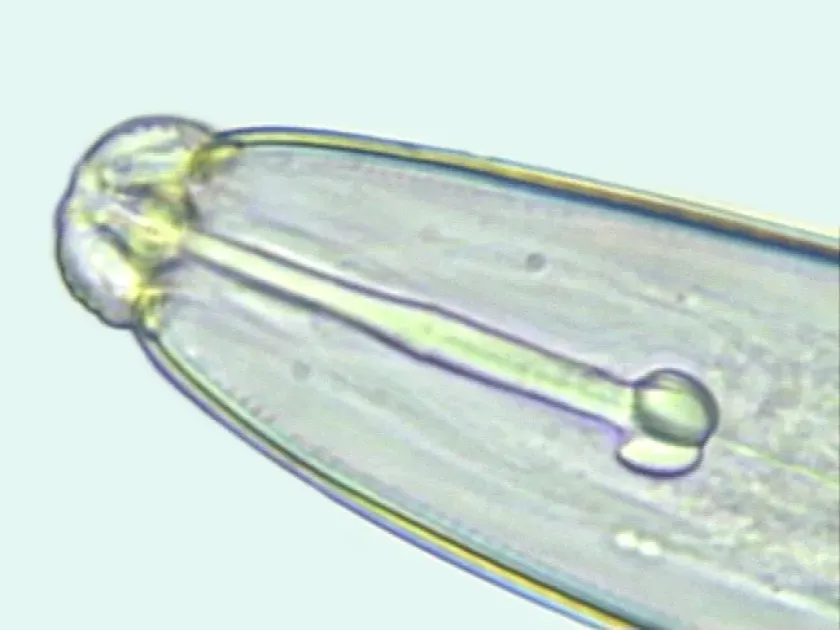
The pea needle nematode (Longidorus pisi) is a member of the Dorylaimida order and the Longidoridae family. It is a soil-dwelling ectoparasitic nematode with a thread-like body measuring up to 5–6 millimeters in length, making it visible to the trained eye during detailed soil analysis.
This pest is characterized by a long, slender feeding tube called a stylet, which it uses to puncture plant root cells. Unlike many sedentary nematodes, the Longidorus species is capable of active movement through the soil profile to locate optimal moisture and nutrient-rich zones.
The life cycle involves incomplete metamorphosis. Juveniles look similar to the adults but differ in body size. The speed of their development is strictly dependent on soil temperature and humidity levels within the rhizosphere.
Reproduction takes place in the soil, where females deposit eggs in the root zone. Optimal development is observed in light, well-aerated soils that maintain consistent moisture levels throughout the growing season.
These nematodes can survive at significant depths in the soil, entering a low-metabolic state during unfavorable conditions. Their high plasticity allows them to adapt to diverse agricultural environments across different geographic regions.
What it damages
Longidorus pisi is a wide-ranging polyphage. It primarily damages crops such as peas, beans, sugar beets, tomatoes, and various vegetables. It can also persist on many common weeds, which serve as reservoirs between primary crop cycles.
During feeding, the nematode injects enzymes into root tissues, causing localized necrosis and deformation. This interferes with the plant’s ability to absorb water and essential nutrients from the soil solution.
Infested roots often develop galls or swellings at the puncture sites. This mechanical damage leads to the necrosis of root tips, effectively halting normal root growth and causing the root system to become stunted and branched.
The damage is most severe during the seedling stage and peak root development. Infested plants exhibit reduced growth, chlorosis, and stunted appearance, which significantly reduces total yield and compromises the quality of the harvested crop.
Additionally, Longidorus pisi acts as a vector for various plant viruses. By transferring viral particles through its stylet during feeding, it can initiate viral infections across large fields, leading to significant foliage distortion and chlorosis.
Signs of infestation
The primary sign of infestation is patchy growth in the field, where seedlings may die off or appear significantly stunted compared to healthy plants. These patches are often visible due to their chlorotic and diminished appearance.
Upon digging up the roots, one can observe stunted systems that appear bushy or malformed. Brown necrotic spots are commonly visible at the tips of the roots, confirming the presence of feeding activity by these parasites.
During dry spells, infested plants show signs of severe water stress even under normal irrigation. This occurs because the damaged root system is unable to maintain the necessary transpiration rates required to support the plant.
In later stages, lower leaves tend to turn yellow and wilt prematurely. The overall vigor of the plant declines, making it susceptible to secondary infections by soil-borne fungi and bacteria that thrive in the weakened root tissues.
Visual identification of the nematode itself is not possible without laboratory procedures involving soil extraction, flotation methods, and microscopic examination of samples taken from the plant's rhizosphere.
Control measures
The primary control strategy involves strict crop rotation to prevent the accumulation of the pest. It is essential to avoid monocropping sensitive species and to include non-host crops that help break the life cycle of the nematode.
Agronomic practices include deep tillage, which disrupts the soil habitat and reduces nematode populations. Additionally, effective weed control is crucial, as weeds serve as survival reservoirs for the pest during fallow periods.
If population densities exceed economic thresholds, the use of soil fumigants or specialized nematicides may be justified. These applications must strictly follow regulatory guidelines and safety protocols due to the toxic nature of many of these chemicals.
Regular soil monitoring before planting is highly recommended. For populations that are present but below catastrophic levels, biological control agents, such as predatory fungi, can be used to suppress nematode development naturally.
Sanitation of farm equipment is critical to preventing the spread of the nematode. Since it is often transported via soil clinging to machinery, tires, and tools, thorough cleaning between different fields is a key preventive measure in integrated pest management.
Taxonomy
- Latin name
- Longidorus pisi
- Order
- Nematodes
- Family
- Longidoridae
- EPPO code
- LONGPI
Discussion
No discussions yet — be the first.