
Longidorus piceicola
Longidorus piceicola
Description
How to identify
Longidorus piceicola is a microscopic soil-dwelling nematode belonging to the order Dorylaimida and the family Longidoridae.
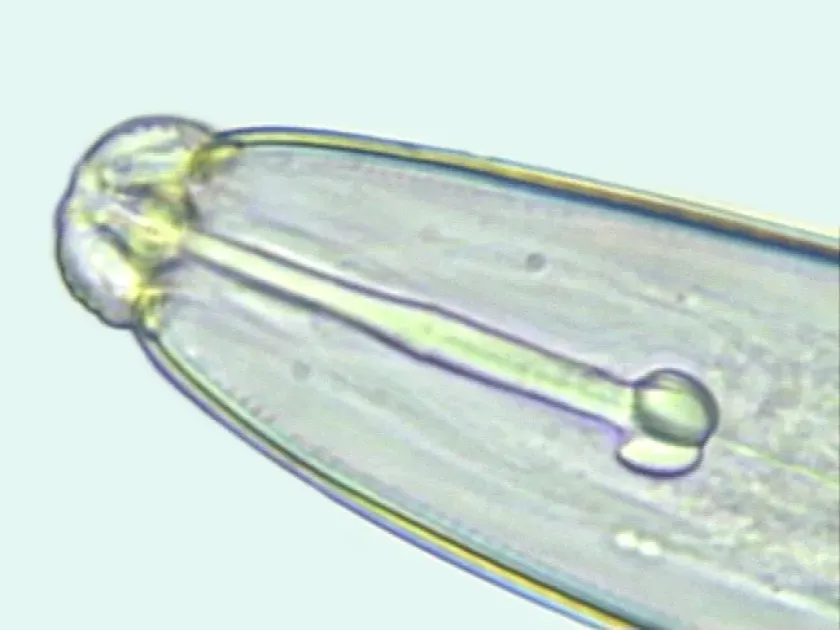
It is classified as an ectoparasite, characterized by a long, slender body and an exceptionally elongated stylet used for feeding.
These nematodes occupy the rhizosphere, where they move through soil pores to find suitable host roots for feeding.
Besides direct physical damage, this species acts as a vector for various plant viruses, posing a significant risk to forestry.
Their life cycle includes several juvenile stages occurring entirely within the soil environment, often synchronized with host root growth.
What it damages
This nematode primarily infests the roots of coniferous species, with Norway spruce being a major and highly susceptible host.
Young seedlings in nurseries are particularly vulnerable, as their developing root systems provide an easy food source for the nematode.
Feeding results in root stunting, tip necrosis, and the formation of galls that prevent the plant from absorbing necessary nutrients.
Reduced root vitality makes the trees highly susceptible to secondary pathogens, which often leads to the death of young plants.
In mature stands, chronic infestation causes a significant loss in growth and reduces the overall vigor and productivity of the forest.
Signs of infestation
A primary indicator of infestation is irregular growth patterns, where patches of stunted seedlings appear within the nursery bed.
Affected plants often show chlorosis or premature needle drop, reflecting the failure of the root system to support the tree's health.
Upon examination, roots exhibit localized swellings and a lack of fine root hairs, which are critical for water and nutrient uptake.
The trees appear generally weakened, showing less resilience to environmental stressors like drought or frost due to root damage.
Confirmation of the nematode presence requires specialized laboratory extraction techniques from soil samples taken near the root zone.
Control measures
Effective management begins with soil solarization or pre-planting fumigation in nurseries to eliminate populations before seedlings are introduced.
Strict hygiene practices, including the use of certified pathogen-free stock, are essential to prevent the spread of the nematode.
Incorporating biological control agents or planting antagonistic cover crops can help suppress nematode numbers over time.
Strategic monitoring of soil conditions and root health allows for early intervention before the infestation causes significant economic loss.
- Periodic soil testing for nematode populations.
- Maintaining optimal soil drainage.
- Usage of resistant or tolerant cultivars where available.
Taxonomy
- Latin name
- Longidorus piceicola
- Order
- Nematodes
- Family
- Longidoridae
- EPPO code
- LONGPC
Discussion
No discussions yet — be the first.