
Longidorus dunensis
Longidorus dunensis
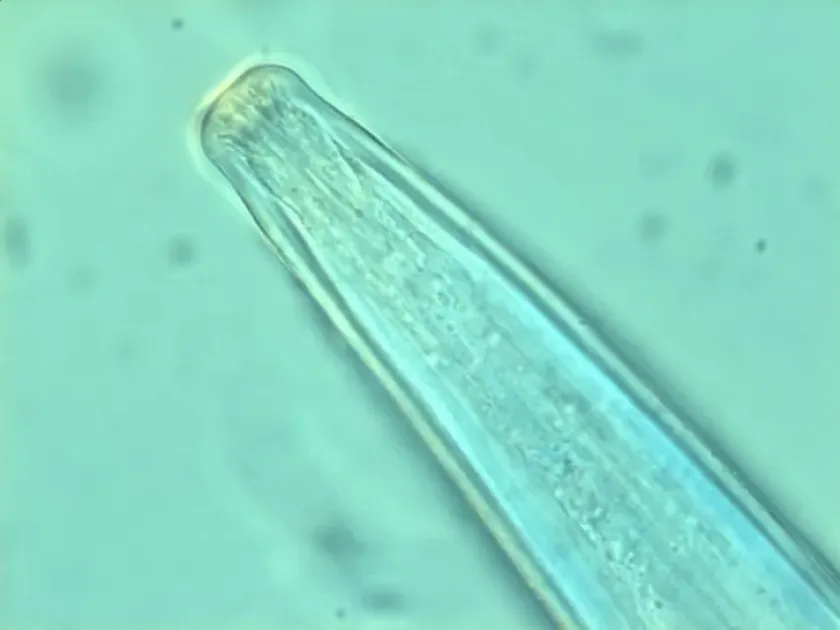
Description
How to identify
Longidorus dunensis is a species of ectoparasitic nematode belonging to the order Dorylaimida and the family Longidoridae. Adult specimens are recognized by their elongated, vermiform bodies and notably long odontostyles used to pierce and feed on plant root cells.
Identification of this species in field settings is challenging due to the microscopic size of the organisms. Accurate classification requires laboratory processing, typically involving soil and root sampling followed by microscopic examination.
These nematodes favor sandy soil conditions and are frequently found in coastal regions or agricultural land with light soil textures. Their high mobility within the soil profile allows them to navigate effectively in search of suitable host roots.
The biology of Longidorus dunensis is tied to the lifecycle of typical needle nematodes. They progress through several molting stages, with each stage requiring access to a host plant to fulfill nutritional needs for maturation.
The lifecycle is relatively long, which makes this nematode a persistent pest. It can survive in the soil for several years even in the absence of specific host crops, complicating long-term management strategies.
What it damages
This pest affects a broad spectrum of agricultural crops, ornamental plants, and forest seedlings. It poses a significant risk to vegetable crops, potatoes, and various cereals grown in light or sandy soil environments.
The root system is the primary target for this parasite. Feeding activities cause mechanical damage to root cells, which impairs the plant's ability to efficiently uptake water and essential soil nutrients.
Puncture points caused by the nematode's long stylet often become necrotic or form galls. These lesions disrupt internal nutrient transport and create entry points for secondary soil-borne pathogens, such as fungi and bacteria.
Severe infestations lead to stunted plant growth and overall reduced plant vigor. Crops become highly susceptible to environmental stress, particularly drought, due to their inability to sustain proper water intake through damaged roots.
Economic damage is manifested through decreased yields and lower commercial quality of produce. In heavily infested areas, significant gaps in crop stands or complete crop failure may occur.
Signs of infestation
The first visual indication of an infestation is the appearance of irregular patches of stunted plants in the field. These areas typically show slow growth compared to adjacent healthy parts of the field.
Chlorosis and premature wilting during peak sunlight hours, which do not improve with irrigation, are characteristic signs. These symptoms highlight the failure of the root system to provide sufficient hydration to the foliage.
Examination of the root system often reveals deformities, thickening, excessive branching, or the death of root tips. Roots may appear stubby or stunted due to repeated damage to apical meristems by the nematodes.
Visible symptoms can also include small swellings or necrotic spots on the root cortex, which serve as indicators of heavy feeding activity by the parasite population.
Overall field performance metrics, such as uneven germination and poor secondary root development, are critical indicators for performing a thorough soil phytosanitary analysis.
Control measures
Effective management begins with crop rotation using non-host plant species. This strategy helps to naturally decline the nematode population by limiting access to food sources over several growing seasons.
Cultural practices, such as deep plowing, disrupt soil structure and hinder nematode mobility. Keeping fields free of weeds is crucial, as many wild plants can serve as reservoir hosts for the nematode.
The use of cover crops with nematicidal properties, such as certain varieties of mustard or oilseed radish, can help suppress nematode populations in the topsoil layers during fallow periods.
It is mandatory to use only certified, nematode-free propagation material to prevent the introduction and spread of the pest into clean agricultural plots.
Chemical control via specialized nematicides should be treated as a last resort and implemented only when soil sampling confirms high infestation levels, strictly adhering to safety and environmental regulations.
Taxonomy
- Latin name
- Longidorus dunensis
- Order
- Nematodes
- Family
- Longidoridae
- EPPO code
- LONGDU
Discussion
No discussions yet — be the first.