
Longicaudus aphid
Longicaudus
Description
How to identify
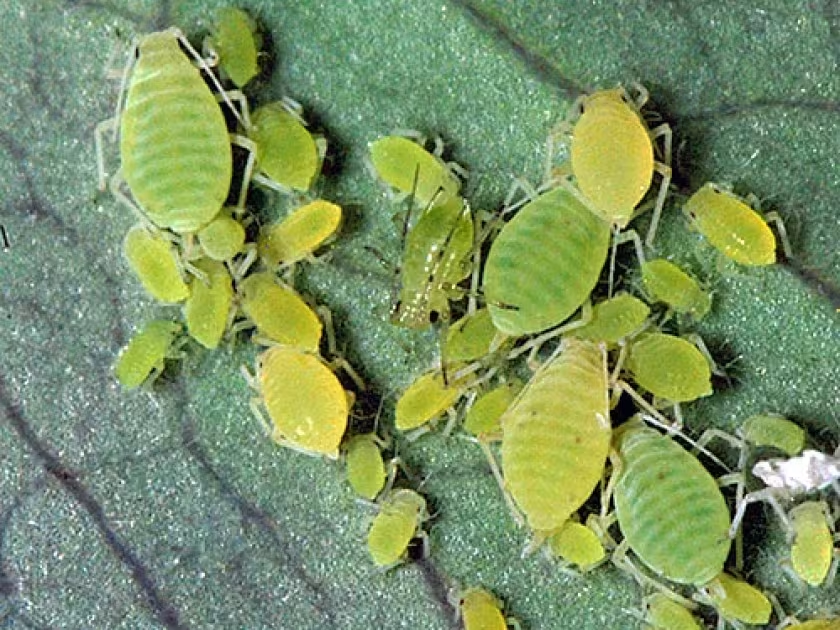
The Longicaudus aphid (Longicaudus trirhodus) belongs to the family Aphididae, order Hemiptera. It is distinguished by its exceptionally long siphunculi (tubes) located on the abdomen.
These insects are typically light yellowish-green or whitish in color, making them difficult to spot against the foliage of host plants.
The species is known for its complex life cycle, involving primary hosts (usually Rosaceae) and secondary hosts (such as Apiaceae), which complicates pest control strategies.
Adults can be either winged or wingless, allowing them to effectively colonize new plants or migrate between host types during the growing season.
Nymphs resemble the adults but are smaller; they are highly active and begin feeding almost immediately after hatching from winter eggs.
What it damages
The primary plants affected by this aphid are various rose species and related shrubs within the Rosaceae family, which serve as their spring host plants.
During the summer, the population migrates to secondary hosts, often plants within the celery or parsley family (Apiaceae), where they continue to multiply.
Damage occurs through the continuous extraction of plant sap, which deprives the plant of vital nutrients and leads to stunted growth and weakened structure.
Infested leaves often become distorted, curled, or chlorotic, which significantly reduces the efficiency of photosynthesis across the entire plant.
Beyond direct feeding, these aphids are known vectors for various plant viruses, which can cause severe long-term damage to ornamental gardens and agricultural plots.
When it appears
The life cycle begins in early spring, as nymphs emerge from overwintering eggs deposited on the bark or buds of their primary host plants.
The most rapid growth and reproduction of colonies occur in late spring and early summer when environmental conditions are optimal for aphid development.
During mid-summer, winged aphids migrate to secondary host plants, effectively expanding their territory and ensuring the survival of the colony.
As temperatures begin to drop in autumn, the aphids return to their primary hosts, where mating occurs and eggs are laid to survive the winter months.
The number of generations per year is heavily influenced by the regional climate, with warmer autumns potentially leading to an extended period of pest activity.
Signs of infestation
One of the most obvious indicators of an infestation is the curling and yellowing of the foliage, as the aphids tend to congregate on the undersides of leaves.
The presence of honeydew, a sticky substance secreted by the aphids, often attracts ants and promotes the growth of sooty mold on the plant surface.
- Sticky honeydew residue on leaves and stems.
- Increased ant activity around affected plants.
- Deformation and yellowing of new, tender growth.
- Premature leaf drop and wilting of flowers.
- Black sooty mold growth covering the foliage.
Regular inspection of the underside of leaves is necessary, as the aphids often remain hidden within the curled leaf tissue during the early stages of infestation.
Control measures
Effective management begins with cultural practices, such as removing secondary host weeds and ensuring that plants are well-watered and healthy.
Encouraging natural predators, such as ladybugs, lacewings, and hoverflies, can significantly keep aphid populations below damaging thresholds.
When infestation levels become critical, systemic insecticides are the most effective solution, as they reach the aphids hiding within curled leaves.
Applications should be timed appropriately to minimize the impact on beneficial insects and pollinators, preferably occurring during the early morning or evening hours.
Proper garden sanitation in the fall, including the removal of dead plant material and debris, helps to destroy overwintering eggs and reduce future infestations.
Taxonomy
- Latin name
- Longicaudus
- Order
- Hemiptera (bugs, aphids, leafhoppers)
- Family
- Aphididae
- EPPO code
- LONDSP
Discussion
No discussions yet — be the first.