
Viburnum leaf miner
Lithocolletis lantanella
Description
How to identify
The Viburnum leaf miner (Phyllonorycter lantanella, synonym Lithocolletis lantanella) is a member of the Gracillariidae family, known for its tiny size and golden-patterned wings.
Adult moths are very small, typically reaching a wingspan of only 7 to 9 millimeters, making them difficult to detect without close inspection of the foliage.
The larvae are specialized leaf-miners that live and feed exclusively within the leaf tissues, shielded from external environment and many contact pesticides.
The pupal stage is often found in cocoons tucked away inside the mined leaf or within the leaf litter beneath the affected shrub.
Depending on the climatic zone, this species can produce multiple generations per year, leading to overlapping life stages and persistent pressure throughout the growing season.
What it damages
The moth primarily targets Viburnum species, including Viburnum opulus and Viburnum lantana, causing significant aesthetic and physiological damage.
Larvae consume the interior parenchyma of the leaves, creating blotch-like mines that disrupt the plant's ability to perform photosynthesis efficiently.
Heavy infestation leads to leaves turning chlorotic, curling, and falling prematurely, which severely weakens the shrub’s overall health and growth vigor.
Young plants or those already stressed by environmental factors are particularly susceptible, often showing a marked decline in blooming and berry production.
The creation of mines weakens the structural integrity of the leaf, often serving as entry points for various bacterial and fungal pathogens.
Signs of infestation
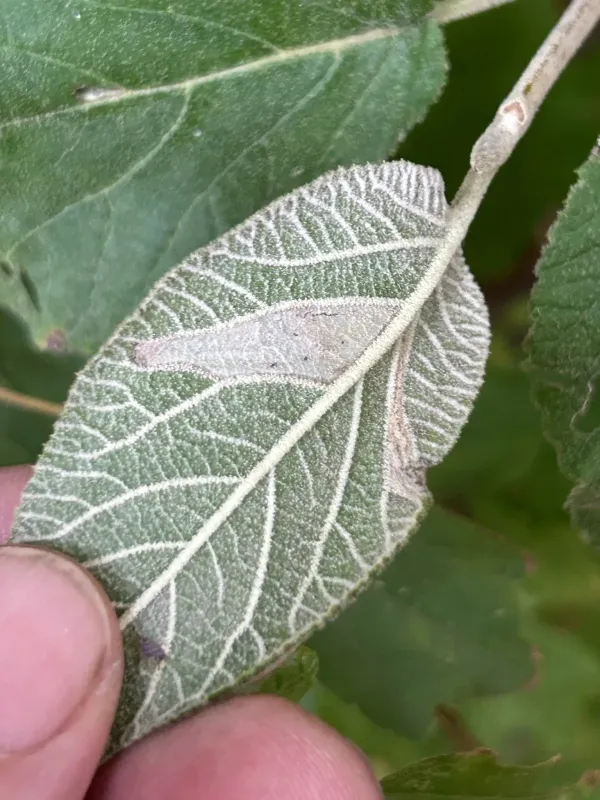
The earliest sign of infestation is the appearance of small, pale, or whitish spots on the upper surface of the leaves during late spring or summer.
As the larvae continue to feed, these spots expand into folded, parchment-like mines that distort the natural shape of the leaf blade.
Look for small, dark specks of frass (larval waste) inside the mines, which are often visible when holding the leaf against the light.
In high-density situations, the leaves may curl tightly or show crinkling, leading to a general unkempt appearance of the shrub’s foliage canopy.
During the late season, checking the leaf litter beneath the bushes can reveal empty pupal cases or overwintering cocoons attached to dried leaves.
Control measures
Sanitation is a primary control method; raking and burning or bagging leaf litter in the fall removes the overwintering generation and reduces future populations.
Systemic insecticides are the most effective chemical approach, as they are absorbed by the plant and kill larvae feeding inside the leaf tissues.
Applications should be timed to coincide with the emergence of adult moths and egg-laying cycles, usually monitored using pheromone or sticky traps.
Encouraging beneficial insects, such as parasitic wasps that naturally predate on mining larvae, can provide long-term biological suppression.
Maintaining strong plant health through proper watering and fertilization helps the Viburnum withstand and recover from minor leaf miner attacks.
Taxonomy
- Latin name
- Lithocolletis lantanella
- Order
- Lepidoptera (butterflies)
- Family
- Gracillariidae
- EPPO code
- LITHLA
Discussion
No discussions yet — be the first.