
Solitary oak leafminer
Lithocolletis hamadryadella
Description
How to identify
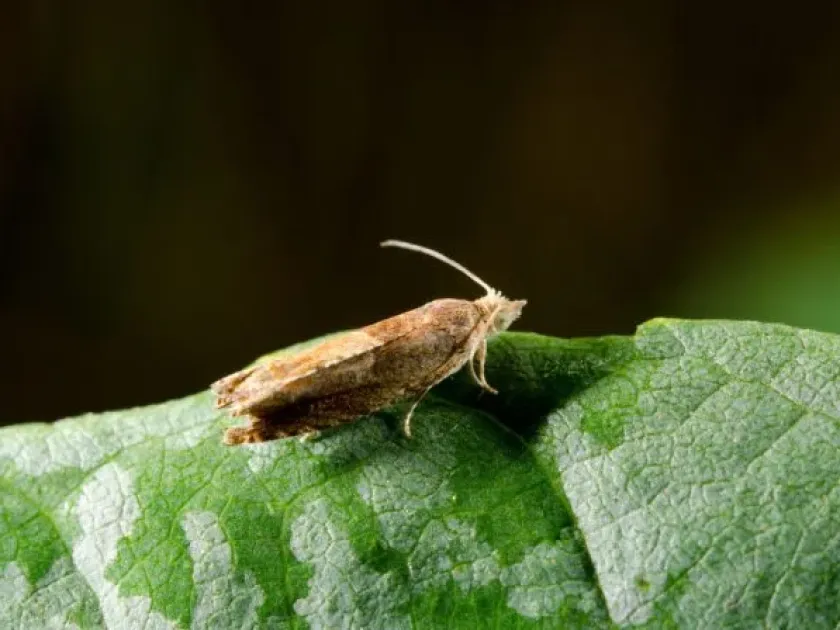
The solitary oak leafminer, scientifically known as Cameraria hamadryadella, is a tiny moth belonging to the family Gracillariidae.
Adult moths are very small, measuring about 6–8 mm in wingspan, with a distinct silver and brown striped pattern on their forewings.
The life cycle of the moth consists of egg, larval, pupal, and adult stages, with the larval stage being the most destructive to the host plant.
The larvae are specialized to feed specifically between the epidermal layers of oak leaves, creating a habitat known as a mine.
Pupation occurs inside the leaf mine within a white, silk-lined cocoon, which protects the developing insect from predators.
What it damages
The primary hosts for this species are various oak trees, including white oak and red oak, which serve as both food and shelter.
Damage is characterized by the consumption of the leaf's internal tissue (parenchyma), which disrupts the tree's ability to perform photosynthesis.
Heavy infestations can lead to premature leaf drop, which significantly depletes the tree's energy reserves throughout the growing season.
Stressed trees are much more susceptible to secondary attacks from wood-boring insects, fungi, and environmental stressors.
While an individual tree can survive minor infestations, repeated yearly damage leads to reduced overall vitality and slowed branch growth.
When it appears
Adult moths emerge in early spring, coinciding with the timing of oak leaf development to ensure fresh leaves for the next generation.
There are typically multiple generations per year, with the highest levels of larval activity occurring during the warmest summer months.
The development time of the larvae is highly dependent on ambient temperature, shortening significantly in hot weather conditions.
The final generation of the season enters a state of diapause as pupae, overwintering safely within the leaf litter beneath the host tree.
Warm, dry springs often result in higher survival rates for early-season larvae, potentially leading to widespread damage later in the year.
Signs of infestation
The most visible sign of infestation is the presence of distinctive white or brown blotch-like mines on the surface of the leaves.
When held up to sunlight, the internal structure of the mine is clearly visible, often revealing the larva or the dark frass (excrement) it leaves behind.
Affected leaves may show discoloration or patches that resemble mosaic patterns due to the merging of multiple individual mines.
In severe cases, the entire canopy of an oak tree may turn brown or appear scorched prematurely, signaling a significant pest load.
Early-stage infestations are subtle, often manifesting as small, pale circular spots before expanding into larger, irregularly shaped mines.
Control measures
Sanitation is a critical control method; raking and removing fallen leaves in autumn destroys the overwintering pupae and reduces the next year's population.
For high-value ornamental trees, systemic insecticides applied as soil drenches or trunk injections can provide effective control without foliage spraying.
Biological control methods include encouraging natural predators, such as parasitic wasps that naturally regulate leafminer populations.
Pheromone traps can be used for monitoring adult moth populations, helping to time insecticide applications for when they are most vulnerable.
- Remove and dispose of leaf litter beneath infested trees in late fall.
- Maintain tree vigor through proper watering and fertilization to improve resistance.
- Apply registered contact insecticides if population density reaches economic threshold levels.
Taxonomy
- Latin name
- Lithocolletis hamadryadella
- Order
- Lepidoptera (butterflies)
- Family
- Gracillariidae
- EPPO code
- LITHHA
Discussion
No discussions yet — be the first.