
Gaultheria leaf miner
Lithocolletis gaultheriella
Description
How to identify
The Gaultheria leaf miner, known scientifically as Lithocolletis gaultheriella (sometimes classified as Cameraria gaultheriella), is a small moth belonging to the family Gracillariidae.
Adult moths are tiny with a wingspan of approximately 8–10 mm. Their forewings feature complex, metallic-patterned scales that provide excellent camouflage on host leaves.
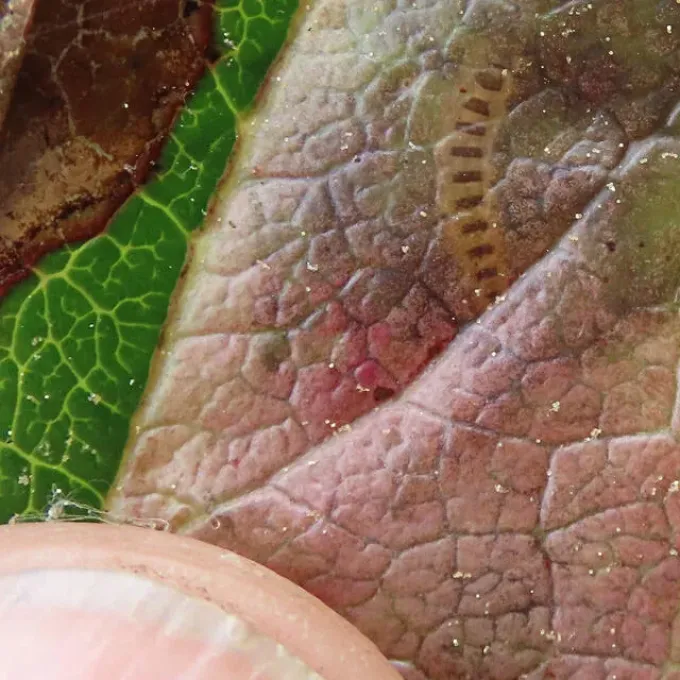
The larvae are specialized leaf-miners, possessing flattened bodies designed to thrive in the confined space between the upper and lower leaf surfaces.
Because they spend their developmental stages inside the leaf, they are rarely seen by gardeners unless specifically looking for signs of their activity.
Correct identification often relies on the shape of the mine (the tunnel left by the larvae) and the specific host plant, as this species is host-specific.
What it damages
The primary host for this pest is the wintergreen plant, Gaultheria procumbens, a highly valued evergreen groundcover in gardens and landscapes.
The larvae consume the inner parenchyma tissue of the leaves, leaving the outer epidermal layers intact, which creates visible blotches or serpentine patterns.
Severe infestations can lead to the loss of photosynthetic capacity, causing the plant to weaken and lose its characteristic dark green luster.
When multiple mines occur on a single leaf, the tissue dries out and crumbles, significantly diminishing the aesthetic value of the groundcover.
Continuous damage over successive seasons can result in plant decline and dieback, especially in areas where wintergreen is used for mass planting.
When it appears
The life cycle of the Gaultheria leaf miner is closely synchronized with the growth of its host plant throughout the spring, summer, and early autumn.
Adults emerge in early spring, mate, and lay eggs on the leaves, starting the first generation of larvae for the season.
Multiple generations can occur within a single growing season, meaning that population density can build up rapidly if conditions remain favorable.
The most active period for larval mining is during the height of summer, as temperatures promote faster metabolic rates and rapid development of the moth.
The moth survives the winter in the pupal stage, usually hidden within the fallen, mined leaves, making sanitation a critical component of pest control.
Signs of infestation
Early infestation signs include the appearance of light-colored, translucent spots or winding tunnels visible on the upper surface of the leaves.
Dark granular deposits, which are the larva's waste (frass), can often be seen inside the mines when viewed against a bright light source.
- Light-colored blotches or mines on the leaves.
- Leaf curling or browning starting from the infested areas.
- Premature yellowing and leaf fall during the growing season.
Damaged leaves often appear papery and thin because the inner tissue has been completely removed by the feeding activity of the larvae.
Observing small, fluttering moths around wintergreen beds during dusk can be an early warning sign of a potential outbreak.
Control measures
Sanitation is the most effective preventative measure; rake and destroy all fallen leaves during autumn to eliminate the overwintering pupae.
Regular monitoring of the foliage allows for the manual removal of individual infested leaves before the larvae emerge to pupate or reach adulthood.
Systemic insecticides, applied when active mining is detected, are effective because the chemical moves into the leaf tissue where the larvae feed.
Biological controls, such as beneficial nematodes or parasitic wasps, can help manage populations in an integrated pest management (IPM) program.
Maintaining the overall health of the wintergreen patch with appropriate irrigation and soil nutrition helps the plants withstand pest stress more effectively.
Taxonomy
- Latin name
- Lithocolletis gaultheriella
- Order
- Lepidoptera (butterflies)
- Family
- Gracillariidae
- EPPO code
- LITHGA
Discussion
No discussions yet — be the first.