
Oak leafminer
Lithocolletis cincinnatiella
Description
How to identify
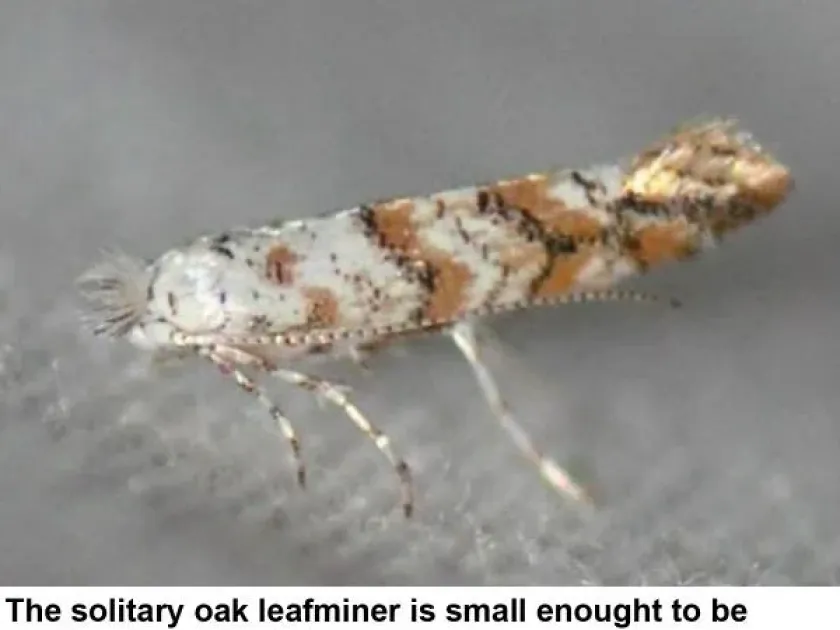
The oak leafminer (Cameraria cincinnatiella, formerly Lithocolletis cincinnatiella) is a small moth belonging to the family Gracillariidae. The adult moth has a wingspan of approximately 6–8 mm, with forewings featuring a golden-brown pattern marked by white bands.
The larvae of this pest are specialized leaf-miners. They live inside the leaf tissue, consuming the parenchyma and forming characteristic blotch mines. As they grow, larvae undergo several stages of development before pupating within the mine.
Systematically, this insect is classified under the order Lepidoptera, family Gracillariidae. It specifically targets various oak species (Quercus), often causing significant aesthetic and physiological damage to forest stands and urban trees.
The lifecycle of the oak leafminer is closely synchronized with the phenology of the host oak trees. Depending on the local climate, the insect can produce two to four generations per growing season, which facilitates rapid population explosions.
These moths typically overwinter in the pupal or adult stage within the leaf litter beneath host trees. Therefore, fallen leaves serve as the primary reservoir for the initial spring infestation in the surrounding environment.
What it damages
The oak leafminer primarily attacks various species of the genus Quercus, including common oak and red oak. Infestations typically begin in the lower parts of the canopy and gradually progress upwards as the season advances.
By consuming the photosynthetic tissue inside the leaves, larvae destroy the tree’s ability to produce energy. A single leaf can host multiple mines, which significantly reduces the leaf surface area available for gas exchange and photosynthesis.
Heavy infestation often leads to premature leaf drop, sometimes occurring as early as mid-summer. This early senescence weakens the tree, reduces its carbohydrate reserves, and makes it more susceptible to drought and winter injury.
This pest is particularly damaging to young nursery stock, municipal park trees, and ornamental landscapes. Repeated annual attacks can lead to severe loss of vigor, eventually threatening the long-term survival of the host trees.
Furthermore, the physical damage caused by the leafminer creates entry points for secondary pathogens, such as fungi causing leaf spots or branch dieback, leading to a synergistic decline in the tree's health.
Signs of infestation
The most obvious symptom of an oak leafminer infestation is the appearance of distinct blotch mines on the foliage. These are irregular patches that turn brown or yellow and often appear slightly inflated as the larvae grow.
When examined from the underside of the leaf, the mines appear as lighter, raised areas. Unlike some other leaf-mining species, this moth often forms gregarious mines where multiple larvae feed together inside the same cavity.
On the underside of the affected leaf surface, one can often find small dark granules; these are the larval frass, which accumulate inside the mine during the feeding process.
- Yellowing and premature curling of leaf margins during the summer.
- Abundant brown patches (mines) covering the surface of the leaves.
- Early leaf drop occurring well before the natural autumn season.
- Visibility of tiny moths resting on leaves during evening inspections.
A significant reduction in green foliage during the summer months is a critical indicator of a high infestation level. The presence of leaf litter under trees long before autumn should alert agronomists to take immediate action.
Control measures
The most effective cultural control method is the thorough collection and destruction of fallen leaves in autumn. By removing the litter, you eliminate the overwintering population, drastically reducing the moth density for the next year.
Biological control strategies include the use of pheromone traps to disrupt mating and monitor population levels. Encouraging the presence of natural enemies, such as parasitic wasps (parasitoids), can also help keep populations in check.
Chemical control may be necessary in nurseries or high-value landscape settings. Systemic insecticides are the most effective choice, as they are absorbed by the leaf tissue and kill the larvae residing within the mines.
Applications should be timed to coincide with the peak of adult moth flight or the initial egg-hatching phase. Always consult local regulations regarding the use of pesticides in public parks and residential areas.
Promoting a healthy environment with high biodiversity remains the best long-term protection. Well-watered and healthy oak trees have a better capacity to withstand minor infestations without the need for intensive chemical interventions.
Taxonomy
- Latin name
- Lithocolletis cincinnatiella
- Order
- Lepidoptera (butterflies)
- Family
- Gracillariidae
- EPPO code
- LITHCI
Discussion
No discussions yet — be the first.