
Spotted tentiform leafminer
Lithocolletis
Description
How to identify
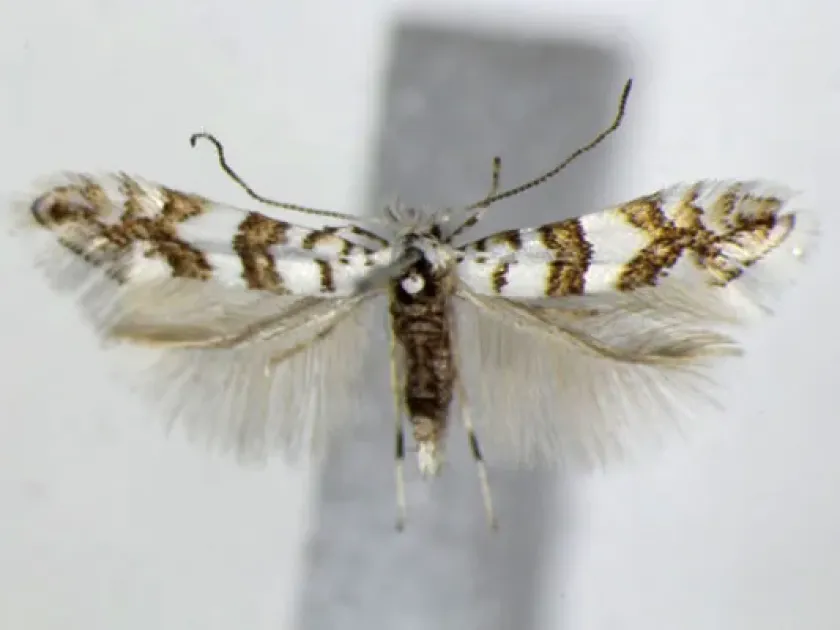
The spotted tentiform leafminer belongs to the Gracillariidae family. Adult moths have a wingspan of about 8–10 mm and feature distinct patterns on their forewings, making them hard to spot on bark.
Larvae undergo significant morphological changes throughout their development. Early instars are flat and sap-feeding, designed for living within the leaf lamina, while later instars become tissue-feeders.
The pupal stage occurs inside the leaf mines. The larva creates a silken lining, or tent, which pulls the leaf surface into a fold, creating the characteristic shape that gives the pest its name.
Life cycles are highly dependent on ambient temperature. In warmer climates, this species can produce multiple generations per year, leading to overlapping life stages and constant pressure on trees.
The species is widespread and highly successful at adapting to different horticultural environments, often becoming a significant pest when natural biological control agents are disrupted.
What it damages
Primary hosts include apple, pear, and other Rosaceae species. The leafminer thrives by consuming the photosynthetic tissue of the leaves, which directly impacts the plant's overall energy production.
Mining activity destroys the mesophyll layers, which reduces the leaf's ability to undergo photosynthesis. This leads to early leaf yellowing and eventual premature leaf drop in heavily infested orchards.
The reduction in green leaf area impairs the tree's ability to store carbohydrates for the winter. This significantly lowers the tree's resistance to cold temperatures and future pest or disease pressure.
Economic damage is twofold: reduced yield in the current season and compromised tree health for the following year. Poor fruit quality is often a direct consequence of severe defoliation.
Heavy infestation levels can lead to significant canopy loss by mid-summer, which exposes the fruit to sunscald and reduces its commercial market value.
Signs of infestation
The most recognizable symptom is the presence of pale, tent-like mines on the lower leaf surface. These appear as white or yellowish patches that gradually turn brownish as they age.
The upper surface of the affected leaf may show wrinkled or bumpy patches due to the damage inflicted on the internal tissues. This is often the first thing a grower notices during scouting.
Frass (larval waste) is concentrated within the mine and is visible as dark specks. This is a reliable diagnostic feature to differentiate between leafminer damage and other leaf-spotting diseases.
Premature leaf drop is a strong indicator of an advanced infestation. If trees begin losing leaves prematurely in late summer, it is essential to check for high densities of leafminer mines.
Observing the flight of small moths near the canopy at twilight provides early warning. Timely detection of adult activity is crucial for scheduling effective intervention strategies.
Control measures
Cultural control includes the sanitation of the orchard floor. Raking and removing fallen leaves during autumn eliminates the primary overwintering sites for the pupae, reducing the spring population.
Biological control plays a vital role in natural suppression. Maintaining habitat for parasitic wasps, which prey on leafminer larvae, is a cornerstone of sustainable orchard management.
Chemical intervention should be timed to coincide with the larval hatch period. Systemic insecticides are preferred as they penetrate the leaf tissue, ensuring contact before the larva completes its mine.
- Removing and composting fallen leaves in autumn.
- Using pheromone traps for monitoring moth population levels.
- Targeted insecticide applications during larval emergence.
- Conservation of native parasitic wasps and predatory insects.
Resistance management is critical. It is recommended to rotate different classes of insecticides to prevent the development of resistant strains within the orchard population.
Taxonomy
- Latin name
- Lithocolletis
- Order
- Lepidoptera (butterflies)
- Family
- Gracillariidae
- EPPO code
- LITHSP
Discussion
No discussions yet — be the first.