
American serpentine leafminer
Liriomyza trifolii
Description
How to identify
The American serpentine leafminer (Liriomyza trifolii) belongs to the Diptera order and the Agromyzidae family. Adult flies are small, roughly 2 mm long, with a distinct yellow head and thorax.
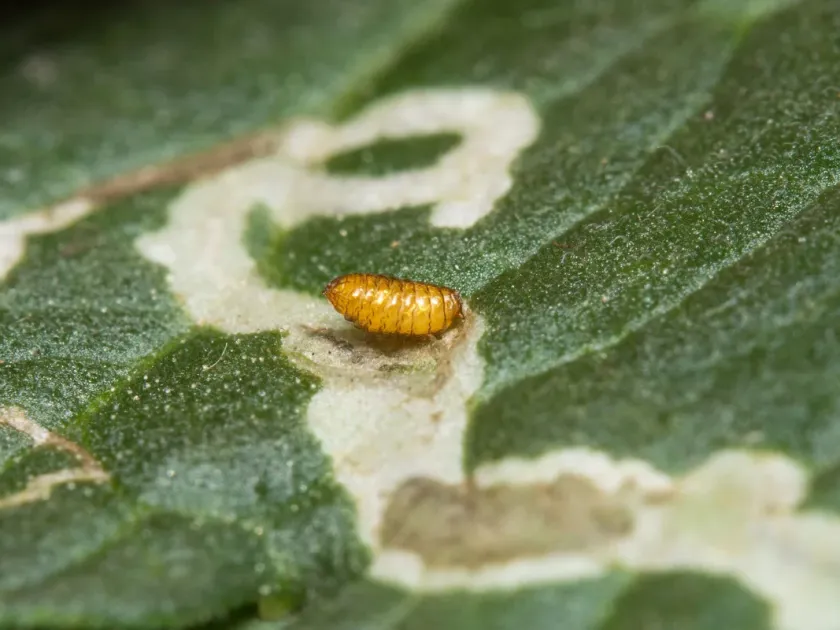
The larvae are legless, yellowish-white maggots that live entirely within the leaf tissue, creating serpentine tunnels known as mines. This stage is hidden from view and protected from many external factors.
The life cycle is rapid, typically completing in just 2 to 3 weeks under optimal greenhouse temperatures. This high reproductive rate allows the pest to produce multiple overlapping generations annually.
Female flies create puncture wounds on leaves using their ovipositors to feed on plant sap and to lay eggs. A single female can deposit hundreds of eggs throughout her lifespan.
As a highly adaptable species, it is a significant quarantine pest worldwide, frequently introduced into new regions through the movement of infested ornamental plants and vegetable transplants.
What it damages
This pest is highly polyphagous, attacking more than 400 plant species. It is a major economic threat to crops such as tomatoes, peppers, cucumbers, and various ornamental species.
In ornamental horticulture, Liriomyza trifolii often affects chrysanthemums, gerberas, and gypsophila, causing cosmetic damage that renders the products unmarketable.
Larvae consume the leaf mesophyll, creating extensive tunnels. This feeding activity disrupts photosynthesis and leads to rapid leaf chlorosis and premature defoliation of the crop.
Severe infestations weaken the plant, resulting in reduced fruit size, delayed development, and significant yield losses in both greenhouse and field environments.
Furthermore, the physical punctures and mines serve as entry points for bacterial and fungal pathogens, which may cause secondary infections and complete plant tissue decay.
Signs of infestation
The most diagnostic symptom is the presence of winding, serpentine white mines on the leaves, which increase in size as the larva matures and feeds.
Small, white stippling marks on the upper surface of leaves indicate feeding punctures made by adult female flies, which often occur before mining begins.
Within the mines, you can see intermittent black or dark brown specks, which are the excrement (frass) deposited by the larvae as they progress through the leaf tissue.
In cases of heavy infestation, multiple mines can coalesce, covering the entire surface of the leaf, causing it to wither, turn brown, and eventually fall off the plant.
Monitoring for adult presence using yellow sticky cards is the primary way to detect an infestation early, often revealing the presence of flies before larval damage becomes visible.
Control measures
Integrated Pest Management (IPM) strategies include the use of yellow sticky traps to capture adults and monitor population density throughout the growing season.
Sanitation is crucial; removing and destroying infested plant debris prevents the next generation from emerging and further infesting the crop.
Biological control agents, specifically hymenopteran parasitoids like Diglyphus isaea, are effective in suppressing larval populations by hunting them within the mines.
Chemical control must be carefully managed, as these pests develop resistance to many insecticides. Using selective products and rotating active ingredients is essential to maintain efficacy.
Strict quarantine protocols for imported plant material and regular greenhouse disinfection cycles are necessary to prevent the establishment and spread of this destructive pest.
Taxonomy
- Latin name
- Liriomyza trifolii
- Order
- Diptera (flies)
- Family
- Agromyzidae
- EPPO code
- LIRITR
Discussion
No discussions yet — be the first.