
American serpentine leafminer
Liriomyza trifoliearum
Description
How to identify
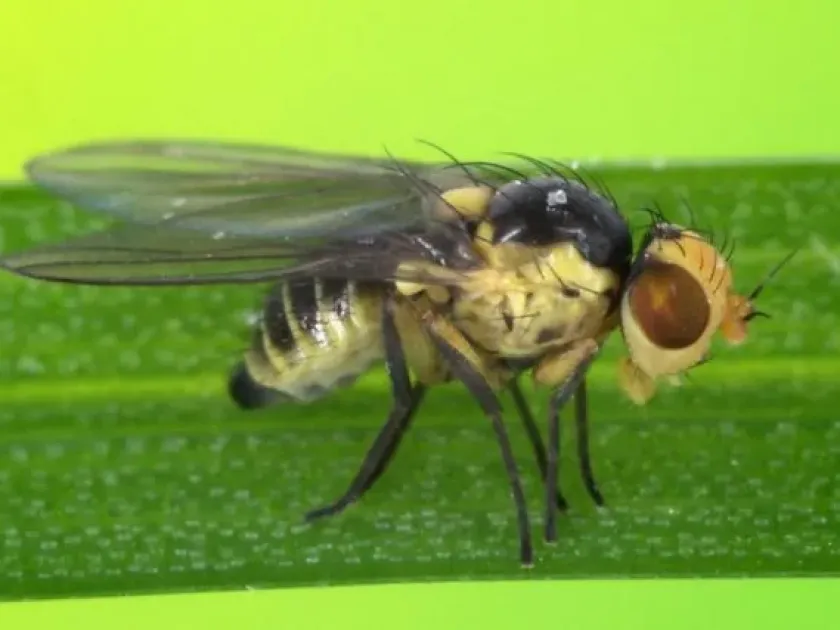
The American serpentine leafminer is a significant pest belonging to the Agromyzidae family. Adult flies are very small, measuring approximately 2 millimeters in length.
They are characterized by a dark grey or black body with distinctive yellow markings on the head and thorax, making them difficult to spot without close inspection.
The life cycle encompasses four stages: egg, larva, pupa, and adult. In warm greenhouse environments, the entire life cycle can be completed in less than three weeks.
Females insert eggs into the leaf epidermis. Upon hatching, the larvae immediately begin feeding within the leaf tissue, which protects them from many external factors.
The pupal stage typically occurs either in the soil or on the surface of the leaf, enclosed in a small, oval, golden-brown puparium.
What it damages
This species is highly polyphagous, known to infest more than 400 different plant species. It poses a severe threat to commercial vegetable and ornamental production.
Key host plants include tomatoes, cucumbers, peppers, celery, beans, and various flowering plants such as chrysanthemums and gerberas.
Damage is twofold: adult females cause mechanical injury via feeding punctures, while larvae destroy the internal tissues of the leaves by creating serpentine tunnels.
Extensive mining activity severely reduces the photosynthetic capacity of the plant, leading to stunted growth and reduced yields in fruit-bearing crops.
In ornamental plants, the aesthetic damage is significant, rendering flowers or foliage unsellable due to the visible white tunnels and necrotic leaf tissue.
Signs of infestation
The earliest symptom is the appearance of tiny white speckles on the upper surface of the leaves, resulting from female feeding and oviposition activities.
These spots soon develop into white, winding, thread-like mines that snake across the leaf surface, clearly revealing the movement path of the larva inside.
One diagnostic feature is the presence of dark, moist frass deposits arranged in alternating rows along the sides of the leaf mine.
As the infestation progresses, individual mines often intersect, eventually causing large portions of the leaf to turn necrotic and dry out completely.
Severely infested plants display widespread leaf yellowing and curling, followed by premature leaf drop, which weakens the plant's overall vitality.
Control measures
Monitoring using yellow sticky traps is essential to detect adult activity early, providing a window to apply control measures before larvae establish deep tunnels.
Cultural control practices involve maintaining weed-free zones around greenhouses, as many common weeds serve as reservoir hosts for the leafminer fly.
Biological control through the release of parasitoid wasps, such as Diglyphus isaea, is highly effective, as these wasps hunt larvae hidden inside the leaf tissue.
Chemical intervention should be used strategically with integrated pest management (IPM) to prevent the development of pesticide resistance in the population.
- Use of biological control agents
- Regular sanitation and disposal of infested debris
- Proper monitoring with sticky traps
- Strategic rotation of insecticide classes
Taxonomy
- Latin name
- Liriomyza trifoliearum
- Order
- Diptera (flies)
- Family
- Agromyzidae
- EPPO code
- LIRITI
Discussion
No discussions yet — be the first.