
Liriomyza sorosis
Liriomyza sorosis
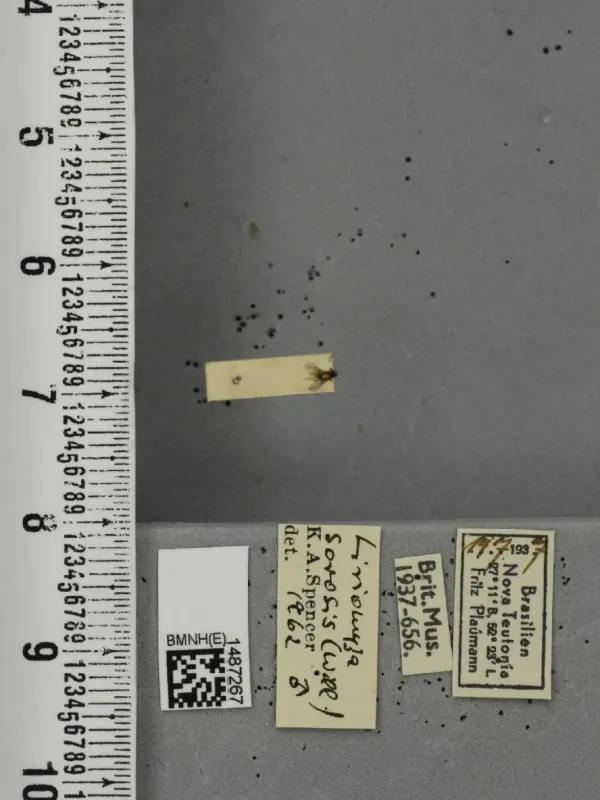
Description
How to identify
Liriomyza sorosis is a species of leafminer fly belonging to the family Agromyzidae within the order Diptera. Adult flies are small insects, typically measuring between 1.5 and 2 mm in length with a characteristic yellow and black coloration.
Identifying the pest in the field can be difficult due to its small size and the fact that most of its life cycle occurs hidden inside plant tissues. The larvae are the primary stage responsible for causing visible damage.
The life cycle encompasses several stages: egg, three larval instars, prepupa, pupa, and adult. Females use their ovipositor to pierce the leaf epidermis, creating puncture wounds used for both feeding and egg-laying.
Developmental speed is highly dependent on environmental factors, particularly temperature and humidity. Under optimal conditions, the transition from egg to adult can occur very rapidly, facilitating several overlapping generations per season.
This species is well-adapted to surviving on various host plants, which contributes to its status as a persistent and widespread agricultural pest in many regions.
What it damages
Liriomyza sorosis is a polyphagous insect that attacks a broad range of plant families, including Asteraceae, Solanaceae, and Fabaceae. It is a significant threat to both greenhouse and field-grown crops.
The damage is primarily caused by larvae that feed within the leaf parenchyma, creating characteristic winding mines (tunnels). These tunnels disrupt the plant's photosynthetic efficiency and cause premature leaf senescence.
In addition to larval feeding, the punctures created by adult females can facilitate the entry of secondary pathogens, including bacteria and fungi, which may lead to further deterioration of plant health.
Young plants are especially susceptible. Severe infestations can result in significant growth stunting, reduced fruit set, and overall poor plant vigor, leading to substantial economic losses for producers.
Heavy mining activity may lead to the total collapse of the leaf surface, which severely limits the plant's ability to produce necessary nutrients for yield development.
Signs of infestation
The most distinctive symptom of Liriomyza sorosis infestation is the presence of winding, light-colored trails or lines on the leaves, which become increasingly apparent as the larvae grow larger.
Upon close inspection, growers may notice numerous tiny white dots on the leaf surface. These are the feeding and oviposition punctures left by adult females, often appearing before the actual mines form.
As the infestation progresses, leaves may begin to yellow, wilt, or curl. In severe cases, the affected leaf tissue dies off, leading to a scorched appearance of the plant canopy.
Inspecting the mines against light often reveals the presence of larvae or granular black frass inside the tunnels, providing confirmation of active infestation by the leafminer.
Infestations typically start on the lower leaves of the plant, where the microclimate is often cooler and more humid, providing ideal conditions for egg development.
Control measures
Management strategies often involve the use of yellow sticky traps, which are highly effective at monitoring adult populations and reducing the number of flies in greenhouse environments.
Good agricultural practices, such as rigorous weed control, are essential. Removing wild host plants around the field reduces the reservoirs where the pest can overwinter or survive between crops.
Chemical control must be timed to target the larvae. The use of systemic insecticides that can penetrate the leaf tissue is often required to effectively reach the larvae inside their mines.
Biological control programs utilizing parasitoid wasps (hymenopteran endoparasitoids) have shown promise in maintaining pest populations below economic thresholds without heavy chemical use.
- Prompt removal and destruction of heavily infested foliage to stop the cycle.
- Implementing crop rotation to break the pest life cycle in the soil.
- Strict sanitation protocols for equipment to prevent the spread of pupae.
Taxonomy
- Latin name
- Liriomyza sorosis
- Order
- Diptera (flies)
- Family
- Agromyzidae
- EPPO code
- LIRISR
Discussion
No discussions yet — be the first.