
Leaf miner fly
Liriomyza pusilla
Description
How to identify
The leaf miner fly (Liriomyza pusilla) belongs to the order Diptera and the family Agromyzidae. These are tiny insects, typically measuring 2–3 mm in length, with a distinct yellowish-black body coloration.
Adult flies feed on plant sap by piercing leaf surfaces with their ovipositors. They lay eggs inside the leaf tissue, making the infestation difficult to detect in its early stages.
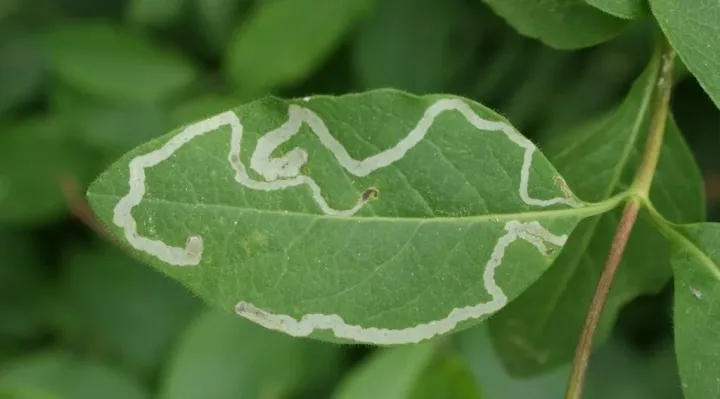
The larvae are small, legless, and white or yellowish. They spend their entire developmental period feeding on the mesophyll tissue within the leaves, creating distinct tunnels.
The life cycle encompasses four stages: egg, three larval instars, puparium, and adult. In warm, favorable environments, the entire cycle can be completed in just a few weeks.
Pupation frequently occurs in the soil or on plant debris, allowing the pest to overwinter successfully in greenhouses or protected growing structures.
What it damages
This pest is a notorious polyphage, causing significant damage to various crops, including tomatoes, cucumbers, peppers, lettuce, and numerous ornamental flowering plants.
The primary damage is caused by the larvae, which create extensive winding tunnels, commonly known as mines, that disrupt the plant's ability to photosynthesize.
Affected leaves often develop chlorosis, wither prematurely, and eventually drop off, which significantly reduces the plant's vigor and overall fruit yield.
The feeding punctures made by adult flies serve as entry points for secondary pathogens, leading to bacterial and fungal infections that further damage the plant.
For ornamental crops, the presence of these mines results in severe aesthetic damage, rendering the product unsalable in commercial markets.
When it appears
In outdoor environments, the leaf miner fly becomes active in late spring as temperatures rise, typically starting around 15–18°C.
Under greenhouse conditions, reproduction can continue year-round, resulting in multiple, overlapping generations if not properly managed by the grower.
Peak population growth and infestation levels are typically observed during hot and dry summer months, which accelerate the larval development cycle.
Depending on the region, several generations can occur per season; in highly controlled indoor environments, up to 10 generations per year are possible.
Early season scouting is critical, as young plants are particularly susceptible to damage and can be stunted if the infestation is not addressed immediately.
Signs of infestation
The most recognizable symptom of a leaf miner infestation is the appearance of pale, winding, thread-like lines on the upper and lower surfaces of leaves.
Small, whitish pin-prick spots are also common, representing the sites where adult flies have fed or deposited eggs into the plant tissue.
- Clear, serpentine mines visible across the leaf surface.
- Yellowing and necrotic patches surrounding the larval tunnels.
- Stunted plant growth and reduced fruit quality or production.
- Premature abscission (dropping) of leaves starting from the bottom of the plant.
- Increased risk of secondary infections entering through puncture sites.
Dark fecal deposits left by the larvae within the mines are a definitive indicator of an active leaf miner infestation rather than a nutrient deficiency.
Control measures
Effective management requires an integrated pest management (IPM) approach that combines cultural, biological, and chemical interventions.
Strict sanitation practices, such as removing and destroying infested plant material and weeds, are essential to break the pest's life cycle.
Yellow sticky traps are highly effective for monitoring adult populations and providing early warning signs of a burgeoning infestation.
Biological control agents, particularly parasitoid wasps like Diglyphus isaea, can be released to naturally regulate larval populations without chemical intervention.
If chemical control is necessary, use systemic insecticides and ensure that you rotate products with different modes of action to prevent the development of resistance.
Taxonomy
- Latin name
- Liriomyza pusilla
- Order
- Diptera (flies)
- Family
- Agromyzidae
- EPPO code
- LIRIPU
Discussion
No discussions yet — be the first.