
Onion leaf miner
Liriomyza nietzkei
Description
How to identify
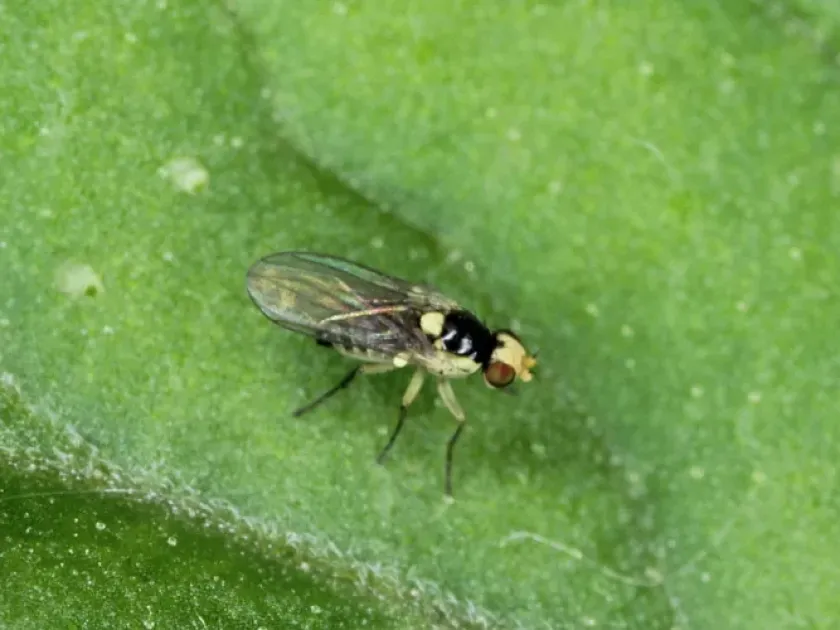
The onion leaf miner (Liriomyza nietzkei) belongs to the Agromyzidae family of dipterous insects. The adult stage is a small fly with a grayish-black body and distinct yellow markings on its thorax.
The larval stage is characterized by a legless, creamy-white maggot that lives internally within the leaf tissues, making it difficult to detect with standard contact pesticides.
The life cycle involves four distinct stages: egg, larva, pupa, and adult. Multiple generations can occur within a single growing season depending on the climate and local temperatures.
Pupation typically takes place in the soil or within old plant debris, which represents the primary overwintering stage of the pest.
Adult flies are active during the warmer months, feeding on plant sap and laying eggs inside the epidermis of the onion foliage to begin the cycle again.
What it damages
The primary hosts of Liriomyza nietzkei are plants within the Amaryllidaceae family, specifically focusing on onions, leeks, and chives.
Larvae consume the interior green tissue (mesophyll) of the leaves, creating winding, serpentine tracks that are visible as tunnels beneath the leaf cuticle.
This feeding activity significantly reduces the photosynthetic efficiency of the onion plant, which negatively impacts the growth of the bulb.
In cases of severe infestation, the leaves may collapse, turn yellow, and die prematurely, drastically reducing the overall yield and marketability of the crop.
The damage caused by mining also serves as an entry point for secondary bacterial and fungal pathogens, potentially leading to rot in the field or during storage.
Signs of infestation
The hallmark sign of infestation is the presence of white, winding tunnels (mines) that appear on the surface of the green onion leaves.
At the beginning of the infection, these tracks are very thin, but they increase in size and width as the larva matures and continues its feeding process.
Close inspection of the mines often reveals small black dots, which are the fecal droppings of the larvae left behind during their progression through the leaf.
Yellowing, drooping, and shriveling of the leaf tips are symptomatic of a significant pest load that has damaged the internal structure of the foliage.
- White serpentine tunnels on leaf blades.
- Yellowing and drying of leaves starting from the tips.
- Small black excrement spots inside the mines.
- Reduced plant vigor and stunted growth.
Control measures
Cultural control practices, such as strict crop rotation, are essential to break the life cycle of the leaf miner and prevent population buildup.
Deep plowing after the harvest is highly recommended, as it buries pupae deep into the soil and prevents the emergence of the next generation of adults.
Monitoring with yellow sticky cards allows farmers to track the flight patterns of adult flies and time their intervention programs more effectively.
Sanitation is critical; removing and destroying crop residues helps eliminate the primary source of overwintering pupae from the field environment.
When necessary, systemic insecticides should be applied upon the first sighting of mines to target larvae before they cause extensive damage to the leaf tissue.
Taxonomy
- Latin name
- Liriomyza nietzkei
- Order
- Diptera (flies)
- Family
- Agromyzidae
- EPPO code
- LIRINI
Discussion
No discussions yet — be the first.