
Cereal leaf miner
Liriomyza flaveola
Description
How to identify
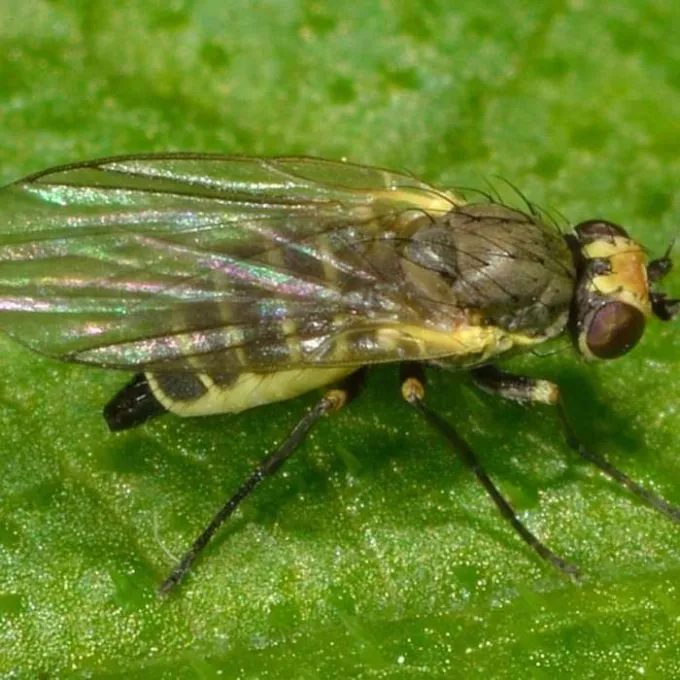
The cereal leaf miner (scientific name Liriomyza flaveola) is a species of fly belonging to the family Agromyzidae. These tiny insects are characterized by their small size, usually reaching 2–3 mm in length.
The larval stage is the most destructive phase of the lifecycle. The larvae are legless and yellowish-white, specifically adapted to live and feed within the leaf tissues.
The life cycle encompasses four main stages: egg, larva, pupa, and adult. Depending on environmental factors, multiple generations can occur throughout the growing season.
The insect typically overwinters in the pupal stage, often remaining within the soil or in crop residues, which allows it to emerge effectively when conditions improve.
Adult flies are generally active during the warmer parts of the day and rely on favorable weather to locate host plants for oviposition on leaf surfaces.
What it damages
The pest primarily targets cereal crops, including wheat, barley, oats, and rye. It can also infest various species of wild grasses found in and around fields.
Damage is caused by larvae mining through the leaf parenchyma. This mining activity disrupts the photosynthetic capacity of the plant and reduces overall vigor.
As larvae consume the interior tissue, they create visible tunnels, which significantly reduce the amount of green leaf area available for energy production.
Severe infestations can lead to substantial yield losses, especially if the damage occurs during critical growth stages like tillering or stem elongation.
The physical destruction of the leaf tissue may also create entry points for secondary pathogens, such as fungi or bacteria, further stressing the plant health.
Signs of infestation
The most diagnostic sign of an infestation is the presence of characteristic winding, light-colored tunnels, or "mines," etched into the leaf blades.
As the larva matures and grows, these mines typically become wider, reflecting the increased appetite of the developing insect within the leaf tissue.
Affected leaves may show signs of yellowing (chlorosis) and may eventually wither or turn brown, particularly if the mining is extensive across the blade.
- Presence of distinctive serpentine white lines on leaf surfaces.
- Yellowing or premature senescence of infested leaves.
- General stunting of the plant in cases of heavy larval pressure.
- Visible larvae or their puparia within the mined leaf sections.
In the field, these symptoms are often easier to identify when looking at the upper leaves of young cereal plants during the late spring period.
Control measures
Effective management begins with integrated pest management (IPM) practices, such as proper crop rotation to minimize the build-up of local pest populations.
Deep plowing in the autumn is a recommended cultural practice to bury overwintering pupae, thereby preventing them from emerging the following spring.
Maintaining clean fields by eliminating host weeds, particularly grassy species, reduces the alternative food sources that support the pest during the season.
Chemical control involving systemic insecticides is often necessary if the pest population exceeds the economic threshold, as these chemicals can penetrate leaf tissues.
Scouting programs are essential to determine the timing of insecticide applications, ensuring they are used only when larvae are present and active within the leaves.
Taxonomy
- Latin name
- Liriomyza flaveola
- Order
- Diptera (flies)
- Family
- Agromyzidae
- EPPO code
- LIRIFL
Discussion
No discussions yet — be the first.