
Chickpea leaf miner
Liriomyza cicerina
Description
How to identify
The chickpea leaf miner (Liriomyza cicerina) is a significant dipteran pest belonging to the Agromyzidae family. The adult fly is very small, typically measuring between 1.5 and 2 millimeters in length.
Adults are dark-colored with yellowish markings on the thorax and abdomen. The larvae are small, legless, and have a pale-yellowish appearance, developing exclusively within the internal tissues of the host plant's leaves.
As a specialized pest, it primarily targets chickpea crops. Depending on the local climatic conditions, this insect can complete several generations throughout the growing season, posing a continuous threat to the crop.
The life cycle consists of the egg, larval, pupal, and adult stages. Females insert eggs into the leaf epidermis, which causes initial mechanical damage before the larvae begin their feeding process.
The species overwinters as pupae in the soil or within dry plant debris. Understanding this overwintering habit is crucial for implementing effective soil management strategies to break the pest's cycle.
What it damages
The primary host for Liriomyza cicerina is the chickpea (Cicer arietinum). While other legumes may occasionally be infested, the chickpea crop suffers the most severe economic impact from this pest.
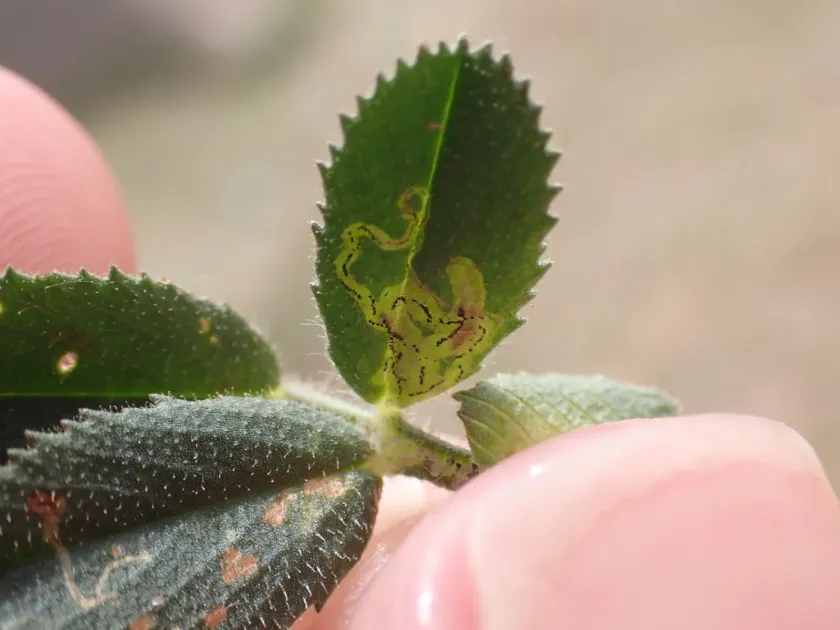
Larvae feed on the leaf parenchyma, creating winding, serpentine tunnels known as 'mines'. This feeding behavior destroys the chlorophyll-containing tissue, which is essential for the plant's photosynthetic activity.
Heavy infestations result in widespread yellowing and premature leaf drop. Early-season attacks significantly stunt plant growth and reduce the number of pods produced, directly impacting the final yield.
Adult flies contribute to the damage by feeding on leaf sap, creating numerous small puncture wounds. These punctures not only stress the plant but can also serve as entry points for bacterial and fungal pathogens.
In cases of severe infestation, yield losses can be substantial, often ranging from 20% to over 30% in high-pressure areas, especially when the pest attack coincides with dry and hot weather conditions.
When it appears
Activity usually begins in late spring or early summer as temperatures rise. The emergence of adult flies is closely linked to the warming of the soil, which triggers the development of the overwintering pupae.
High temperatures during the growth period significantly accelerate the development of the larvae. This rapid life cycle allows for multiple overlapping generations, leading to a exponential increase in pest numbers.
The most vulnerable stage for the chickpea crop is during the transition to flowering and pod set. Stress caused by leaf mining during these developmental stages is difficult for the plant to recover from.
As autumn approaches and temperatures drop, the activity of the leaf miner decreases. The larvae pupate and enter the soil to survive the winter, effectively ending the period of active damage for the season.
Field monitoring should start as soon as the first true leaves emerge. Using yellow sticky traps can help detect the presence of adult flies before larvae start causing visible damage to the leaf tissue.
Signs of infestation
The most distinctive sign of infestation is the appearance of white, serpentine tunnels (mines) on the leaf surface. These are highly visible and characteristic of the larval feeding pattern.
Close inspection of the ends of the mines often reveals the presence of the small larvae. Finding the larvae confirms active infestation, which is vital for making timely pest control decisions.
The puncture marks made by female flies look like tiny, pale dots on the leaf surface. These often appear in small groups and are evidence of adult feeding and egg-laying activity before the mines are formed.
In heavily infested fields, the foliage may look scorched or withered due to the total loss of green tissue. This significantly reduces the plant's ability to produce energy, leading to a sparse canopy.
The affected leaves eventually turn brown, dry out, and drop prematurely. This visual degradation of the canopy is a clear indicator that the pest population has reached high levels.
Control measures
Cultural control, such as crop rotation, is essential. Avoiding planting chickpea in or near fields where the crop was grown in the previous season helps in reducing initial pest pressure significantly.
Deep plowing after the harvest is an effective method to bury the pupae deep in the soil, preventing the adult flies from emerging in the spring. This simple practice can break the life cycle of the pest.
Chemical control should be employed only when economic thresholds are exceeded. Systemic insecticides that can be absorbed by the leaves are the most effective against the larvae protected inside the leaf tissues.
Weed management around the field margins is important, as wild legumes can host the pest during the off-season. Keeping these areas clean helps prevent the migration of the flies into the main crop.
- Use of systemic insecticides labeled for legume leaf miners.
- Maintaining proper field sanitation by destroying crop residues.
- Planting resistant or tolerant chickpea varieties where available.
- Regular scouting to identify the onset of infestation early in the season.
Taxonomy
- Latin name
- Liriomyza cicerina
- Order
- Diptera (flies)
- Family
- Agromyzidae
- EPPO code
- LIRICI
Discussion
No discussions yet — be the first.