
Onion leaf miner
Liriomyza chinensis
Description
How to identify
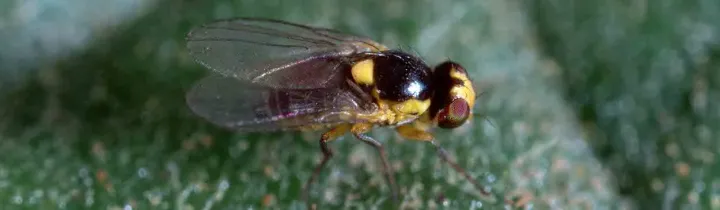
The onion leaf miner (Liriomyza chinensis) belongs to the Agromyzidae family within the order Diptera. These are tiny flies, typically measuring 2–3 mm in length, characterized by a yellow and black color pattern.
The life cycle encompasses egg, larval, pupal, and adult stages. The larval stage is the primary cause of damage as they feed within the leaf parenchyma.
Adult females use their ovipositors to puncture leaf surfaces to lay eggs, which results in visible spotting on the onion foliage.
Upon hatching, larvae construct serpentine mines within the leaf tissue, which are distinctive marks used for species identification in the field.
Pupation often occurs in the soil near the base of the plant or among plant debris, where the insect remains until environmental conditions allow for the next emergence.
What it damages
This pest specifically targets plants within the Allium genus, including bulb onion, welsh onion, leek, and garlic, causing significant stress to these crops.
Feeding by larvae disrupts the internal structure of the leaf, hindering the plant's ability to photosynthesize effectively during critical growth stages.
Stunted growth and reduced bulb size are common outcomes of a heavy infestation, directly impacting the final yield and commercial quality of the produce.
The physical damage creates entry points for secondary pathogens, such as bacteria and fungi, which can cause soft rot and foliage decay.
In severe cases, the cumulative damage leads to total yellowing and withering of the foliage, drastically reducing the overall health of the onion field.
When it appears
Activity is highly temperature-dependent, typically beginning in the spring once soil temperatures reach roughly 10–12 degrees Celsius.
The onion leaf miner is known for being multivoltine, meaning it produces multiple generations throughout a single growing season, leading to persistent pressure.
Peak damage is most frequently observed from late spring through mid-summer, matching the period of rapid vegetative growth in Allium crops.
Warmer weather conditions accelerate the insect's life cycle, potentially leading to rapid population outbreaks if not monitored correctly.
As temperatures drop in autumn, the population transitions into the pupal stage, seeking shelter in the soil or crop residues to overwinter.
Signs of infestation
The earliest sign of infestation is the appearance of small, white stipples or puncture marks on the leaves, caused by female feeding and oviposition.
The most diagnostic sign is the presence of winding, light-colored tunnels (mines) appearing under the epidermis of the leaves as larvae feed.
As the tunnels grow, the leaves begin to yellow, wilt, and eventually turn brown, often starting from the tips or the most heavily mined areas.
Examining the leaves against the light reveals the larvae or dark frass (excrement) within the tunnels, confirming an active infestation.
- White puncture marks on the foliage.
- Winding, light-colored trails inside the leaves.
- Yellowing and curling of the leaf tips.
- Premature decay of the entire aerial part of the plant.
Control measures
Crop rotation is the most essential cultural practice, ensuring that Allium crops are not planted in the same location for at least three consecutive years.
Deep plowing or tilling of the soil after harvest destroys pupae overwintering in the topsoil, effectively reducing the next season's population.
Applying physical barriers such as floating row covers (agrofleece) during the adult fly emergence period prevents females from laying eggs on the leaves.
For established infestations, systemic insecticides are required to reach the larvae protected within the leaf tissue, as contact sprays have limited efficacy.
Sanitation practices, including the removal and destruction of infested plants, are critical to prevent larvae from exiting the leaves to pupate in the soil.
Taxonomy
- Latin name
- Liriomyza chinensis
- Order
- Diptera (flies)
- Family
- Agromyzidae
- EPPO code
- LIRICS
Discussion
No discussions yet — be the first.