
Onion leaf miner
Liriomyza cepae
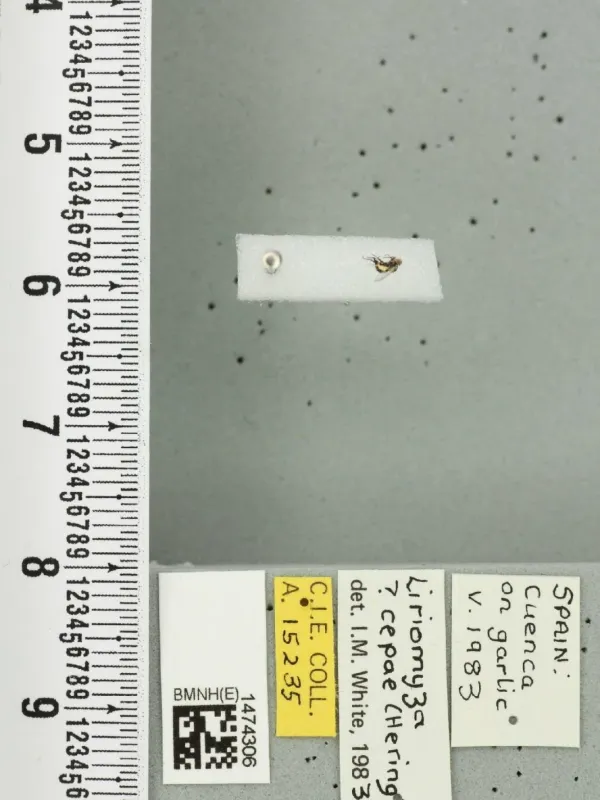
Description
How to identify
The onion leaf miner (Liriomyza cepae) is a small dipteran insect belonging to the family Agromyzidae. Adult flies are typically 2–3 mm in length, characterized by a dark body with noticeable yellow markings on the thorax and head.
The larvae are legless, maggot-like creatures reaching 3–4 mm in length. They are endoparasitic, spending their entire larval development inside the leaf tissues of host plants.
Pupation usually occurs within the tunnels made in the leaves or occasionally in the soil, depending on environmental conditions and plant health.
The life cycle is highly dependent on temperature, with multiple generations possible during a single growing season if weather conditions remain favorable.
Entomologists and agronomists use yellow sticky traps to monitor adult flight activity, which is crucial for determining the timing of protective interventions.
What it damages
The primary hosts for Liriomyza cepae are members of the Amaryllidaceae family, specifically onions (Allium cepa), leeks, and garlic, which suffer the most damage.
Larval feeding destroys the internal mesophyll of the leaves, significantly reducing the surface area available for photosynthesis and hindering plant growth.
This damage weakens the plant, reducing its ability to store nutrients in the bulb, which directly impacts the yield and overall size of the harvest.
The tunnels created by larvae expose the plant to secondary pathogens, including various species of bacteria and fungi that cause rot in leaves and bulbs.
In cases of severe infestation, the cosmetic damage to the foliage renders the produce unsellable, leading to substantial economic losses for commercial growers.
Signs of infestation
The most distinctive symptom of infestation is the presence of serpentine mines — winding, translucent tunnels within the leaf blade created by feeding larvae.
Leaves will show visible yellowing or chlorosis, eventually leading to curling, wilting, and premature drying, which significantly degrades the crop appearance.
If you inspect the leaf under bright light, you may see the larva itself moving through the tunnel or find small dark frass (excrement) scattered along the path.
Affected fields often display uneven growth patches, where stunted plants are clearly distinguishable from healthier sections of the crop.
During the late stages of infestation, the leaves may break off or collapse entirely, further compromising the structural integrity of the plant and its bulb formation.
Control measures
Crop rotation is the most essential cultural practice, as it disrupts the life cycle of the pest by moving susceptible crops away from overwintering sites.
Deep autumn plowing or soil cultivation is recommended to bury pupae present in the soil, preventing the emergence of the next generation of adults.
Physical protection, such as the use of fine-mesh insect nets or floating row covers, serves as a barrier that prevents female flies from laying eggs on the leaves.
Chemical control focuses on the use of systemic insecticides that are absorbed into the plant foliage to target larvae protected within the leaf tissue.
Sanitation practices, including the removal of weeds and crop residues that may harbor the pest during the off-season, are vital for reducing initial infestation levels.
Taxonomy
- Latin name
- Liriomyza cepae
- Order
- Diptera (flies)
- Family
- Agromyzidae
- EPPO code
- PHYBCE
Discussion
No discussions yet — be the first.