
Liriomyza approximata
Liriomyza approximata
Description
How to identify
Liriomyza approximata is a member of the Agromyzidae family within the order Diptera. These are tiny flies, often recognized by their specific yellow and black coloration characteristic of many leaf-miner species.
The larval stage is characterized by a legless, maggot-like body that is specifically adapted for internal leaf feeding. Larvae dwell within the mesophyll layer of the host plant leaves, feeding entirely out of sight.
Adult flies are generally only a few millimeters long, making them difficult to identify in the field without magnification. Their presence is usually confirmed by the distinctive feeding patterns they leave behind.
The life cycle includes the egg, larva, pupa, and adult stages. Depending on environmental conditions, particularly temperature, the complete generation cycle can be completed in just a few weeks.
High reproductive rates allow these pests to build up large populations rapidly, especially in protected environments like greenhouses where conditions remain stable throughout the season.
What it damages
Liriomyza approximata is a known polyphagous pest, meaning it attacks a wide range of botanical hosts. Primary crops at risk include tomatoes, potatoes, cucumbers, and various leguminous vegetables.
Ornamental and floricultural plants are also frequently targeted, which can lead to significant economic losses in the horticultural sector. Damage is exclusively caused by the larval stage.
Larvae consume the leaf parenchyma, leaving the epidermis intact, which disrupts the photosynthetic ability of the plant. This loss of photosynthetic capacity causes stress and growth retardation.
Severe infestations result in heavy leaf drop and significant yield reduction in commercial crops. Furthermore, the tunnels created by larvae can serve as entry points for bacterial and fungal pathogens.
On ornamental plants, the visual damage caused by leaf mines renders the product commercially unacceptable, leading to high financial losses for growers.
Signs of infestation
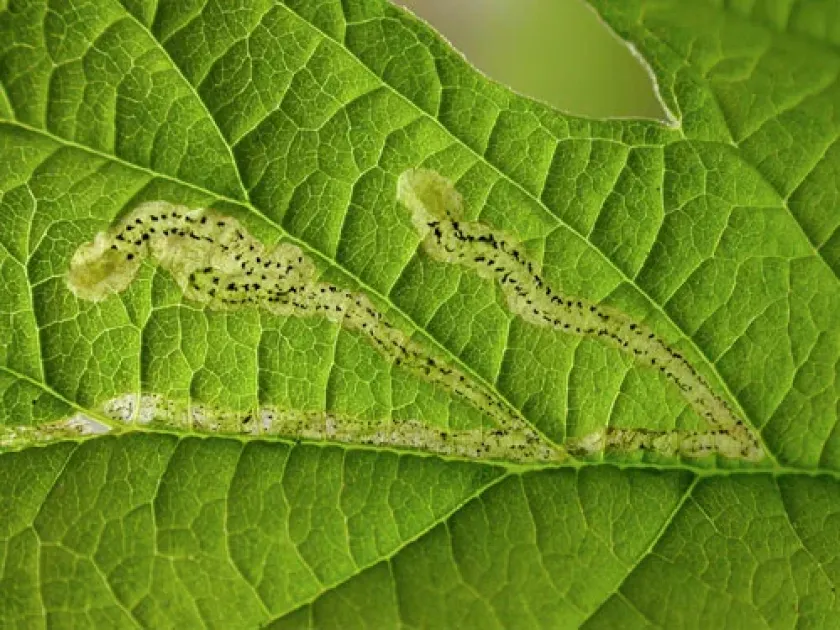
The most recognizable sign of infestation is the appearance of leaf mines—winding, whitish trails that larvae create as they feed. These mines often grow and intersect, forming larger blotches.
Careful inspection of the foliage against a light source often reveals the larva inside the tunnel. Additionally, small black dots of fecal matter left by the larvae can be seen inside the mines.
As the infestation progresses, leaves may become discolored, wither, and curl. Severe damage causes the leaves to drop prematurely, which weakens the entire structure of the plant.
Monitoring for signs of damage should begin early in the season, focusing on the lower leaves which are typically the first to be colonized by female flies.
Yellow sticky traps are a standard monitoring tool used to detect the arrival of adult flies, allowing for the timely implementation of control tactics before widespread egg-laying occurs.
Control measures
Management of leaf miners requires an integrated approach, utilizing cultural, biological, and chemical methods. Weeding is essential, as many non-crop plants serve as reservoirs for the pest.
Biological control involves the release or encouragement of parasitic wasps (Hymenoptera: Eulophidae), which are natural enemies that effectively suppress leaf-miner populations.
Chemical control should rely on systemic insecticides that can penetrate leaf tissue to reach the hidden larvae. It is crucial to rotate chemical modes of action to prevent the development of insecticide resistance.
Sanitation practices, such as the removal and destruction of heavily infested leaves and crop debris, are vital for limiting the spread of the population within a facility.
- Implementation of crop rotation to break the pest cycle.
- Use of fine-mesh netting to exclude flies from greenhouses.
- Selection of resistant or less susceptible plant varieties.
Taxonomy
- Latin name
- Liriomyza approximata
- Order
- Diptera (flies)
- Family
- Agromyzidae
- EPPO code
- PHYBAP
Discussion
No discussions yet — be the first.