
Onion leaf miner
Liriomyza allia
Description
How to identify
The onion leaf miner, Liriomyza allia, is a species of dipteran insect belonging to the family Agromyzidae, known for the mining behavior of its larvae.
The adult fly is very small, typically 2-3 mm long, with a characteristic yellow and black coloration that helps it blend into foliage.
The life cycle progresses through eggs, three larval stages, pupae, and adults. The female uses her ovipositor to pierce leaf tissue and deposit eggs.
Larvae are pale, legless maggots that spend their entire development time within the leaf, eating the tissue between the upper and lower epidermis.
Pupation may occur within the mine or in the soil near the host plant, depending on environmental conditions and the specific generation cycle.
What it damages
This pest primarily infests plants in the Allium genus, including onions, garlic, shallots, and leeks, causing significant agricultural losses.
Larval feeding destroys the mesophyll layer of the leaves, which significantly inhibits photosynthesis and reduces the plant's ability to store energy.
When the infestation is severe, the foliage loses its structural integrity, leading to wilting, stunted growth, and a reduction in bulb size and market value.
The tunnels created by larvae can serve as entry points for various bacterial and fungal pathogens, potentially causing rot in storage.
The cumulative damage often results in yellowing leaves that dry out prematurely, leaving the plant vulnerable to environmental stressors.
Signs of infestation
The most distinctive symptom is the appearance of serpentine or winding trails (mines) on the leaf surface, which start narrow and widen as the larva grows.
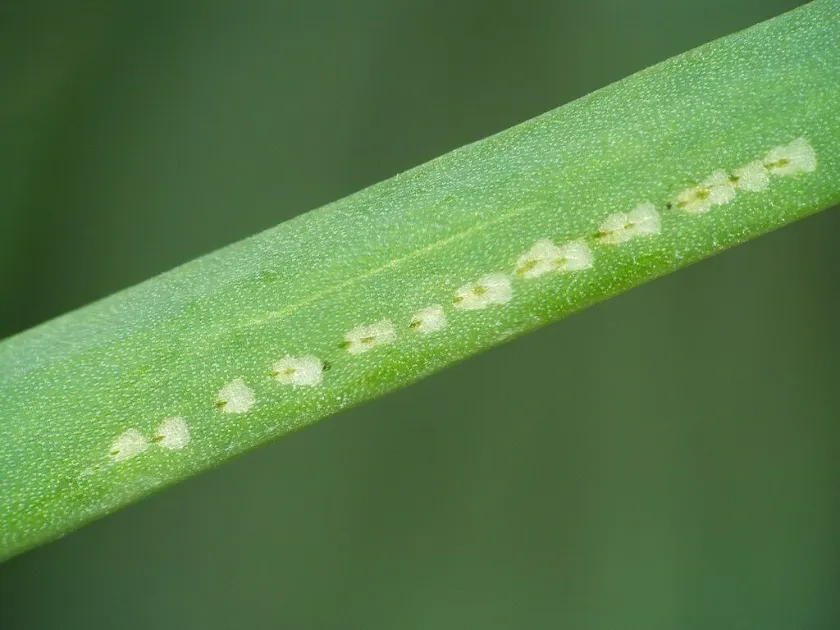
Tiny white spots on the leaf are clear indicators of feeding or oviposition punctures made by adult females during the early stages of infestation.
Leaves affected by the miner often show curling, twisting, and tip-burn symptoms that differentiate this damage from standard nutrient deficiencies.
If you inspect the mines closely, you can often see small, dark frass pellets deposited by the larva as it navigates through the interior of the onion leaf.
In high-density populations, the leaves may become riddled with tunnels, leading to total leaf collapse and a scorched appearance of the crop canopy.
Control measures
Management of the onion leaf miner requires a multi-pronged approach that focuses on prevention and timely intervention when populations spike.
Cultural control measures, such as crop rotation and the destruction of infested plant debris, are fundamental to reducing the local population of overwintering pupae.
Physical barriers, like fine-mesh row covers, can be very effective in preventing adult flies from landing on the plants and laying eggs.
Systemic insecticides are the primary chemical tool for control, as they can travel into the leaf tissue to reach larvae shielded by the leaf epidermis.
- Monitoring flight activity with yellow sticky cards.
- Removing weeds that act as alternative hosts for the miner.
- Maintaining healthy soil fertility to help plants recover from stress.
- Using biological control agents such as predatory wasps where appropriate.
Taxonomy
- Latin name
- Liriomyza allia
- Order
- Diptera (flies)
- Family
- Agromyzidae
- EPPO code
- LIRIAL
Discussion
No discussions yet — be the first.