
Leafminer fly
Liriomyza
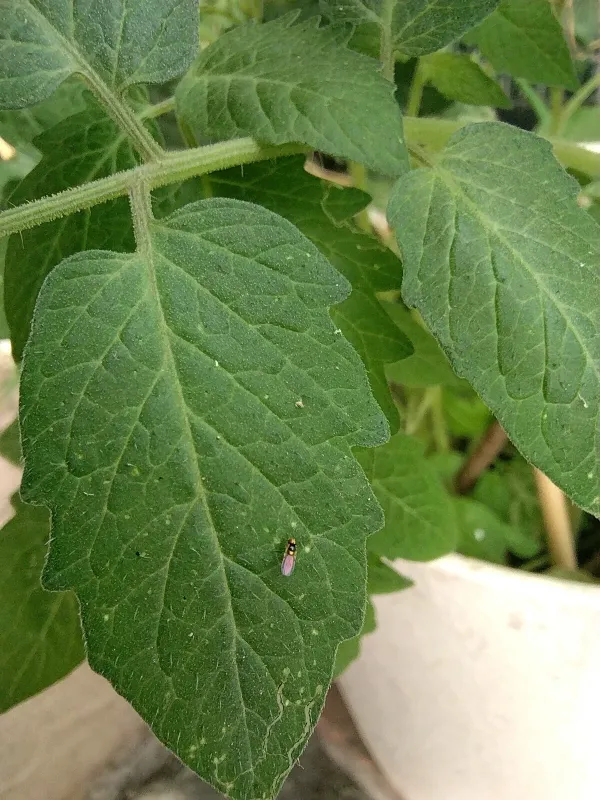
Description
How to identify
The leafminer fly (genus Liriomyza) belongs to the order Diptera and the family Agromyzidae. These are tiny insects, typically 2-3 mm long, often featuring yellow and black markings.
The life cycle consists of egg, larva, pupa, and adult stages. Females puncture the leaf epidermis to feed on sap and deposit eggs, resulting in small white stippling marks on the leaf surface.
The larvae are legless, maggot-like, and develop within the leaf tissue, creating distinct tunnels as they consume the mesophyll layer of the plant.
Pupation usually occurs within the soil or on the leaf surface, forming a small, hard, brown-colored puparium that protects the developing insect.
Under favorable greenhouse conditions, the entire life cycle can be completed in as little as two to three weeks, leading to overlapping generations and rapid population growth.
What it damages
These pests are highly polyphagous, attacking a wide range of crops including tomatoes, cucumbers, peppers, lettuce, and numerous ornamental plants like chrysanthemums.
Severe infestations are particularly problematic in greenhouse environments where year-round production allows for continuous breeding cycles.
Signs of infestation
The most recognizable sign is the presence of winding, white, serpentine mines visible on the upper surface of the leaves.
As larvae feed and grow, the mines expand in width, eventually causing leaves to turn yellow, wither, and drop prematurely, which inhibits healthy growth.
Feeding punctures made by adult flies appear as clusters of tiny white dots, which can reduce the marketability of leafy vegetables and herbs.
Leaf tissue damaged by mining activity becomes susceptible to secondary infections from pathogens, further exacerbating the decline of the plant.
Control measures
Management requires a balanced strategy combining cultural practices, biological controls, and chemical intervention when necessary.
- Deploying yellow sticky traps to monitor adult population levels and reduce their numbers.
- Maintaining high sanitation standards, including the prompt removal and destruction of infested foliage.
- Introducing biological control agents, such as Diglyphus isaea, a parasitic wasp that targets larvae inside mines.
- Using systemic insecticides carefully to target larval stages while protecting beneficial insect populations.
- Implementing strict quarantine protocols for new plant materials entering the greenhouse to prevent initial infestations.
Taxonomy
- Latin name
- Liriomyza
- Order
- Diptera (flies)
- Family
- Agromyzidae
- EPPO code
- LIRISP
Discussion
No discussions yet — be the first.