
Freshwater isopod
Lirceus brachyurus
Description
How to identify
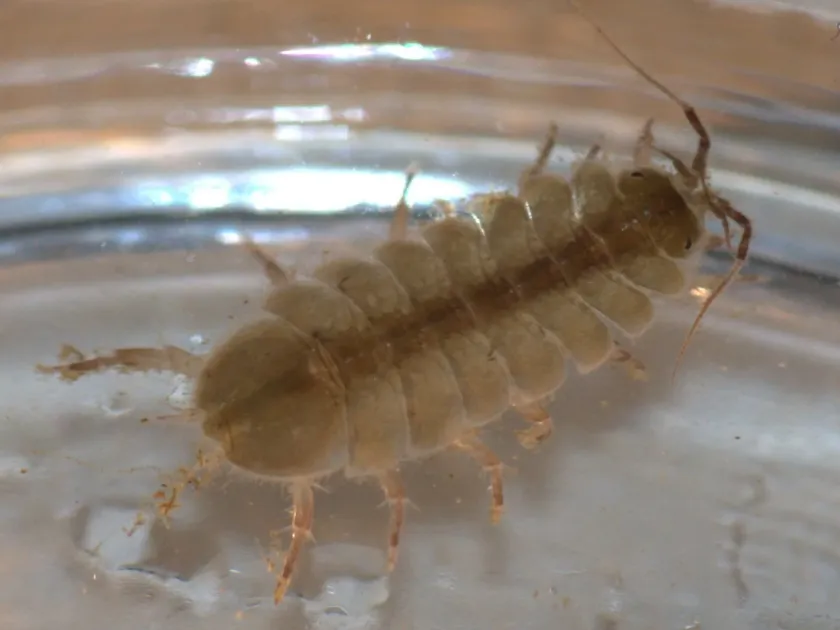
The freshwater isopod (Lirceus brachyurus) is a crustacean belonging to the order Isopoda, family Asellidae. These small aquatic organisms are often mistaken for terrestrial woodlice due to their physical appearance.
They possess a flattened, segmented body that is typically grayish-brown or translucent. This coloration allows them to hide effectively within plant root zones, biofilms, and organic debris found in water systems.
Respiration is facilitated by branchial structures located on their abdominal appendages. The species thrives in environments with high oxygen levels and abundant decaying organic matter.
Movement is achieved via seven pairs of walking legs, enabling them to navigate efficiently through the complex root systems of hydroponically grown crops.
The biological lifecycle of this isopod is temperature-dependent, allowing for year-round development in climate-controlled greenhouse environments.
What it damages
The primary targets of Lirceus brachyurus are seedlings and young plants in hydroponic or aquaponic setups. The pest feeds on fine root hairs, severely compromising the plant's nutrient uptake capacity.
Beyond direct feeding, the damage caused by these isopods creates entry points for various soil-borne and water-borne pathogens, leading to root rot and systemic infections in the crop.
In cases of high infestation, the isopods may also feed on the epidermis of plant stems submerged in the nutrient solution, resulting in localized necrosis and plant decline.
Economic impact includes reduced growth rates, inconsistent yield quality, and the potential for total crop failure if the population remains unchecked within the solution tanks.
The presence of this pest is a clear indicator of system vulnerability and suggests a breach in the sanitation protocols of the cultivation facility.
When it appears
In natural freshwater habitats, activity peaks during spring and summer months. However, in closed artificial systems, isopods maintain metabolic activity throughout the year.
Introduction into cultivation systems typically occurs via contaminated water sources, untreated organic fertilizers, or sub-par sanitization of equipment moved between facilities.
Reproduction is efficient, with females carrying their offspring in a specialized brood pouch. This biological strategy ensures high juvenile survival rates, even in closed environments.
Under optimal conditions, the life cycle from egg to adult is short, allowing for rapid population explosions that can quickly overwhelm a hydroponic installation.
When environmental conditions become unfavorable, isopods exhibit a degree of resilience, sheltering in organic residues or deep within pipes until the situation improves.
Signs of infestation
Symptoms of infestation often begin with unexplained plant wilting and slowed maturation. Inspection of the root system reveals characteristic bite marks and the loss of healthy root architecture.
Isopods are frequently identified during routine checks of water filters or pumps. Molted exoskeletons floating in the nutrient reservoir serve as a primary diagnostic indicator of an established colony.
- Wilting foliage despite adequate irrigation and light.
- Visual presence of small, scuttling crustaceans near the plant roots.
- Accumulation of debris and root fragments within the filtration system.
Plants fail to thrive because the damaged root system can no longer efficiently transport water and minerals to the upper parts of the plant.
Secondary infections, such as pythium or other fungal pathogens, often accompany the damage, further exacerbating the physical symptoms of the infestation.
Control measures
Control strategies require a complete system teardown and deep cleaning of all reservoirs, pipes, and substrates. Sterilization is necessary to ensure no eggs remain in the system.
Installing fine-mesh filtration screens at all water intake points prevents the entry of isopods from external sources and helps filter out juveniles already present.
Biological control methods are increasingly preferred, involving the introduction of specific bacteria or predatory organisms that target the isopods without harming the crops.
Chemical intervention should be considered a last resort, as many standard pesticides are harmful to the microbial health of hydroponic systems and can be phytotoxic.
Regular system monitoring, including water quality checks and sanitation audits, remains the most effective long-term defense against re-infestation.
Taxonomy
- Latin name
- Lirceus brachyurus
- Family
- Asellidae
- EPPO code
- LIRCBR
Discussion
No discussions yet — be the first.