
Freshwater hoglouse
Asellus aquaticus
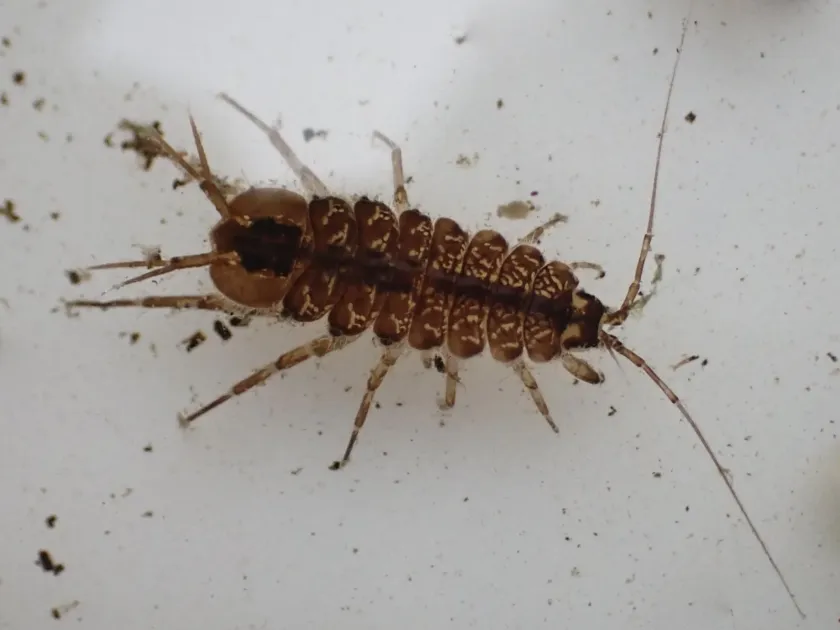
Description
How to identify
The freshwater hoglouse (Asellus aquaticus) is a common aquatic isopod crustacean belonging to the family Asellidae, often found in freshwater environments and irrigation systems.
Adult hoglice typically measure 12–20 mm in length and possess a flattened, elongated body with seven pairs of jointed legs, facilitating movement along submerged surfaces.
Their coloration ranges from grey to brown, allowing them to blend seamlessly with decaying organic matter and sediment present in irrigation tanks and hydroponic trays.
Biological development involves eggs being carried by the female in a specialized brood pouch, where juveniles develop until they are ready to emerge as miniature versions of adults.
Due to their ability to survive in various water conditions, they often colonize artificial environments like hydroponics, provided there is enough organic debris to feed on.
What it damages
While primarily detritivores, freshwater hoglice become significant pests in hydroponic and nursery systems when their population density exceeds manageable levels.
They target the root systems of young seedlings, feeding on delicate root tips and hairs, which leads to stunted growth and reduced nutrient uptake efficiency.
By grazing on plant tissues, they create wounds that serve as entry points for secondary bacterial and fungal pathogens, potentially leading to systemic plant failure.
In high-density greenhouse environments, they may damage stem tissues submerged in nutrient solutions, causing necrosis and significantly compromising the health of the crop.
Furthermore, their activity can lead to the clogging of fine filtration systems and pumps, causing operational disruptions that indirectly stress the plants.
When it appears
In controlled greenhouse environments, the freshwater hoglouse remains active throughout the year, as temperature and humidity remain constant for their development.
In open systems, peak activity typically occurs during warmer months when water temperatures in reservoirs and irrigation tanks are optimal for rapid reproduction.
During colder months, they often seek refuge in protected infrastructure, such as drainage pipes or warm recirculating water systems, ensuring survival between growing cycles.
Their life cycle is not seasonal in a biological sense but is rather driven by food availability and the presence of organic waste within the hydroponic solution.
Constant monitoring is required because these crustaceans can establish persistent populations in any system that provides adequate moisture and organic substrate.
Signs of infestation
The most reliable sign of an infestation is the visual observation of grey, crustacean-like organisms moving within the nutrient solution or on the surface of the root medium.
Root damage manifests as chewed or ragged root tips that turn brown or black, often accompanied by a foul smell indicative of microbial decay in the root zone.
Accumulation of fine, dark excrement pellets near the base of the plant or within the filtration housing is a strong indicator of an established colony of hoglice.
Plants affected by these pests exhibit signs of water stress, including wilting during peak sunlight hours, even when the hydroponic system is functioning correctly.
Detection through transparent viewing ports in cultivation systems usually reveals active movement of individuals around the root zone, signaling a need for intervention.
Control measures
The primary control measure is the strict removal of plant debris and organic buildup from the system, as this serves as the primary food source for the population.
Implementing high-quality mechanical filtration systems is essential to physically remove hoglice from the water flow before they reach the plant roots.
Sanitizing the system between crops using appropriate chemical treatments or hydrogen peroxide solutions can effectively eliminate any remaining individuals and their eggs.
Maintaining stable water quality and replacing nutrient solutions regularly helps disrupt the life cycle of the hoglouse by limiting the accumulation of organic matter.
In severe cases, complete system flushing and chemical disinfection are necessary to restore the growing environment and ensure the long-term health of the crops.
Taxonomy
- Latin name
- Asellus aquaticus
- Family
- Asellidae
- EPPO code
- ASELAQ
Discussion
No discussions yet — be the first.