
Lirceus
Lirceus
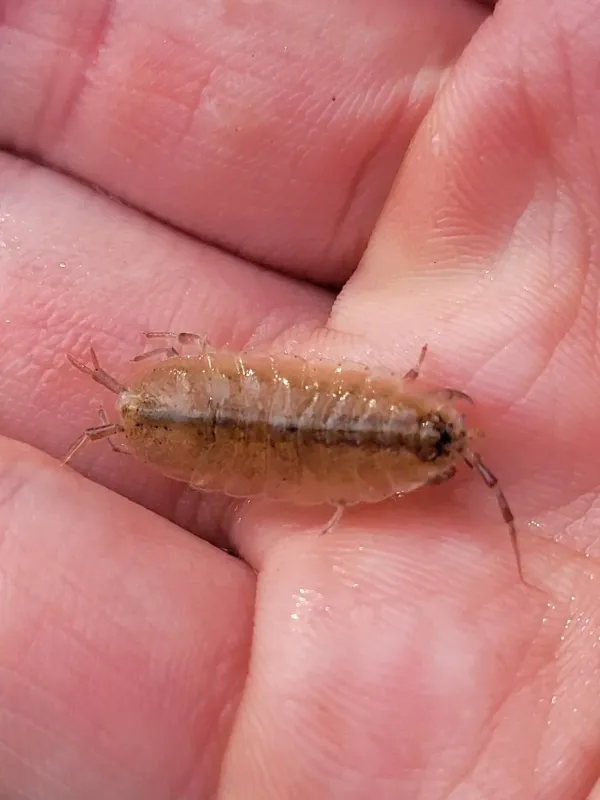
Description
How to identify
Lirceus is a genus of aquatic isopods belonging to the family Asellidae, commonly found in freshwater environments but increasingly problematic in hydroponics.
These crustaceans typically measure between 5 to 15 mm in length and possess a flattened, segmented body adapted for crawling through organic debris and root mats.
They are equipped with seven pairs of legs, allowing for rapid movement across various surfaces, making them highly efficient at colonizing wet, dark environments.
Their life cycle includes female brooding, where eggs are kept in a specialized pouch, ensuring high survival rates for offspring in protected system environments.
Due to their nocturnal nature and preference for hiding in substrates, they often remain unnoticed until their population density reaches significant levels.
What it damages
The primary damage caused by Lirceus involves the consumption of fine root hairs, which are essential for nutrient uptake in plants grown in water-based systems.
By grazing on the root system, these isopods create wounds that provide entry points for opportunistic plant pathogens, such as Pythium and other root rot fungi.
Heavily infested plants often exhibit symptoms of nutrient deficiency, stunted growth, and sudden wilting, despite optimal conditions in the growth medium.
In large-scale commercial operations, Lirceus can accumulate in pumps and filtration units, leading to mechanical failures and circulation blockages.
The cumulative stress from root damage and associated secondary infections can significantly reduce the overall crop yield and quality.
When it appears
In controlled environment agriculture or greenhouses, Lirceus activity can persist throughout the entire year if temperatures remain stable.
The rate of reproduction is closely tied to water temperature; warmer conditions accelerate their life cycle and increase the frequency of offspring production.
In outdoor-connected systems, population spikes are often observed during warmer months when natural water bodies experience seasonal growth of aquatic vegetation.
During colder periods, the isopods may become dormant within the system's sludge, waiting for better conditions to resume active feeding and reproduction.
Consistent monitoring of system water quality and equipment is necessary to detect their presence before the population density becomes uncontrollable.
Signs of infestation
Visual identification of adult isopods in filtration screens or floating in nutrient tanks is the most definitive sign of an infestation.
Root systems may appear frayed or exhibit distinct bite marks along the primary and lateral roots, differentiating their damage from typical root rot.
An accumulation of fine debris or "frass" at the base of the tank or within the plumbing lines often indicates a thriving colony of Lirceus.
Plants may show progressive decline without any visible pathogens on the leaves, indicating that the problem is rooted in the sub-surface area.
Changes in water clarity or unusual activity near the root zone during night inspections can confirm the presence of these nocturnal pests.
Control measures
The most effective management strategy involves rigorous physical filtration of source water to prevent the entry of isopods into the growing system.
Regular maintenance, including the systematic removal of organic sediment and biofilms from tanks and tubing, is essential to starve the pest population.
Using sterile, high-quality substrates for every growing cycle minimizes the risk of introducing Lirceus into the hydroponic environment.
UV-sterilization of recirculating water is an effective method to neutralize juvenile stages and limit the spread of the population within the infrastructure.
- Implement fine mesh filters in water supply lines.
- Schedule regular system deep-cleaning to prevent organic buildup.
- Isolate new plants to prevent the introduction of pests via contaminated media.
Taxonomy
- Latin name
- Lirceus
- Family
- Asellidae
- EPPO code
- LIRCSP
Discussion
No discussions yet — be the first.