
Cabbage aphid
Lipaphis
Description
How to identify
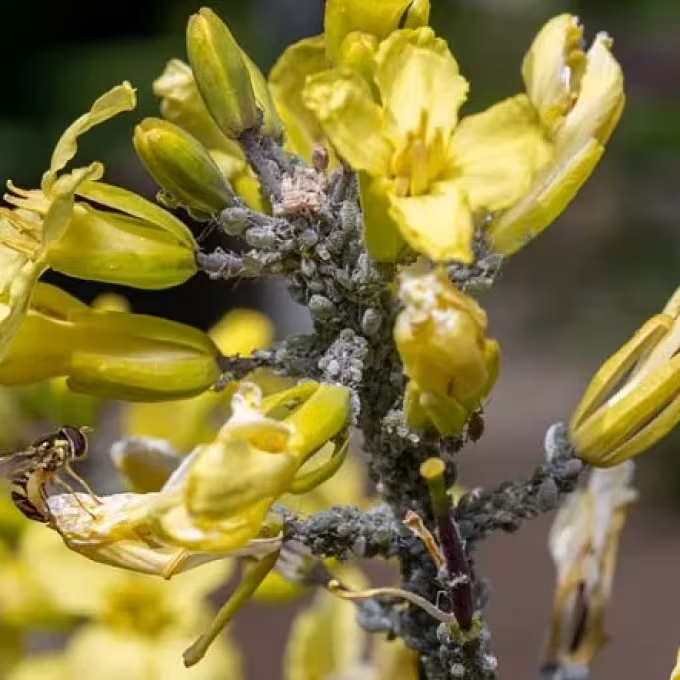
The cabbage aphid (Lipaphis erysimi) is a small, soft-bodied insect belonging to the Aphididae family. Adult individuals are typically grey-green and covered with a fine waxy, mealy-like secretion that gives them a characteristic dusty appearance.
The species exists in both wingless and winged forms. Winged adults are responsible for colonizing new host plants, while wingless forms are focused on rapid reproduction within the existing colony.
They overwinter as eggs, typically attached to the stems and leaves of cruciferous weeds or agricultural crop debris. In spring, these eggs hatch into stem mothers, starting the cycle anew.
Reproduction is primarily parthenogenetic, meaning females give birth to live young without mating. Under optimal environmental conditions, populations can explode in size within just a few weeks.
Due to their high reproductive rate, they are considered one of the most significant pests for brassica crops worldwide, capable of causing devastating damage if left unchecked.
What it damages
Cabbage aphids primarily attack plants in the Brassicaceae family, including cabbage, kale, broccoli, cauliflower, Brussels sprouts, and oilseed rape. They feed by inserting their stylets into the plant's phloem.
Continuous feeding drains the plant of vital nutrients and sap, leading to severe physiological stress. This results in stunted growth, leaf curling, and overall reduction in plant vigor.
Beyond direct damage, they are prolific vectors of various plant viruses. These viruses cause systemic infections that can lead to crop failure, reduced quality, and total loss of marketable yield.
In addition to tissue damage, the excretion of honeydew promotes the growth of sooty mold. This black fungus covers the leaves, reducing the plant's ability to perform photosynthesis efficiently.
In heavy infestations, the sheer number of aphids covering the plant can be so dense that the vegetative parts appear to be entirely coated, leading to rapid wilting and necrosis.
Signs of infestation
The most recognizable sign is the curling, crinkling, or cupping of the leaves. Aphids prefer to hide in these sheltered areas, making them difficult to spot without close inspection.
Yellowing or chlorotic patches develop on the leaves where the aphids have been feeding. If the colony is large enough, these patches will eventually die, turning brown and brittle.
The presence of honeydew, a sticky substance on the foliage, often attracts ants and promotes the colonization of black sooty mold, which is a clear visual indicator of an aphid infestation.
Checking the undersides of leaves and around the terminal buds often reveals dense clusters of grey-green aphids. These areas are their primary feeding sites due to the high sap pressure.
On flowering brassicas, aphids will congregate on the flower stalks, causing them to twist and preventing proper seed set, which is especially problematic for those saving their own seeds.
Control measures
Cultural control practices involve the removal and destruction of crop residues after harvest to eliminate overwintering sites. Keeping the garden free of cruciferous weeds like shepherd's purse is essential.
Encouraging natural predators such as lady beetles, hoverflies, and lacewings is a highly effective way to manage aphid populations. These beneficial insects can drastically reduce aphid numbers.
For chemical intervention, systemic insecticides are the most effective choice as they are absorbed by the plant and reach the aphids hidden in curled leaves. Always follow label instructions for safety.
Organic control methods include the application of insecticidal soaps or neem oil. These treatments work by contact and are generally safe for humans and pets, though they require thorough coverage of the leaves.
Early detection is key to successful management. Regular scouting of the undersides of leaves allows gardeners to apply treatments before the population reaches an uncontrollable level.
Taxonomy
- Latin name
- Lipaphis
- Order
- Hemiptera (bugs, aphids, leafhoppers)
- Family
- Aphididae
- EPPO code
- LIPASP
Discussion
No discussions yet — be the first.