
Berberis aphid
Liosomaphis berberidis
Description
How to identify
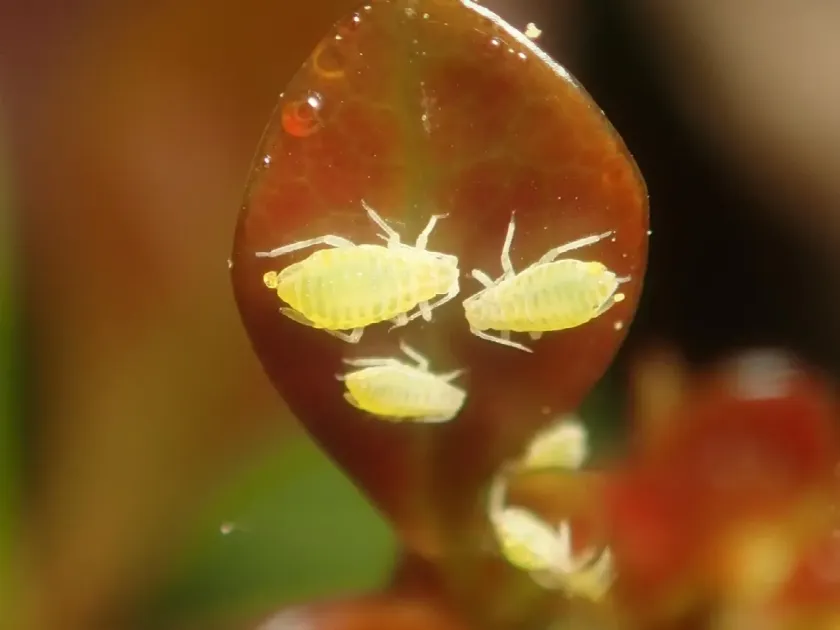
The Berberis aphid (Liosomaphis berberidis) is a small sap-sucking insect belonging to the family Aphididae. Adults have an elongated body, typically green or yellowish-green, with distinct dark markings on the abdomen.
The species exists in both wingless and winged forms, allowing for efficient colonization of new plant tissues. Nymphs are smaller versions of the adults, sharing similar coloration but lacking wings until they mature.
These insects are characterized by well-developed antennae and prominent siphunculi (cornicles) at the end of their abdomen. These features are essential for accurate field identification using a magnifying glass.
Living in dense colonies, they primarily cluster on the underside of leaves and near the growing tips of Berberis shrubs. Their rapid reproductive cycle, based on parthenogenesis, allows for quick population explosions.
This species is highly adaptable and can survive in various temperate climates. Its success as a pest is attributed to its high fecundity during the growing season and its ability to exploit young plant growth effectively.
What it damages
The primary host for this aphid is the Berberis genus, especially common barberry and various ornamental cultivars. Mahonia species may also serve as secondary hosts in some garden environments.
The damage is concentrated on young, tender shoots that are still actively growing. Aphids penetrate plant tissues with their stylets to feed on nutrient-rich phloem sap, leading to significant physiological stress.
Feeding causes the leaves to curl, twist, and sometimes become chlorotic or deformed. This reduces the plant's photosynthetic capacity, ultimately stunting the growth of the infested shrub.
The excretion of honeydew promotes the growth of sooty mold, which coats the foliage in a black, sticky layer. This further interferes with gas exchange and reduces the aesthetic appeal of the ornamental plants.
Severe infestations can lead to premature leaf drop and increased susceptibility to winter damage. If left unchecked, the overall health and vigor of the shrub will decline significantly over consecutive seasons.
When it appears
The aphid overwinters in the egg stage. Eggs are laid in the autumn in crevices of the bark or near the buds of the host plant, where they remain dormant throughout the winter.
In spring, as the plant begins to bud, the eggs hatch into nymphs. These initial generations, often called "stem mothers," start the cycle of asexual reproduction that continues throughout the summer.
During the summer months, the population grows exponentially through live birth. Multiple overlapping generations occur, ensuring the colony remains active as long as fresh green growth is available.
As autumn approaches, environmental triggers signal the production of sexual forms. These males and females mate to lay overwintering eggs, effectively closing the biological cycle for the year.
The most active period for this pest is late spring and early summer. This corresponds with the period of peak sap flow and the development of tender new foliage, which is optimal for aphid feeding.
Signs of infestation
Curled and distorted leaves at the shoot tips are the most visible sign of an infestation. If you notice stunted, uneven leaf development, it is likely that aphids are present on the underside.
Closer inspection usually reveals dense colonies of small, green insects grouped along the veins. In heavy infestations, the aphids can cover entire stems and flower stalks.
Sticky, shiny honeydew on the foliage is a classic indicator. Over time, this substance becomes colonized by black sooty mold, making the leaves look dirty and unhealthy.
Ant activity is a very reliable secondary sign. Ants are often found tending to aphid colonies, protecting them from predators in exchange for the sugary honeydew the aphids produce.
Failure of new shoots to extend or the early yellowing and brittleness of leaves are signs of long-term feeding. These symptoms indicate that the shrub is suffering from a persistent pest pressure.
Control measures
Proper pruning is a vital cultural control method. Thinning out the center of the shrub improves airflow and light penetration, creating an environment that is less favorable for aphid colonization.
On smaller plants, a high-pressure spray of water can effectively dislodge aphids and reduce the population density. This should be done carefully to avoid damaging the tender new growth.
Encouraging natural predators such as ladybirds, lacewings, and hoverflies is an excellent biological approach. Avoiding broad-spectrum pesticides helps keep these beneficial insects in your garden.
For severe infestations, systemic insecticides containing acetamiprid or imidacloprid can be used. These work by being absorbed into the plant's tissues, targeting the aphids while they feed.
Always ensure thorough coverage of the underside of the leaves during treatment. Rotating between different chemical classes is recommended to prevent the development of pesticide resistance in the aphid population.
Taxonomy
- Latin name
- Liosomaphis berberidis
- Order
- Hemiptera (bugs, aphids, leafhoppers)
- Family
- Aphididae
- EPPO code
- LIOABE
Discussion
No discussions yet — be the first.