
Leptophlebia vespertina
Leptophlebia vespertina
Description
How to identify
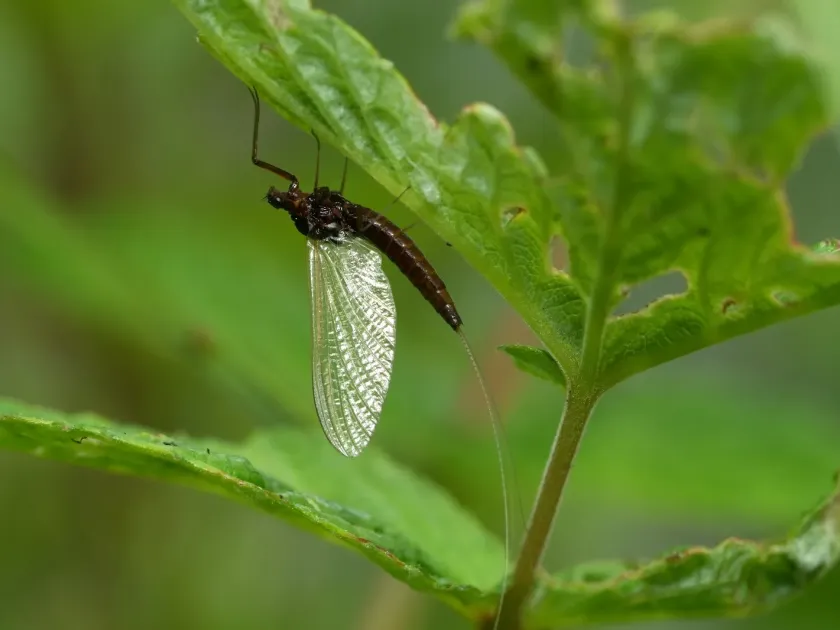
Leptophlebia vespertina is a species of mayfly belonging to the family Leptophlebiidae within the order Ephemeroptera. These insects are known for their fragile, slender bodies and long caudal filaments.
The aquatic larvae, often found in still or slow-moving water bodies, possess distinct lateral gills on their abdomen that are essential for respiration in low-oxygen environments.
Adult mayflies typically exhibit a dark brown to black coloration, which serves as a camouflage mechanism during their short-lived aerial stage.
The lifespan of the adult stage is remarkably brief, often lasting only a few hours to a couple of days, as their sole biological purpose is reproduction.
The larval stage is the longest part of their life cycle, involving multiple molts as the insect grows and prepares for the final emergence.
What it damages
Leptophlebia vespertina is not considered an agricultural pest. Its ecological niche is strictly confined to freshwater habitats, away from terrestrial crop fields.
There is no evidence of this species damaging plants, as larvae feed exclusively on decaying organic matter, algae, and microscopic organisms found in water.
The presence of these insects is generally viewed as a positive indicator of water quality, as mayflies are sensitive to heavy pollution and industrial toxins.
While large swarms may occasionally cause minor disturbances for farm workers near reservoirs, they do not pose any economic threat to harvests.
Therefore, no management or eradication efforts are required for this species in any agricultural context or farming operation.
When it appears
The emergence of adult Leptophlebia vespertina typically occurs during the late spring and early summer, peaking between May and June.
These insects are highly synchronized in their emergence, which is triggered by environmental cues such as rising water temperatures and daylight duration.
Larvae develop throughout the year, with growth rates accelerating as the warmer seasons approach, ensuring the population survives the winter.
The timing of the adult flight is often strictly limited to the twilight hours, helping the species avoid diurnal avian predators.
Monitoring the seasonal activity of these mayflies can provide researchers with valuable data regarding the health and temperature fluctuations of local water systems.
Signs of infestation
The most prominent sign of a Leptophlebia vespertina population is the formation of swarms above the surface of ponds or canals during dusk.
The presence of exuviae (cast-off larval skins) on emergent vegetation around the water's edge indicates recent successful transitions from the water to the air.
Scientific sampling of water bodies using aquatic nets will reveal the presence of larvae, confirming the active breeding cycle within the habitat.
The observation of mass die-offs on the water surface after the mating season is a normal biological event following the completion of their reproductive cycle.
The total lack of feeding damage on agricultural crops in the vicinity further confirms that this species remains strictly within its aquatic niche.
Control measures
Since Leptophlebia vespertina provides no threat to agricultural productivity, there are no established control methods for this species in agriculture.
Efforts to control these insects are unnecessary and could potentially harm the aquatic ecosystem, which relies on mayflies as a critical food source for fish.
If insect swarming becomes a nuisance near agricultural infrastructure, simple physical barriers or light management can be implemented to mitigate interference.
Maintaining healthy water bodies is the best way to ensure the natural balance of the ecosystem, allowing indigenous predators to keep populations in check.
It is recommended to focus on monitoring and protection rather than intervention, given the beneficial role these mayflies play in the food chain.
Taxonomy
- Latin name
- Leptophlebia vespertina
- Family
- Leptophlebiidae
- EPPO code
- LPTBVE
Discussion
No discussions yet — be the first.