
Leptophlebia marginata
Leptophlebia marginata
Description
How to identify
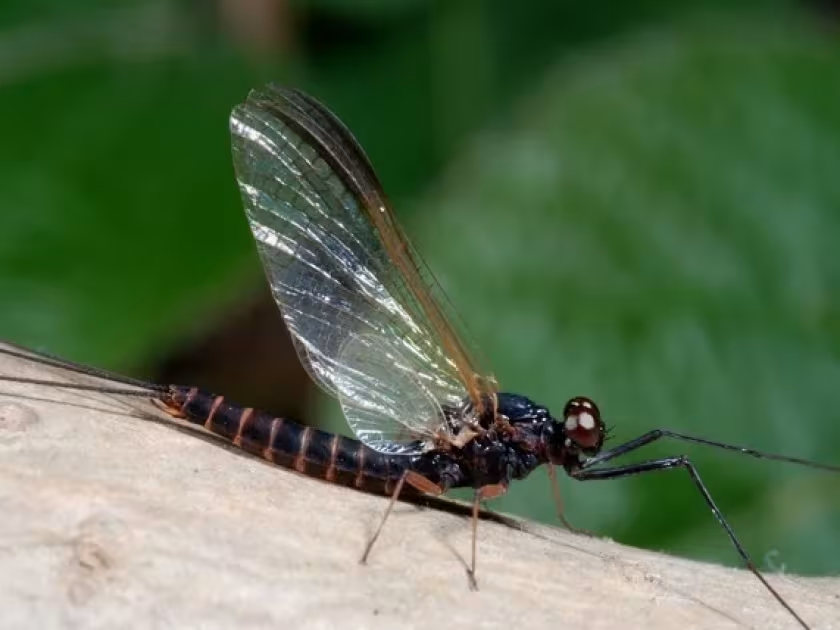
Leptophlebia marginata belongs to the order Ephemeroptera (mayflies) and the family Leptophlebiidae. The adult insect is characterized by its transparent wings with a distinct dark margin, which is the species' identifying feature.
The adult body is slender, measuring approximately 10–12 mm in length, with characteristic long cerci (tail filaments). Its dark coloration helps it blend into the surrounding riparian vegetation.
Nymphs of this species are exclusively aquatic, dwelling in freshwater habitats. They possess a flattened body shape that is well-adapted for movement across the bottom substrate of ponds and slow-moving streams.
The tracheal gills, located along the abdomen, are split into two parts and are lanceolate in shape. These organs are highly effective for extracting dissolved oxygen from the water.
The nymphal mouthparts are adapted for browsing on detritus, algae, and organic matter, making them essential decomposers within their aquatic habitat.
When it appears
The adult flight period typically occurs during the spring, usually between May and June. During this time, the mature mayflies emerge from the water to mate and lay eggs.
The nymphal stage lasts for several months, with the insects overwintering on the bottom of the water bodies, often buried in silt or debris.
The adult stage is extremely short-lived, often lasting only a few days or hours. Adults do not feed, as their mouthparts are vestigial, focusing energy solely on reproduction.
Water temperature plays a critical role in the rate of nymphal development. Warmer spring temperatures significantly accelerate the metamorphosis process.
Synchronization of emergence is common among mayflies, which serves as a defensive strategy against predators and ensures successful mating within a short window.
Control measures
Leptophlebia marginata is not a pest of agricultural crops. It poses no threat to farming, horticulture, or forestry, and therefore, control measures are neither needed nor recommended.
This species is highly regarded as a water quality bioindicator. Its presence suggests a healthy, well-oxygenated aquatic environment, while its absence may signal ecological stress.
Indiscriminate use of pesticides near water sources should be avoided to protect this beneficial insect and the entire aquatic ecosystem it supports.
Agronomists and land managers should distinguish between economic pests and ecologically important species to ensure sustainable agricultural practices.
Preserving the natural integrity of streams and ponds is the best way to support the population of this species, which serves as a vital food source for various fish and other predators.
Taxonomy
- Latin name
- Leptophlebia marginata
- Family
- Leptophlebiidae
- EPPO code
- LPTBMA
Discussion
No discussions yet — be the first.