
Leptophlebia
Leptophlebia
Description
How to identify
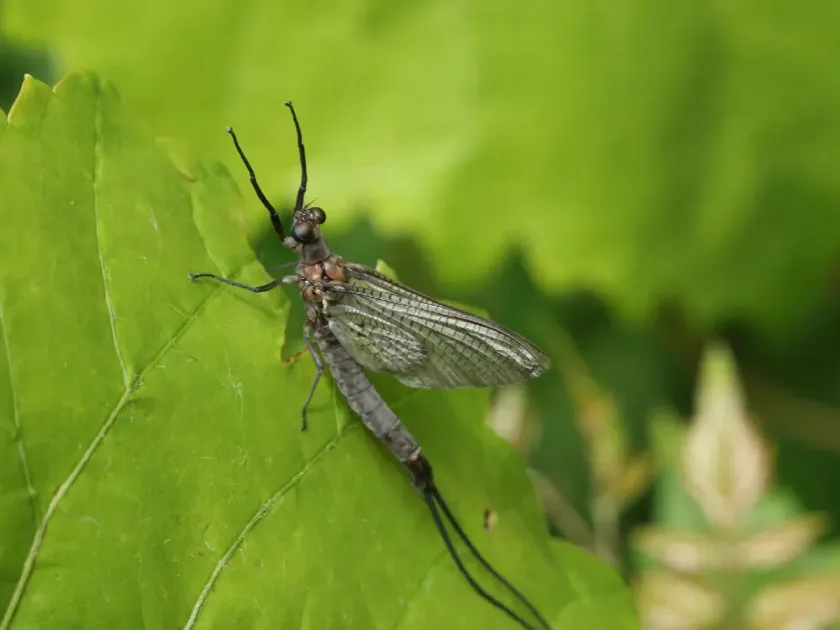
Leptophlebia is a genus of mayflies belonging to the order Ephemeroptera and the family Leptophlebiidae. These insects are famous for their distinct two-stage aerial life cycle.
Adult mayflies are characterized by transparent wings and three long tail filaments known as cerci. They are delicate insects that do not feed in their adult form.
The aquatic larvae, or nymphs, have visible gills along the sides of their abdomen, which are specialized for extracting oxygen from the water.
The body of the nymph is slender and well-adapted for maneuvering through aquatic vegetation or hiding beneath stones in freshwater environments.
Species within this genus are widely distributed and generally favor clear, cool, and well-oxygenated bodies of water such as streams and small ponds.
What it damages
It is important to clarify that Leptophlebia is not an agricultural pest. These insects spend their entire larval development phase exclusively in water.
They do not consume or damage cultivated crops, vegetables, or fruit trees. Therefore, they pose no threat to the productivity of farming operations.
Some mayflies can be an annoyance near residential areas when they emerge in massive swarms, but this is a temporary natural phenomenon.
In aquaculture, larvae might consume some resources intended for fish, but they also serve as a vital natural food source for young fish populations.
Overall, Leptophlebia contributes positively to the ecosystem rather than harming any agricultural activity, making pest control unnecessary.
When it appears
The emergence of adult Leptophlebia typically occurs during the late spring and early summer months, depending on the local climate and water temperatures.
The larval stage is significantly longer than the adult stage, often spanning several months to over a year as the nymphs gradually mature.
In warmer conditions, the development process accelerates, leading to synchronized emergence events where many adults appear simultaneously.
Adult life is extremely brief, often lasting only a few days, as their sole biological purpose is to mate and lay eggs back into the water.
During winter, the nymphs remain active under the ice or in deep water, showing high tolerance to cold conditions until the next growth season begins.
Signs of infestation
Evidence of their presence can be found by inspecting the edges of clean ponds, where nymphs may be collected using a fine-mesh aquatic net.
The most visible sign of their activity is the mating swarm of adults hovering near water bodies during the warm hours of the day or at dusk.
After a mass emergence, one might find discarded nymphal exuviae (cast-off skins) clinging to reeds or leaves along the shoreline.
There are no damage symptoms on land crops, as these insects are biologically incapable of feeding on terrestrial plant tissue.
The presence of Leptophlebia is often viewed as a sign of good water quality, indicating that the local ecosystem is relatively free from pollution.
Control measures
No pest control measures are required for Leptophlebia, as they are beneficial organisms that do not interfere with agricultural or horticultural systems.
The use of insecticides in or near water bodies to control mayflies is strongly discouraged as it causes unnecessary harm to aquatic biodiversity.
Maintaining a natural balance in aquaculture ponds, such as encouraging fish populations that eat nymphs, provides a sustainable form of regulation.
Agricultural best practices focus on protecting local water sources from runoff, which naturally maintains a healthy habitat for various beneficial aquatic insects.
If you encounter these insects on your property, there is no reason to take action; they are temporary visitors that play a crucial role in the food web.
Taxonomy
- Latin name
- Leptophlebia
- Family
- Leptophlebiidae
- EPPO code
- LPTBSP
Discussion
No discussions yet — be the first.