
Goose barnacle
Lepas
Description
How to identify
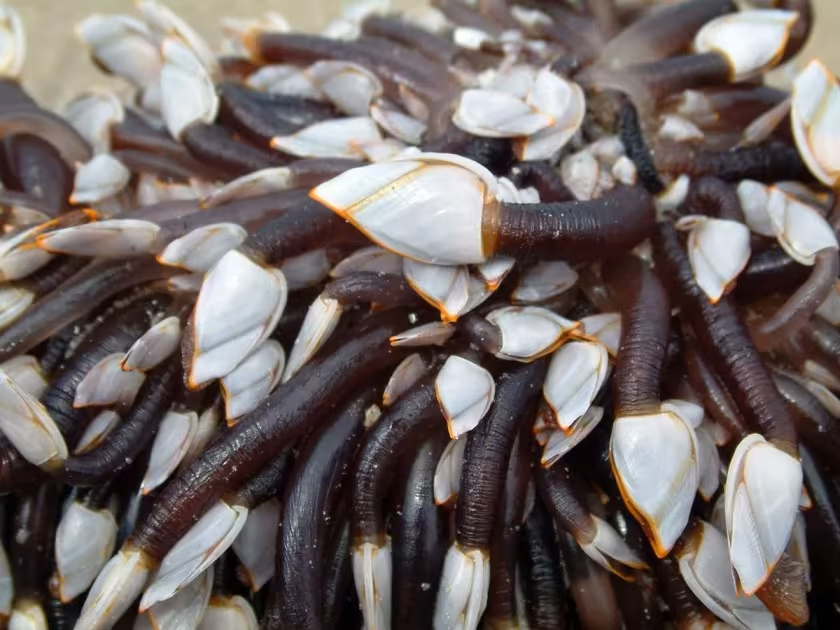
The goose barnacle (genus Lepas) is a type of stalked barnacle belonging to the order Pedunculata, which resides in marine environments worldwide.
These organisms are characterized by a capitulum composed of several calcium carbonate plates and a flexible, muscular stalk used for attachment.
They are sessile filter feeders that thrive in high-energy marine zones, often attaching themselves to floating objects or coastal structures.
Unlike terrestrial pests, they inhabit the water column as larvae before settling permanently on submerged substrates.
Their biological structure is perfectly evolved for surviving in strong currents while capturing nutrient-rich organic particles.
What it damages
While goose barnacles do not attack crops, they are considered major pests in marine aquaculture and maritime industries.
They pose a significant threat by colonizing aquaculture nets, mooring lines, buoys, and underwater structural components of fish cages.
Excessive biofouling increases the total weight of submerged infrastructure, which can cause structural failure or dangerous deformation of equipment.
Dense clusters of barnacles severely restrict water flow, causing oxygen depletion and increasing the accumulation of waste within fish pens.
Their presence also drastically increases surface roughness, which creates drag and makes routine equipment maintenance much more difficult.
When it appears
Goose barnacles typically reproduce during warmer months when favorable water temperatures trigger larval development cycles.
The planktonic larvae travel via ocean currents, looking for suitable hard surfaces to colonize and initiate their metamorphosis.
The intensity of colonization is usually highest during the late spring and summer, correlating with plankton blooms and ocean temperature peaks.
Winter conditions generally slow down the rate of new settlements, though established colonies often remain persistent throughout the year.
Effective farm management requires tracking seasonal water temperatures to predict periods of peak larval settlement in local coastal waters.
Signs of infestation
The presence of goose barnacles is easily identified by white, calcified shell plates forming dense clusters on underwater equipment.
A noticeable weight increase in nets or floating frames, combined with visible white growth on the submerged materials, indicates an active infestation.
When disturbed, the barnacles retract their cirri (feathery appendages) inside the plates, which is a key diagnostic feature for visual inspection.
Increased bio-accumulation of debris and sediment around the clusters often points to long-term colonization on the submerged structures.
Inspection teams often report increased drag and resistance when trying to move or lift equipment covered by these persistent colonies.
Control measures
Preventative measures include the application of specialized non-toxic anti-fouling coatings that prevent the attachment of barnacle larvae.
Routine maintenance involving high-pressure water blasting or mechanical brushing is essential to clear colonies before they become large and heavy.
Using synthetic nets with smooth, anti-stick surface treatments is highly effective in minimizing the settlement area for these crustaceans.
Allowing aquaculture equipment to dry out in the sun during rotation periods effectively kills the barnacles, as they cannot survive prolonged dehydration.
- Use of anti-fouling paints.
- Mechanical cleaning and pressure washing.
- Selecting specialized net materials.
- Periodic equipment rotation and inspection.
Taxonomy
- Latin name
- Lepas
- Family
- Lepadidae
- EPPO code
- LPASSP
Discussion
No discussions yet — be the first.