
Lecanoideus mirabilis
Lecanoideus mirabilis
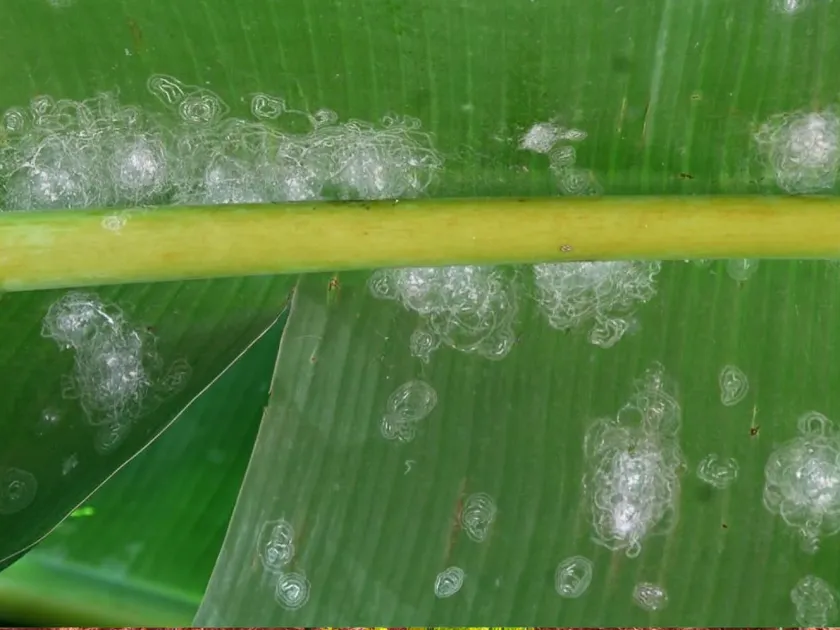
Description
How to identify
Lecanoideus mirabilis is a species of whitefly belonging to the family Aleyrodidae (order Hemiptera). These small insects are recognized by their white, powdery wings which are coated in waxy secretions.
The adult stage is characterized by small, moth-like appearance with wings held in a tent-like position over the body. They are highly active and can quickly disperse within a plantation or greenhouse environment.
Immature stages, known as nymphs or puparia, are typically sessile, oval-shaped, and translucent. They attach firmly to the underside of leaves to feed, making them difficult to notice without careful inspection.
Taxonomically, this species is distinguished by specific morphological features of the pupal case. Specialists rely on these microscopic traits to separate Lecanoideus mirabilis from other similar whitefly species.
The life cycle is heavily influenced by ambient temperature and humidity. Warm, tropical climates accelerate egg hatching and nymph development, potentially leading to multiple generations per year.
What it damages
This pest is a known threat to various tropical and subtropical crops, including important agricultural commodities. It utilizes its piercing-sucking mouthparts to extract vital sap directly from the phloem.
Feeding activities cause systemic stress to the host plant, leading to stunted development, chlorosis, and reduced photosynthetic efficiency. The plants become progressively weaker as the infestation increases.
Excretion of honeydew is a primary byproduct of their feeding process. This sugary substance accumulates on leaves and branches, creating an ideal substrate for the colonization of sooty mold fungi.
Severe infestations often result in leaf senescence and premature abscission. In critical cases, the cumulative damage can lead to significant yield losses and even the death of younger or weaker plants.
Beyond physical damage, the pest acts as a potential vector for viral plant pathogens. The transmission of these viruses is often more economically damaging than the sap-feeding activity itself.
Signs of infestation
The most immediate sign of an infestation is the appearance of small white insects flying up from the foliage when the plant is disturbed or shaken. This cloud of whiteflies is a clear indicator of a population present.
Sticky residue on the surface of leaves and stems indicates the presence of honeydew, a classic sign of sap-sucking pests. This stickiness is often the first visible symptom noticed by field workers.
A coating of black, powdery sooty mold on the foliage confirms the long-term presence of whiteflies. This fungus does not feed on the plant directly but blocks light, further hindering growth.
Yellowing or chlorotic patches on leaves, which may spread across the entire leaf surface, often develop as a result of prolonged sap extraction by nymphal colonies.
- Cloud of white insects disturbed upon movement;
- Sticky honeydew secretions on foliage;
- Black sooty mold covering leaves;
- Leaf chlorosis and yellowing;
- Stunted shoot growth and loss of plant vigor.
Control measures
Monitoring using yellow sticky traps is the most effective way to detect the early arrival of Lecanoideus mirabilis. These traps provide crucial data on population density and flight activity.
Biological control agents, such as parasitic wasps (Aphelinidae) and predatory mites, are essential for sustainable management. Encouraging natural enemies helps keep whitefly populations below the economic threshold.
Systemic insecticides should be reserved for outbreaks that exceed the tolerable damage level. Rotating chemical classes is vital to prevent the development of resistance in the pest population.
Good agricultural practices, including the removal and destruction of heavily infested plant parts, reduce the pest load. Proper sanitation prevents the spread of the insect to non-infested areas.
Horticultural oils and soaps can be used to manage localized infestations. These substances work by physical contact, suffocating the nymphs without leaving harmful toxic residues on the crops.
Taxonomy
- Latin name
- Lecanoideus mirabilis
- Order
- Hemiptera (bugs, aphids, leafhoppers)
- Family
- Aleyrodidae
- EPPO code
- ALEDMB
Discussion
No discussions yet — be the first.