
Guppy
Lebistes
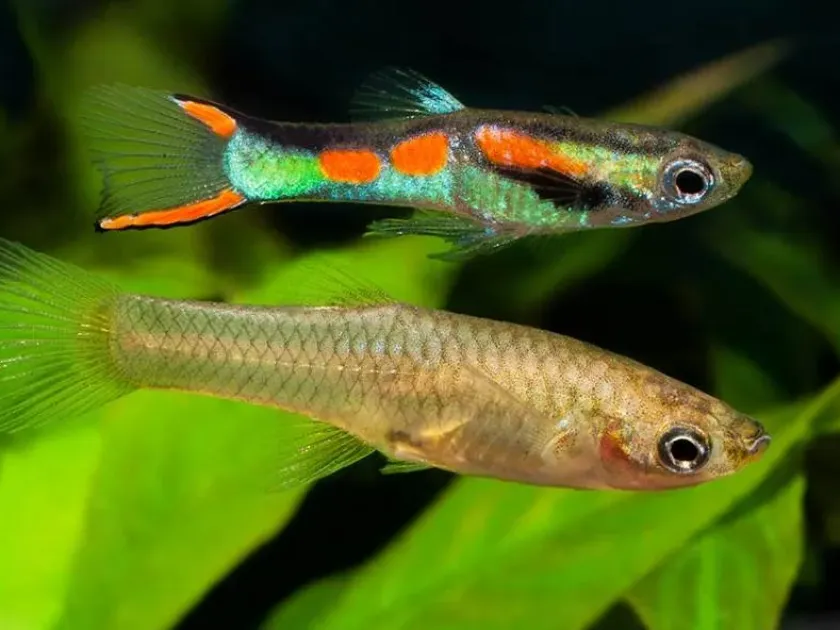
Description
How to identify
The guppy (Poecilia reticulata, formerly Lebistes reticulata) is a small, live-bearing fish belonging to the family Poeciliidae, order Cyprinodontiformes.
Native to South America, they have become an invasive species worldwide due to their extreme adaptability, rapid reproduction, and resilience to varying water conditions.
Adult guppies exhibit sexual dimorphism, with males being smaller and more brightly colored, while females are larger and less vibrant, enabling high reproductive output.
Their ability to thrive in stagnant or slow-moving water makes them a frequent inhabitant of irrigation canals, rice paddies, and aquaculture ponds.
Identification is aided by their distinct swimming behavior and presence in nearly every type of freshwater environment, including those with low oxygen levels.
What it damages
Guppies cause significant disruption by competing for resources with native species and beneficial aquatic organisms that support crop health.
They consume vast amounts of zooplankton, which are essential for maintaining water clarity and biological balance in irrigated agricultural environments.
By preying on the larvae and eggs of other fish, guppies can negatively affect integrated farming systems where multiple species are cultivated together.
Their presence can lead to a decline in water quality parameters, as they influence the nutrient cycle and the decomposition of organic matter in the water.
In high-density populations, they may indirectly stress crops by altering the microbial environment of the irrigation water, leading to lower yields.
When it appears
Guppies breed continuously throughout the year in warm climates, allowing for multiple generations per agricultural season.
Population density typically peaks during the growing season when rice paddies and irrigation networks provide stable, water-filled habitats.
The short life cycle ensures that the species can rapidly colonize newly flooded fields or water reservoirs within weeks.
Seasonal rains often facilitate the spread of guppies from permanent water bodies into agricultural irrigation systems, leading to sudden infestations.
Even in seasonal water systems, guppies can persist in residual water pools, ensuring a rapid rebound once the water levels rise again.
Signs of infestation
A decline in zooplankton populations is one of the first indicators of a guppy infestation in a controlled water environment.
Small shoals of fish visible near the surface or along the edges of irrigation ditches provide direct evidence of their establishment.
Increased turbidity or blooms of certain algae species can occur when guppies deplete the natural grazers that usually keep these populations in check.
Poor growth or unusual stress indicators in aquatic crops may suggest an underlying biological imbalance triggered by a guppy invasion.
Finding high numbers of juvenile fish in water intake structures is a clear sign that the population is breeding and spreading across the agricultural area.
Control measures
Biological control, using predatory fish that naturally hunt guppies, is the most sustainable method for managing their numbers in large systems.
Installing fine-mesh screens and physical barriers in irrigation supply channels is effective in preventing the entry of these fish into sensitive zones.
Draining and drying out irrigation channels and paddies during the off-season is highly effective at eliminating localized guppy populations.
If chemical interventions are necessary, they must be highly targeted to ensure they do not harm the primary crops or beneficial wildlife.
- Predator introduction for biological control.
- Physical barriers and screens.
- Scheduled draining of agricultural fields.
- Water quality monitoring programs.
Taxonomy
- Latin name
- Lebistes
- Family
- Poeciliidae
- EPPO code
- LEBISP
Discussion
No discussions yet — be the first.