
Mosquitofish
Gambusia affinis
Description
How to identify
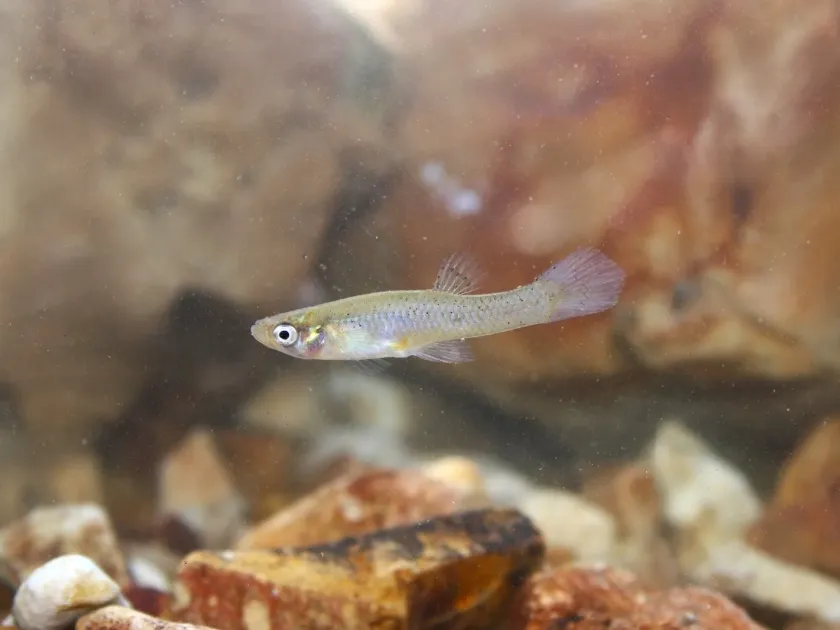
The mosquitofish (Gambusia affinis) is a member of the Poeciliidae family, order Cyprinodontiformes, known for its extreme resilience and adaptability.
Physically, these fish are small, with females growing up to 6-7 cm and males smaller, characterized by a dull olive-grey color and dark spots on the caudal fin.
They are live-bearing fish, which contributes to their rapid population growth and ability to colonize diverse aquatic environments successfully.
This species is highly aggressive and notoriously invasive, often outcompeting native fish and invertebrates for food and habitat resources.
Their physiological robustness allows them to thrive in water bodies with low oxygen levels, high temperatures, and various pollutants.
What it damages
In aquaculture and hydroponic systems, mosquitofish are considered pests because they disrupt biological filtration by consuming beneficial microorganisms.
They pose a significant threat to fish farming by actively preying upon the eggs and fry of valuable commercial fish species, reducing yields.
When present in floating hydroponic systems, they have been observed nipping at plant root systems, which can lead to stress and stunted plant growth.
By consuming natural predators of mosquito larvae and other pests, they upset the natural ecological balance within managed water systems.
Excessive populations increase the organic load in the water, leading to fluctuations in pH and nutrient levels that negatively affect cultivated crops.
When it appears
Mosquitofish are most active during the warmer months when water temperatures consistently exceed 15 degrees Celsius, promoting rapid metabolism.
In controlled indoor environments, such as greenhouses or hydroponic facilities, they remain active and continue reproducing throughout the entire year.
Spring is a critical period for monitoring as populations rapidly expand and spread through irrigation channels and connected water networks.
Summer heat peaks usually correlate with maximum fish density, making the competition for resources in small reservoirs particularly intense.
During winter, they generally reduce activity and migrate to deeper, warmer areas of the water body to survive the colder conditions.
Signs of infestation
The primary sign of infestation is the sudden decline or disappearance of native zooplankton and local macroinvertebrates in the water system.
Visual confirmation can be achieved by observing schools of small fish near the water surface, particularly in well-lit and warm areas.
In hydroponic setups, evidence of damage to delicate plant roots or signs of physical trauma on root hairs strongly suggests the presence of the fish.
Increased cloudiness or changes in water quality metrics that cannot be explained by standard nutrient dosing often point to high fish activity.
Active detection is performed using fine-mesh nets or custom traps placed in strategic locations throughout the irrigation or pond system.
Control measures
Installation of fine-mesh screening at all water intake points is the most effective mechanical measure to prevent the entry of mosquitofish.
Manual removal using traps and netting is recommended for small-scale ponds to suppress population density over time.
In severe infestation cases, draining the system completely and performing a thorough disinfection of the basin is necessary to eliminate all life stages.
Biosecurity protocols should be strictly enforced to prevent the accidental transfer of fish or eggs between different water bodies or containers.
Regular maintenance of filtration systems and monitoring of water parameters will help detect and mitigate potential issues before they escalate.
Taxonomy
- Latin name
- Gambusia affinis
- Family
- Poeciliidae
- EPPO code
- GAMBAF
Discussion
No discussions yet — be the first.