
Eastern mosquitofish
Gambusia holbrooki
Description
How to identify
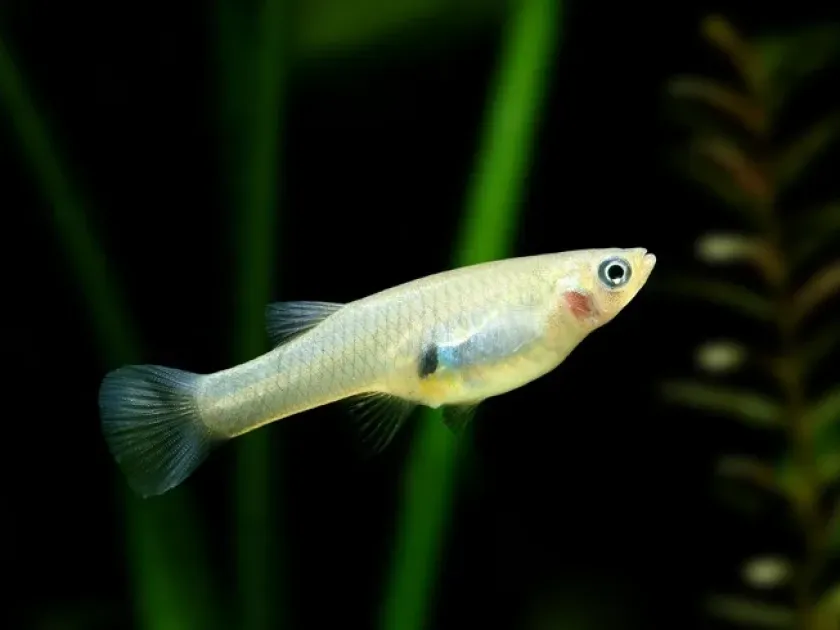
The Eastern mosquitofish (Gambusia holbrooki) is a small freshwater fish belonging to the family Poeciliidae, order Cyprinodontiformes.
Females are larger than males, reaching lengths up to 8 cm, while males are significantly smaller, typically around 3.5 cm.
The body is characterized by an olive-grey color and a distinctive metallic sheen, making them easily identifiable in water.
It is a live-bearing species, which grants it an evolutionary advantage by eliminating the need for vulnerable egg stages.
They exhibit high tolerance to environmental stress, including fluctuating oxygen levels and high water temperatures.
What it damages
This species is highly invasive and competes directly with native species for limited food resources in aquaculture.
They consume vast quantities of zooplankton, which is essential for the growth of commercially valuable fish fry.
In irrigation systems and rice paddies, they disrupt the local food chain by eliminating beneficial invertebrates.
The presence of mosquitofish often leads to a decline in biodiversity, as they outcompete and displace indigenous aquatic life.
By grazing on plankton, they contribute to water degradation, promoting algal blooms and lower water quality.
When it appears
Mosquitofish become active in the spring when water temperatures consistently rise above 10-12 degrees Celsius.
Reproductive activity peaks during the hot summer months, allowing for rapid population explosions in stagnant waters.
Multiple generations can be produced within a single growing season due to their short maturation cycle.
As temperatures drop in autumn, the fish move to warmer, deeper waters to survive the colder months.
They are capable of overwintering in various habitats, ensuring their survival and return for the next cycle.
Signs of infestation
The most common sign is the appearance of dense shoals of small, active fish near the water surface in coastal zones.
A noticeable decrease in the population of copepods and other small crustaceans is a clear indicator of infestation.
Growth rates of target fish stock in aquaculture ponds may decline due to malnutrition caused by competition.
Water clarity issues often arise, as the biological control of algae by zooplankton is significantly impaired.
Direct sightings within drainage canals and pond inlets during routine water maintenance check-ups.
Control measures
Complete drainage and disinfection of ponds are the most effective methods to eliminate mosquitofish populations.
Installation of fine mesh screens on all water inlets is crucial to prevent the entry of invasive individuals into ponds.
Biological control methods, such as introducing predatory fish species, can help manage populations in contained systems.
Regular surveillance of water sources is necessary to catch and treat infestations before they become established.
- Pond drainage
- Mesh screen installation
- Introduction of predators
- Frequent water monitoring
Taxonomy
- Latin name
- Gambusia holbrooki
- Family
- Poeciliidae
- EPPO code
- GAMBHO
Discussion
No discussions yet — be the first.