
Willow Ptarmigan
Lagopus
Description
How to identify
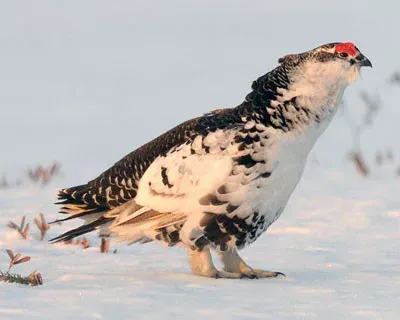
The Willow Ptarmigan (Lagopus lagopus) is a member of the grouse family. These birds are well-adapted to cold climates and feature seasonal color changes that provide camouflage against snow and vegetation.
In summer, their plumage is reddish-brown, perfect for blending into the tundra landscape. By winter, they molt into a pure white coat, except for the black tail feathers, which is vital for survival in snow-covered areas.
A key physical feature is their heavily feathered feet, acting as natural snowshoes. This allows them to traverse deep snow, moving between feeding sites without sinking into the drift.
They are generally sedentary birds, though they may migrate short distances to find food during harsh winters. In winter, they form large flocks, whereas in summer, they usually stay in pairs.
Breeding takes place in the spring, with females laying large clutches of eggs in nests built directly on the ground. Their population density depends heavily on the availability of food and environmental conditions.
What it damages
In northern agricultural regions, the Willow Ptarmigan can become a nuisance when farmland overlaps with their natural habitat. The primary damage involves the consumption of crops and tree buds.
During winter and early spring, they feed extensively on the buds and shoots of woody plants. This behavior often damages windbreak shelterbelts, reducing their efficiency in protecting soil from erosion.
Winter wheat and other early-germinating crops are particularly vulnerable. The birds consume seeds and emerging sprouts, which leads to sparse stands and significant yield losses in affected areas.
Concentrations of ptarmigan flocks lead to soil and crop contamination via droppings. This creates hygiene issues and potential risks for disease transmission within the field environment.
In cases of severe food scarcity, they may target uncovered grain stores or fodder, resulting in direct economic losses for farmers who rely on stored reserves for the coming season.
When it appears
The highest level of damage occurs in late winter and early spring. At this time, natural food sources in the wild are depleted, forcing the birds to move closer to farmland.
Spring is a critical window because the birds are attracted to early green sprouts on fields. This timing directly interferes with the early stages of crop development and establishment.
In summer, the damage risk decreases significantly. During these warmer months, their diet shifts toward native berries, seeds of wild plants, and available insects, leaving crops largely untouched.
Autumn brings the formation of flocks as they prepare for winter. If harvesting is delayed due to weather, these flocks may opportunistically feed on remaining grain left on the field.
Severity is often linked to winter severity; extremely harsh winters with deep, long-lasting snow coverage correlate with higher instances of ptarmigan raiding agricultural fields.
Signs of infestation
The presence of these birds is marked by distinct footprints in the snow, showing a clear pattern of three toes with claw marks. The tracks usually follow a zig-zag or rhythmic path.
Droppings are another common indicator. They appear as cylindrical, dark green or brown pellets left in concentrated areas where the birds have spent time foraging.
You can identify feeding activity by looking for damaged buds or twigs in shelterbelts. The cuts on the branches appear ragged, which is quite distinct from the clean snips of rodents.
Snow pits or shallow depressions are often found in fields where the birds have spent time digging to reach seeds or underlying vegetation beneath the snow cover.
When disturbed, the flock produces loud, gurgling vocalizations and takes flight abruptly. These sounds are often the first sign that a large group of birds is present nearby.
Control measures
Visual deterrents are highly recommended. Using decoys of birds of prey or reflective tapes can effectively discourage the ptarmigan from settling on specific parts of a field.
Acoustic deterrents that broadcast the calls of raptors or loud noises can create a hostile environment for the flock, forcing them to find safer feeding grounds elsewhere.
For high-value or experimental plots, physical exclusion via netting is the most reliable method to prevent any access to the seeds or young seedlings during the danger period.
Applying seed treatments or repellent coatings to crops can reduce their palatability. It is important to ensure these substances are eco-friendly and safe for local wildlife.
Maintaining clear field borders and ensuring that harvest residues are cleared or incorporated into the soil helps remove the incentive for birds to gather in your fields.
Taxonomy
- Latin name
- Lagopus
- Family
- Tetraonidae
- EPPO code
- LAGPSP
Discussion
No discussions yet — be the first.