
Ruffed grouse
Bonasa umbellus
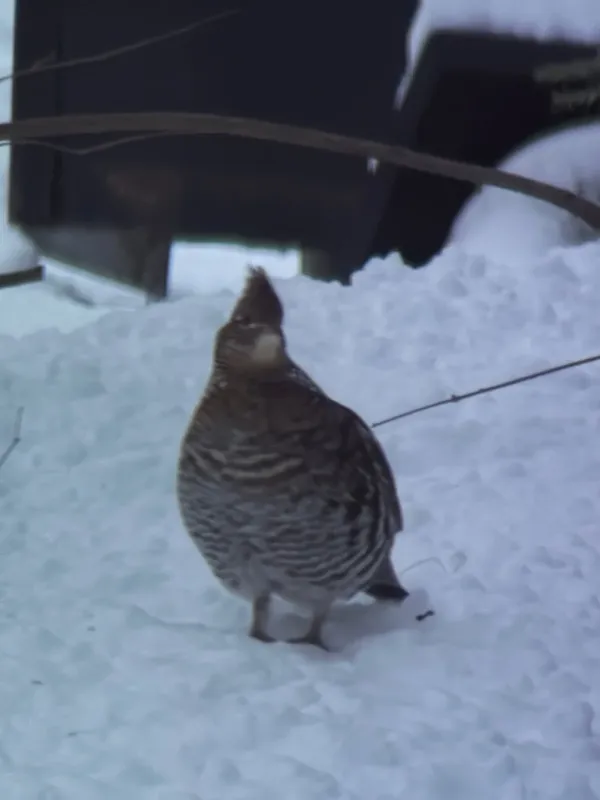
Description
How to identify
The Ruffed grouse (Bonasa umbellus) is a bird species of the family Phasianidae that, while native to forests, can act as a pest in agricultural and orchard settings. Understanding its biology is key to managing its impact on cultivation.
This bird is characterized by its mottled plumage, which serves as excellent camouflage. Males exhibit a distinct "ruff" of dark feathers around the neck, which is often expanded during mating displays or territorial behaviors.
Ruffed grouse populations are typically associated with woodland environments; however, they often forage in nearby orchards when natural food sources like wild fruits and nuts are scarce during winter months.
The life cycle involves seasonal breeding, followed by the dispersal of young birds. Their ability to adapt to edge habitats makes them frequent visitors to agricultural zones adjacent to forests.
In terms of agricultural impact, the grouse can cause localized but significant damage to tree buds and shoots, especially in northern regions where winter food availability is a limiting factor for their survival.
What it damages
The primary damage caused by the Ruffed grouse involves the consumption of vegetative and reproductive buds on various deciduous trees. Fruit-bearing species are particularly susceptible to their foraging habits.
By consuming terminal and lateral buds, grouse can severely impact the growth structure of young fruit trees. In nursery operations, this can lead to misshapen trees and reduced overall tree vigor.
Orchards containing apple, pear, and cherry trees are at the highest risk. The loss of buds during late winter and early spring directly translates into decreased floral production and lower fruit yields.
Damage is most prevalent in trees located near the forest edge. As these birds are relatively shy, they prefer to forage in areas that offer quick cover, making trees adjacent to woods highly vulnerable.
- Apple and Pear trees.
- Cherry and other stone fruit varieties.
- Young nursery saplings of various species.
Signs of infestation
The most evident sign of damage is the presence of branches stripped of their buds. The stems appear clean, but the buds themselves are missing, often leaving behind small bits of bud scales.
Footprints with a characteristic three-toed pattern in the snow or soil beneath the trees are strong indicators that grouse have been present. Tracking these prints can reveal their movement patterns through the orchard.
Droppings found on branches and on the ground underneath the tree canopy provide confirmation of the birds' presence. High density of droppings usually correlates with intense feeding activity.
Observations of the birds in the early morning or late afternoon, when they are most active, allow for early identification of the problem before significant damage occurs to the entire crop.
A decline in the number of healthy buds in late winter, without evidence of insect infestation, often points to avian foraging. Systematic inspection of branches during this time is essential for early diagnosis.
Control measures
Physical exclusion remains the most reliable method for protecting high-value saplings or sensitive tree sections. Wrapping branches in protective netting effectively prevents access to buds.
Visual and auditory deterrents, including reflective tape, predator silhouettes, and ultrasonic sound devices, can be used to create a hostile environment that discourages the birds from staying in the area.
Landscape management plays a crucial role. Removing dense brush and shrubs near the orchard perimeter reduces the amount of cover available to grouse, making the area less attractive for feeding.
Application of taste-aversion repellents onto buds during the dormant season can effectively stop the birds from feeding. These substances make the buds unpalatable without harming the plant growth.
Implementing a regular monitoring program in late winter allows for timely intervention. By identifying feeding activity early, growers can adjust their deterrent strategy before the damage becomes widespread.
Taxonomy
- Latin name
- Bonasa umbellus
- Family
- Tetraonidae
- EPPO code
- BONSUM
Discussion
No discussions yet — be the first.