
Hazel grouse
Bonasa
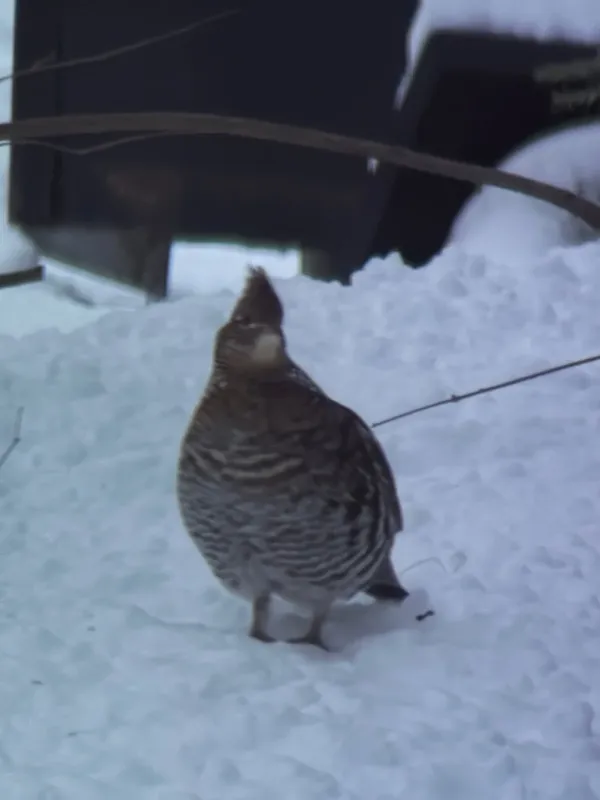
Description
How to identify
The hazel grouse (Bonasa bonasia) is a forest bird belonging to the pheasant family that, in specific agricultural settings, can act as a plant pest.
It is characterized by its mottled plumage, which provides excellent camouflage, allowing the bird to remain hidden within dense forest environments.
Taxonomically, it is classified as a sedentary species typically found in coniferous and mixed forests, though it frequently interacts with forest edges and nearby fields.
The birds are of medium size but possess high behavioral plasticity, enabling them to survive and forage in diverse conditions near human cultivation sites.
A distinctive high-pitched whistle is the primary auditory marker of the bird, which is often heard during mating displays or while foraging in groups.
What it damages
The hazel grouse primarily damages young forest plantations and nursery seedlings by consuming buds, fresh shoots, and conifer needles.
This feeding behavior causes significant physiological stress to young trees, leading to stunted growth, loss of the terminal bud, and irregular branching.
In forest nurseries, repeated browsing by hazel grouse can result in high mortality rates for young saplings, making the cultivation process economically non-viable.
Besides forest trees, these birds can occasionally feed on agricultural crop sprouts located near woodland perimeters, leading to localized yield reductions.
The damage is most severe during the dormant season, when the birds aggressively exploit the available nutrient-rich buds of young deciduous and coniferous trees.
When it appears
The damage intensity peaks during early spring, as trees begin to break dormancy and their buds become highly attractive due to their nutritional value.
During the winter months, hazel grouse are forced to rely heavily on arboreal buds because ground-level food sources are covered by snow or depleted.
The mating period in spring increases the birds' activity levels and territory movement, leading to more frequent encounters with agricultural and forestry plots.
Autumn feeding behavior often involves gathering in small flocks, which increases the impact on specific patches of nursery land or vegetable crops.
Summer months see lower damage pressure, as the birds shift their diet toward insects, berries, and other available forest floor resources.
Signs of infestation
The primary indicators of hazel grouse presence include their distinct footprints left in the soil or snow, which are easily recognizable to foresters.
Feeding damage is identified by the clean removal of buds, particularly from the apical portions of young stems, often with minor abrasions on the shoot bark.
The accumulation of bird droppings under specific young trees is a clear sign that the site is being utilized as a regular feeding or resting location.
A reduced overall growth rate or a visible lack of foliage on young saplings compared to protected areas points to a recurring pest problem.
Damaged stems often show signs of mechanical stress or breakage caused by the bird's weight while reaching for higher terminal buds.
Control measures
Physical barriers such as bird-proof netting represent the most effective long-term solution for protecting high-value saplings in forest nurseries.
Acoustic and visual deterrents, such as sonic cannons or reflective ribbons, can be deployed to keep the birds away from vulnerable agricultural perimeters.
Silvicultural management, including the removal of dense brush and low-hanging branches around nursery edges, reduces suitable hiding places for the grouse.
Integrating artificial predator decoys or periodic movement of scare devices can temporarily disrupt the bird's habituation to the protected site.
Strategic monitoring of local populations allows for proactive measures, such as temporary shielding of young trees before the peak feeding season begins.
Taxonomy
- Latin name
- Bonasa
- Family
- Tetraonidae
- EPPO code
- BONSSP
Discussion
No discussions yet — be the first.