
Oak aphid
Lachnus roboris
Description
How to identify
The Oak aphid (Lachnus roboris) is a member of the Aphididae family, known for being one of the largest aphid species found on oak trees.
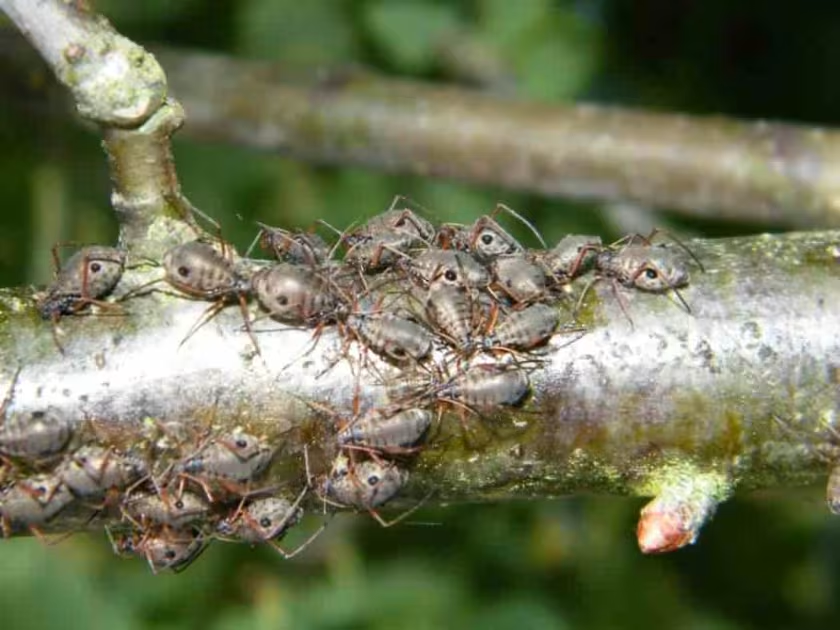
Adult insects measure about 3–4 mm in length and possess a dark brown or black body that blends in perfectly with the bark of oak branches.
They are characterized by their long legs and distinct, cone-shaped siphunculi (siphons) on the dorsal side of their abdomen, which are easily visible upon close inspection.
These aphids typically live in dense colonies, mostly on the bark of young shoots or branches, often protected by symbiotic ant species.
They are hardy insects capable of surviving varied environmental conditions, making them a persistent pest in forest and urban park settings.
What it damages
The primary host for this species is the oak tree (Quercus), although they can also infest chestnut and certain other beech species.
By using their piercing-sucking mouthparts, they extract sap from the bark, which can weaken the host plant significantly during heavy infestations.
Young saplings in nurseries are at the highest risk, as severe feeding can lead to stunted growth and structural deformities in the wood.
In mature forest stands, chronic infestation reduces the overall vigor of the trees, making them more susceptible to drought and secondary pests.
The secretion of honeydew by the aphids covers the foliage, which can interfere with normal gas exchange and photosynthesis of the tree.
When it appears
The lifecycle begins with overwintering eggs, which are deposited by females in late autumn on the bark of twigs or near buds.
In the spring, as the tree begins its growth, the eggs hatch into fundatrices (stem mothers) that initiate the development of the first generation.
Throughout the growing season, multiple generations occur, including both wingless and winged forms, allowing for rapid colonization of the tree crown.
The peak population levels are usually reached during mid-summer, depending on temperature and moisture availability.
The life cycle concludes in the autumn when sexual forms emerge to mate and lay eggs for the following year.
Signs of infestation
The presence of honeydew, a sticky substance excreted by the aphids, is the most common early indicator of an active infestation.
High ant activity on the tree trunks is a reliable secondary sign, as ants actively farm the aphids for their sweet sugary secretions.
Sooty mold, a black fungus, often grows on the honeydew-covered surfaces, resulting in an unsightly appearance and blocking light to the leaves.
Close inspection of the branches usually reveals large, dark clusters of aphids lined up along the bark of young shoots.
- Sticky honeydew covering leaves and branches.
- Increased presence of ants patrolling the branches.
- Dark sooty mold growth on the bark and leaves.
- Premature yellowing or curling of young leaves.
- Visible colonies of large dark-colored insects.
Control measures
Effective management requires regular monitoring of oak trees during the early spring to identify and treat infestations before they spread.
Biological control, by preserving natural predators like ladybugs, hoverflies, and lacewings, is highly effective for maintaining ecological balance.
If chemical intervention is necessary, systemic insecticides applied during the early growth phase provide the most consistent results.
Always ensure that treatments are applied in accordance with local environmental regulations to prevent harm to non-target beneficial insects.
Maintaining tree health through proper irrigation and soil care increases the plant's natural resistance to aphid feeding pressure.
Taxonomy
- Latin name
- Lachnus roboris
- Order
- Hemiptera (bugs, aphids, leafhoppers)
- Family
- Aphididae
- EPPO code
- LACNRO
Discussion
No discussions yet — be the first.