
Pine aphid
Lachnus pinihabitans
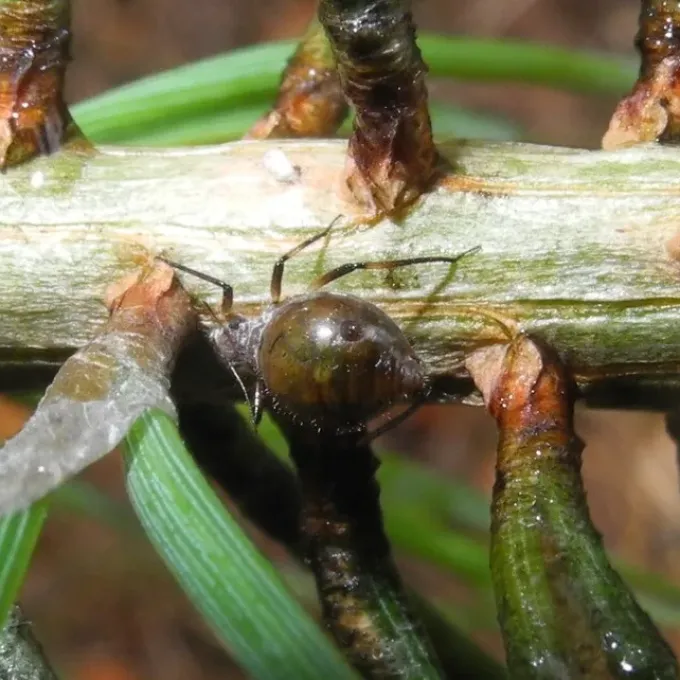
Description
How to identify
The pine aphid (Lachnus pinihabitans) is a specialized insect belonging to the Aphididae family. It specifically targets pine species, inhabiting the bark and young shoots of these coniferous trees.
Adult aphids typically measure 3–4 mm in length. Their bodies are oval and range in color from brown to black, which serves as a natural camouflage on the rough bark of pine trees.
The life cycle involves multiple generations per year. The species exhibits both winged forms, which allow for dispersal to new trees, and wingless forms that remain in existing colonies.
This species is characterized by its symbiotic relationship with ants, which protect the aphid colonies from predators in exchange for the sweet honeydew they excrete.
Winter is survived in the egg stage. These eggs are laid by females in crevices of the bark or near terminal buds, remaining dormant until temperatures rise in the spring.
What it damages
The primary hosts for this pest include Scots pine, black pine, and various ornamental pines. It is particularly damaging in nurseries where young trees are less resilient to sap loss.
By piercing the bark and needles to extract sap, the aphid causes a direct loss of nutrients. This stress weakens the tree and disrupts normal physiological functions, including nutrient transport.
Infested shoots often show signs of distortion and growth stunting. As the aphids drain the sap, the needles become chlorotic, turn yellow, and may prematurely drop from the branch.
Severe infestations create conditions favorable for sooty mold growth. This mold covers the needles in a black layer, reducing the photosynthetic capacity of the tree significantly.
Repeated attacks over several seasons can lead to the decline of the tree, making it susceptible to secondary pests like wood-boring beetles, which can eventually kill the host.
When it appears
The seasonal activity cycle typically begins in early spring when the larvae emerge from the overwintering eggs. This synchronization allows them to feed on the most nutrient-rich new growth.
During the summer months, the population reaches its peak. Warm weather accelerates the reproductive rate, allowing for the emergence of several overlapping generations within a single season.
By late summer, the colony density is usually at its maximum. This is the period when damage becomes most visible to observers, as the health of the pine tree declines noticeably.
As autumn approaches and temperatures begin to drop, the aphids shift their reproductive strategy. Sexual reproduction occurs, and females lay eggs that will survive the upcoming winter.
The timing of these life stages is heavily influenced by regional climatic conditions, meaning that warmer climates may see longer periods of aphid activity than cooler northern regions.
Signs of infestation
The most prominent sign of infestation is the presence of honeydew—a sticky, sugary substance that covers the foliage and branches underneath the aphid colonies.
The honeydew provides a perfect medium for sooty mold to grow, resulting in black, velvety patches on the needles and bark, which act as a clear diagnostic indicator of aphid presence.
An increased presence of ants on the trunk and branches of the tree is a strong secondary indicator, as ants are frequently seen tending to the aphids to collect their honeydew secretions.
Yellowing, drooping, or premature needle drop, particularly on the younger, outer branches, suggests that the tree is currently supporting an active aphid colony.
When inspecting the tree, one may notice clusters of dark insects on the bark. If you gently touch the branches, you might see them move, confirming that the colony is currently active.
Control measures
Systemic insecticides are the most effective method for controlling pine aphids. These chemicals are absorbed by the tree, making the sap toxic to the aphids feeding on it.
Application should be timed correctly, targeting the early spring or whenever the first signs of activity appear. Follow the manufacturer's instructions for the correct dosage.
For smaller ornamental trees, washing the colonies off with a strong stream of water can reduce population pressure. This can be followed by an application of insecticidal soap.
Maintaining tree vigor through proper watering and soil fertilization helps the tree resist damage, making it less attractive to the pests and allowing it to recover faster from infestations.
- Perform regular monitoring of tree health during the growing season.
- Encourage natural predators like ladybirds and lacewings in the garden.
- Remove heavily infested branches to reduce the total population in the area.
Taxonomy
- Latin name
- Lachnus pinihabitans
- Order
- Hemiptera (bugs, aphids, leafhoppers)
- Family
- Aphididae
- EPPO code
- LACNPI
Discussion
No discussions yet — be the first.