
Spruce aphid (Lachnus pallipes)
Lachnus pallipes
Description
How to identify
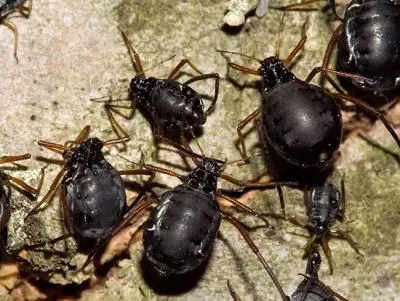
The spruce aphid Lachnus pallipes is a member of the Aphididae family, specifically recognized for its large size and distinct physical features.
Adult insects typically grow to about 4-5 mm in length, which makes them quite noticeable compared to smaller aphid species.
They possess a dark brown to black body, often covered in a fine, dusty secretion that gives them a matte appearance.
The most defining characteristic of this species is its long, pale-colored legs that contrast sharply with its dark body.
These aphids are social insects that form dense colonies on the bark of twigs and branches rather than on the needles themselves.
What it damages
The primary host for this species is the spruce tree, including various cultivars commonly found in nurseries and home gardens.
By using their piercing-sucking mouthparts, they drain sap from the bark of young shoots, causing significant physiological stress to the tree.
Feeding often results in stunted growth of the branches and can lead to the wilting of terminal shoots during high infestation periods.
The excess honeydew produced by the aphids covers the foliage, which subsequently encourages the growth of black sooty mold fungus.
Severe infestations weaken the tree's overall vigor, making it more susceptible to environmental stress, drought, and other secondary diseases.
When it appears
The life cycle begins in early spring when nymphs emerge from eggs that have successfully overwintered on the bark of host trees.
Several generations are produced throughout the warm summer months, with the population peaking during periods of rapid tree growth.
As autumn approaches, the aphids produce sexual forms that mate and lay overwintering eggs in protected cracks in the bark.
The development speed is heavily dependent on temperature, with warmer spring weather leading to earlier outbreaks and faster colony expansion.
Monitoring should be most intense during late spring and early summer when the nymphs are actively colonizing new growth.
Signs of infestation
The most obvious sign of an infestation is the presence of dark, clustered aphids lining the bark of branches in crowded formations.
Sticky honeydew droplets found on needles and twigs are a clear indicator of aphid activity, often accompanied by the smell of fermentation.
The black sooty mold that grows on the honeydew creates an unsightly appearance and impairs the tree's ability to photosynthesize effectively.
A noticeable increase in ant activity around the tree is common, as ants are attracted to and protect the aphid colonies for their honeydew.
- Clusters of dark insects on bark
- Sticky honeydew deposits on foliage
- Presence of black sooty mold
- Increased ant activity on the tree
Control measures
Cultural control involves ensuring tree health through proper watering and fertilization, as stressed trees are more attractive to aphids.
For minor infestations, a strong stream of water can physically dislodge colonies and reduce the initial population size effectively.
In cases of heavy infestation, systemic insecticides applied to the foliage or soil can provide lasting control by killing insects during feeding.
Regular monitoring of the lower and middle branches allows for early detection and targeted application of control measures.
It is important to time treatments properly, focusing on the early season before the populations reach high, damaging levels.
Taxonomy
- Latin name
- Lachnus pallipes
- Order
- Hemiptera (bugs, aphids, leafhoppers)
- Family
- Aphididae
- EPPO code
- SCHDPA
Discussion
No discussions yet — be the first.