
Lachnus
Lachnus
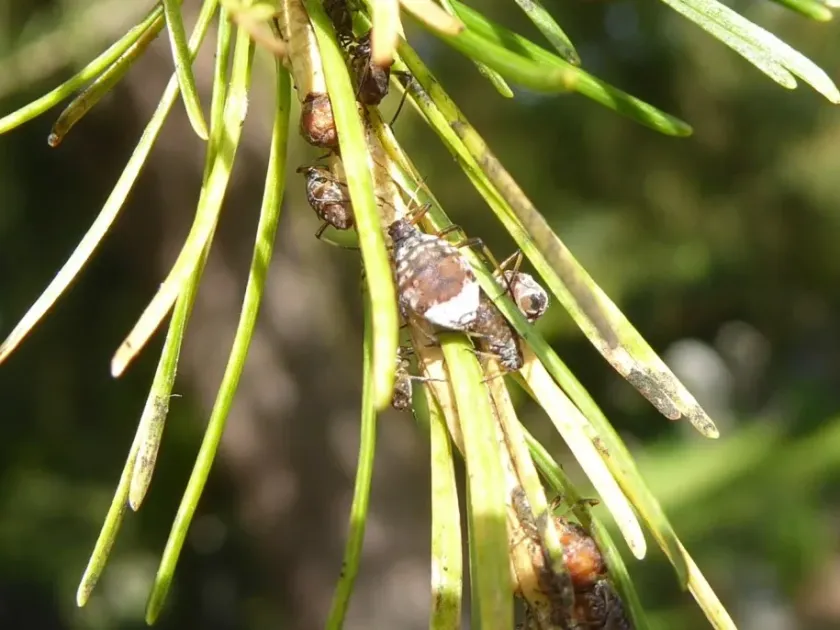
Description
How to identify
Lachnus is a genus of large aphids belonging to the family Aphididae. These insects are highly specialized, feeding exclusively on various coniferous tree species throughout their lifecycle.
They are characterized by a relatively large size, often reaching up to 5–7 mm in length. Their bodies are typically dark brown or black, serving as excellent camouflage against the bark of host trees.
The aphids possess long, sturdy legs, allowing them to move efficiently across branches. Their piercing-sucking mouthparts are designed to penetrate even the thicker bark of conifers.
Their reproduction is complex, involving both asexual (parthenogenetic) and sexual cycles. During the growing season, multiple generations can emerge to rapidly colonize parts of the tree.
Lachnus overwinter in the egg stage. These eggs are deposited in crevices of the bark or near the needle bases, providing protection from harsh winter temperatures.
What it damages
Common hosts for this genus include pines, spruces, firs, and larches. They are frequently found in both forest settings and nursery or landscape environments.
By extracting plant sap from young shoots, twigs, and stems, these aphids cause significant stress to the tree, often resulting in stunted growth and weakened vitality.
Heavy infestations impair the tree's immune system, making it much more susceptible to secondary damage from bark beetles, wood-boring insects, and various fungal pathogens.
A major indirect impact of their feeding is the production of honeydew. This sticky substance promotes the growth of sooty mold, which blocks sunlight and hinders photosynthesis.
Severe infestations often lead to premature needle drop, shoot deformation, and, in young trees, can even cause branch dieback and overall decline in tree health.
When it appears
The activity typically begins in early spring, as temperatures rise and the overwintering eggs hatch into the first generation of nymphs.
Peak populations are usually observed in late spring and early summer when the nutritional value of sap is high and environmental conditions favor rapid multiplication.
Mid-summer may see a decline in activity, although the production of winged forms allows for the migration of the population to new, healthier parts of the tree or nearby hosts.
As autumn approaches, sexual forms develop, mate, and lay the eggs that will persist through the winter, completing the annual cycle.
Monitoring should be conducted throughout the vegetation period, specifically between April and September, to detect early signs of colony formation.
Signs of infestation
The presence of sticky honeydew on the needles and branches is a primary indicator of an infestation. This substance may eventually turn black due to sooty mold growth.
Large numbers of ants on the bark or branches are a classic sign of aphid activity, as ants are known to tend and protect these insects to collect their sugary secretions.
Visual inspection often reveals dense clusters of dark-colored aphids gathered on young shoots or along the twigs of the tree.
Needle yellowing and premature dropping are key visual cues that a branch or shoot has been under prolonged pressure from feeding colonies.
An overall lack of vigor in the tree, characterized by slowed growth rates and sparse foliage, often points to a chronic issue with sap-sucking pests.
Control measures
Effective management begins with monitoring and, in early stages, physical removal of infested branches if the tree size permits.
Systemic insecticides are the most reliable method for controlling established colonies, as they ensure the active ingredient reaches the hidden pests.
- Application of systemic insecticides such as acetamiprid or neonicotinoids.
- Control of ant colonies around the trees to reduce the protection provided to the aphids.
- Encouraging natural predators like ladybugs, lacewings, and hoverflies.
Maintaining optimal tree health through proper fertilization and watering is crucial, as healthy trees are better equipped to tolerate and recover from aphid damage.
Early-season preventative treatments can significantly reduce the risk of mid-summer outbreaks and protect the tree during its most active growth phases.
Taxonomy
- Latin name
- Lachnus
- Order
- Hemiptera (bugs, aphids, leafhoppers)
- Family
- Aphididae
- EPPO code
- LACNSP
Discussion
No discussions yet — be the first.